
Build a Professional Online Presence with Law Firm Website Development
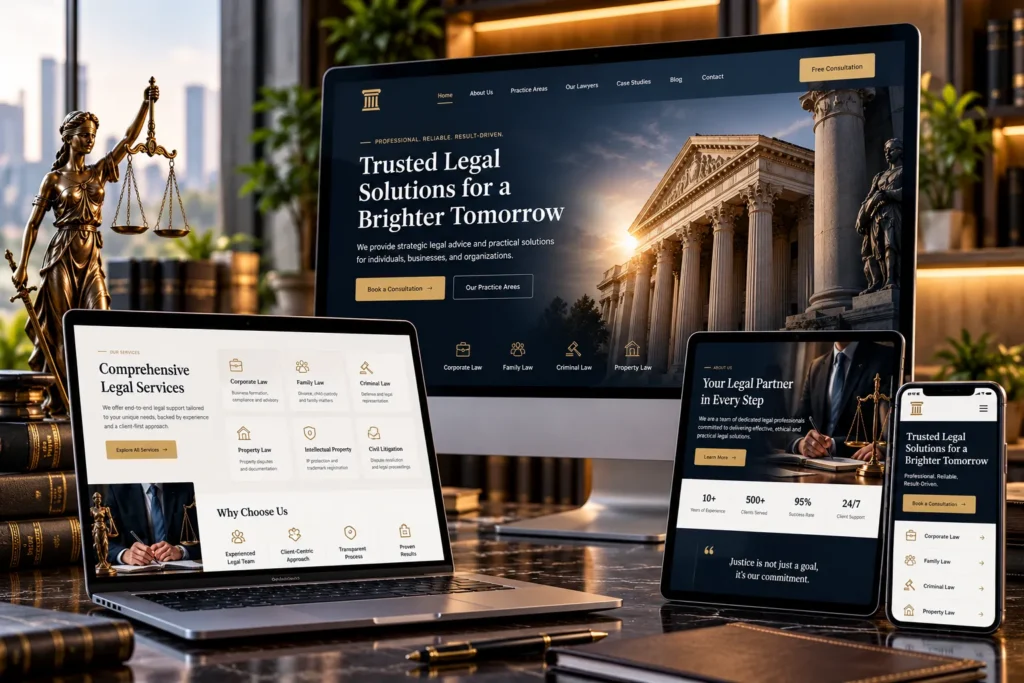
Looking for reliable Law Firm Website Development Services to establish your legal practice online? DigitalClouds creates professional, responsive, and user-friendly websites for law firms, advocates, legal consultants, and independent lawyers. Our approach combines strategic website design, clear practice-area pages, mobile optimization, secure contact forms, and SEO-friendly development. We help legal professionals present their services, professional background, and contact information clearly while making it easier for prospective clients to explore the firm’s offerings and submit relevant enquiries.

- WHY LAW FIRM SEO MATTERS
Why Is Law Firm Website Development Important for Legal Practices?
People often search online when looking for legal assistance, researching practice areas, or comparing law firms and advocates. Before contacting a legal professional, they may want to understand the firm’s areas of practice, professional background, office location, consultation process, and contact options. A poorly designed or outdated website can make this information difficult to find and may prevent visitors from confidently exploring the firm’s services. Law Firm Website Development helps create a structured digital presence that communicates your legal services clearly and supports a better browsing experience. A professionally developed website can organize practice-area information, present verified professional details, improve mobile accessibility, and provide convenient enquiry options. With appropriate technical foundations and an SEO-friendly structure, your website can also support future search optimization and digital marketing activities.
Present your law firm with a website that reflects its professional identity, areas of practice, and approach to client service. Consistent branding, readable content, organized layouts, and clear navigation help visitors understand your firm and locate relevant information without unnecessary confusion.
Create dedicated pages for the legal services your firm provides, such as family law, corporate law, property disputes, criminal law, or civil litigation. Individual practice-area pages allow you to explain the scope of each service, provide relevant information, and help visitors find the legal assistance they are looking for.
Many people browse legal service websites using smartphones. Responsive Law Firm Website Design ensures that text, menus, service pages, forms, and contact details adapt to different screen sizes. A mobile-friendly layout makes it easier for visitors to navigate your website and contact your office.
Help visitors find the right way to contact your firm through clearly displayed phone numbers, email addresses, enquiry forms, and office details. A well-planned contact experience reduces unnecessary steps and makes it easier for people to ask about your services or request a consultation.
Present accurate information about your lawyers, advocates, qualifications, experience, professional affiliations, and areas of practice. Well-organized profiles help visitors understand the professionals associated with your firm while ensuring that credentials and professional claims are represented responsibly.
Develop your website with descriptive URLs, logical heading structures, relevant page titles, internal links, and crawlable content. These technical and structural elements help search engines understand your website and provide a suitable foundation for future Law Firm SEO activities.
Legal websites may handle sensitive enquiries and personal information. Appropriate security measures, HTTPS, secure form handling, access controls, software updates, and reliable backups help protect the website and support its ongoing operation. Security requirements should reflect the information collected and the firm’s operational needs.
Build a website that can accommodate new practice areas, lawyer profiles, legal articles, office locations, and additional functionality as your firm evolves. A scalable structure makes future updates easier and reduces the need to rebuild the entire website whenever your requirements change.
- Services
What Law Firm Website Development Services Do We Offer for Your Business Growth?
DigitalClouds provides Law Firm Website Development Services to help legal professionals establish a credible online presence. We create responsive, user-friendly websites with clear service pages, professional design, secure functionality, and SEO-friendly structures tailored to your firm’s requirements.
Custom Law Firm Website Development
Build a professional website tailored to your firm's brand, practice areas, and business objectives. We create structured, functional websites that present your legal services clearly and support future growth.
Lawyer and Advocate Website Design
Establish your individual online presence with a dedicated lawyer website. We showcase your professional background, qualifications, areas of practice, and contact information through a clear, professional design.
Legal Practice-Area Pages
Organize services such as corporate law, family law, property law, and civil litigation into dedicated pages. Help visitors find relevant legal information and understand the services your firm provides.
UI/UX and Responsive Web Design
Create an intuitive browsing experience with clear navigation, readable layouts, and mobile-friendly designs. Ensure visitors can explore your legal services and access important information across different devices.
SEO-Friendly Website Development
Build a search-friendly website with descriptive URLs, structured headings, metadata, internal links, and logical navigation. Establish a strong technical foundation for future law firm SEO campaigns.
Secure Contact Forms and Enquiry Features
Make it easier for prospective clients to contact your firm using accessible enquiry forms, click-to-call links, and clear contact details. Include appropriate validation, spam prevention, and secure form handling.
Lawyer Profiles and Team Pages
Present partners, associates, and advocates through organized profile pages featuring verified qualifications, experience, and areas of practice. Help visitors understand your legal team and navigate to relevant services.
Legal Blog and Resource Development
Publish legal updates, informative articles, and answers to general legal questions through a structured resource section. Organize categories and related links to make useful content easier to discover and explore.
Website Security, Maintenance, and Support
Keep your website updated and functional with agreed maintenance services, backups, security checks, performance reviews, and technical troubleshooting. Support ongoing website reliability as your firm's needs evolve.
- WHY DIGITALCLOUDS
Why Choose DigitalClouds for Law Firm Website Development Services?
DigitalClouds combines website strategy, UI/UX design, development, and technical optimization to create websites suited to professional service businesses. Our approach to Law Firm Website Development focuses on presenting your legal practice clearly, making essential information accessible, and building a website that can support future content and marketing activities. We consider your practice areas, audience, functionality requirements, and preferred technology when planning the project.
Website Strategy Tailored to Your Legal Practice
We plan the website around your firm's services, professional identity, team structure, and business requirements. Whether you operate an independent practice or a multi-lawyer firm, the page structure and functionality are selected to reflect your actual needs.
Clear Practice-Area and Lawyer Pages
We help organize your legal services into relevant pages and develop consistent layouts for lawyer profiles. This makes it easier for visitors to explore practice areas, understand your professional background, and locate relevant information without navigating through unrelated sections.
Professional and User-Friendly Design
We focus on clear typography, consistent branding, intuitive navigation, readable content, and accessible contact options. Our Lawyer Website Design approach prioritizes usability and professional presentation rather than unnecessary visual elements that distract visitors from important information.
Responsive Development and Technical Foundations
We build responsive websites and review important technical elements, including mobile usability, page speed, indexing accessibility, and website functionality. These foundations support a better user experience and help prepare your website for ongoing content and SEO improvements.
Security-Conscious Website Development
We consider HTTPS, secure form handling, software maintenance, backups, and appropriate access controls during development and support. We also take the website's information-collection requirements into account so that security and privacy measures are suited to its intended use.
Ongoing Support and Transparent Project Delivery
We follow a defined development process covering requirements, design, implementation, testing, and launch. We communicate the agreed scope and functionality clearly, helping you understand what is being developed and which maintenance or support activities may be required after launch.
- Manufacturing SEO Process
How Does Our Law Firm Website Development Process Work?
Our Law Firm Website Development process focuses on understanding your legal practice, planning a clear website structure, creating a professional design, and developing a functional and responsive website. We begin by reviewing your requirements, target audience, practice areas, existing website if available, and desired functionality. Each stage addresses specific design, development, usability, security, and technical considerations to deliver a website that aligns with your firm’s objectives.
Step 01 of 08 · Website Analysis
Law Firm Website Audit and Competitor Analysis
Understand your existing website, identify improvement opportunities, and define the right development approach.
Before planning the design or development, we review your current online presence and understand what your new website needs to achieve. If you already have a website, we assess its structure, navigation, content organization, functionality, mobile usability, and technical condition. We also review relevant law firm websites to understand common user expectations and identify opportunities to make your website more useful and distinctive.
Our website audit and competitor analysis include:
- Existing Website Review: Evaluate the current design, page structure, navigation, functionality, and content organization to identify areas that need improvement.
- Practice-Area Assessment: Review how your legal services are presented and identify opportunities to organize individual practice areas into clearer website sections.
- Competitor Website Analysis: Examine relevant law firm websites to understand their navigation, page layouts, lawyer profiles, contact options, and presentation of legal services.
- Audience and User Journey Review: Identify the information visitors may need when exploring your firm's services, professional background, office details, and consultation process.
- Technical Website Assessment: Review relevant technical issues, including mobile usability, broken links, page speed, HTTPS configuration, and existing website functionality.
- Development Requirement Planning: Document the website's core pages, design requirements, functionality, integrations, and technical priorities before development begins.
Step 02 of 08 · Website Planning
Law Firm Website Structure and Requirement Planning
Create a clear website blueprint based on your practice areas and business objectives.
A well-planned website structure helps visitors understand your firm's services and find important information without unnecessary navigation. We identify the pages, content sections, and functionality required for your website. This stage also establishes the relationship between the homepage, practice-area pages, lawyer profiles, legal resources, and contact information so the website can grow without becoming difficult to manage.
Our website planning activities include:
- Website Sitemap Creation: Define the main pages and their relationships to establish a logical structure for your law firm's website.
- Practice-Area Mapping: Organize your legal services into appropriate categories and identify which services require individual pages.
- Page Requirement Documentation: Outline the purpose and key content elements of the homepage, service pages, team profiles, about page, and contact page.
- Navigation Planning: Structure menus, internal navigation, breadcrumbs where appropriate, and related-page links to help visitors move through the website.
- Functionality Planning: Identify requirements for enquiry forms, click-to-call links, maps, blog sections, appointment requests, and other agreed features.
- Future Expansion Planning: Consider how additional practice areas, lawyers, offices, or resource sections can be added without disrupting the existing structure.
Step 03 of 08 · UI/UX Design
Professional Law Firm Website Design and User Experience
Design a professional, accessible website that makes legal information easier to explore.
The design stage turns your website requirements into a visual and functional layout. We plan the placement of content, typography, colors, navigation, imagery, and calls to action to reflect your firm's identity and professional positioning. The design also considers readability and accessibility so visitors can find relevant practice areas, professional details, and contact information across different devices.
Our UI/UX design activities include:
- Homepage Layout Design: Plan a clear homepage that introduces your firm, highlights relevant practice areas, and directs visitors to important website sections.
- Practice-Area Page Design: Create consistent layouts for legal service pages so visitors can understand each service and find related information.
- Lawyer Profile Design: Organize professional photographs, verified credentials, areas of practice, and relevant background information in a consistent format.
- Navigation and Content Hierarchy: Arrange menus, headings, page sections, and internal links to make important information easier to locate.
- Contact and Enquiry Interface Design: Plan accessible contact details, form layouts, and calls to action that help visitors reach your firm.
- Responsive Design Planning: Consider how layouts, menus, text, images, and interactive elements will adapt to smartphones, tablets, and desktop screens.
Step 04 of 08 · Website Development
Custom Law Firm Website Development and Functionality
Turn the approved design into a working website with the features your firm requires.
During development, we implement the approved layouts, website structure, content sections, and agreed functionality. The technology and development approach depend on your project requirements, content management needs, integrations, and future maintenance plans. We focus on creating a manageable website that presents legal information clearly and works reliably across supported devices.
Our website development activities include:
- Frontend Development: Implement page layouts, navigation, typography, and interactive elements to match the approved website design.
- Content Management Setup: Configure an appropriate content management system, such as WordPress where suitable, so authorized users can update website content.
- Practice-Area Page Development: Build individual service pages using a consistent structure that can accommodate the specific content of each legal practice area.
- Lawyer and Team Profile Development: Create reusable profile layouts for presenting verified professional information and linking profiles to relevant services.
- Contact Form and Feature Integration: Implement agreed functionality, such as enquiry forms, click-to-call links, maps, or other required integrations.
- Cross-Device Functionality Checks: Test menus, links, buttons, forms, and key interactions to identify development issues across supported browsers and screen sizes.
Step 05 of 08 · SEO and Technical Optimization
SEO-Friendly Law Firm Website Setup
Prepare your website for search engine discovery and a smooth browsing experience.
Website development should consider technical SEO from the beginning rather than treating it as an afterthought. We review the website's page hierarchy, URL structure, metadata, mobile usability, loading performance, and indexing accessibility. These foundations help search engines interpret important pages and make future SEO activities easier to implement.
Our SEO and technical optimization activities include:
- SEO-Friendly URL Structure: Create clear, descriptive URLs for practice areas, lawyer profiles, and legal resources where appropriate.
- Metadata and Heading Setup: Configure relevant title tags, meta descriptions, and logical heading structures for important pages.
- Internal Linking: Connect related practice areas, lawyer profiles, blog articles, and contact pages to improve navigation and content discovery.
- Indexing and Sitemap Configuration: Review XML sitemaps, robots directives, canonical settings, and indexing controls as relevant to the website.
- Website Speed Optimization: Assess image sizes, caching, scripts, and other performance factors to identify practical improvements.
- Structured Data Review: Implement appropriate structured data where applicable, ensuring that markup accurately represents visible website information and follows search engine guidelines.
Step 06 of 08 · Content Integration
Legal Service Content and Website Page Development
Organize clear, accurate content that helps visitors understand your firm's services.
Content plays an important role in how a law firm communicates its expertise and explains the services it provides. We integrate approved content into the website structure, ensuring that practice-area pages, lawyer profiles, firm information, and legal resources are easy to read and navigate. Legal descriptions and professional claims should be reviewed for accuracy and compliance with applicable professional requirements before publication.
Our content integration activities include:
- Homepage Content Integration: Organize the firm's introduction, key services, professional information, and contact options within the approved homepage layout.
- Practice-Area Content Formatting: Structure legal service descriptions with suitable headings, paragraphs, lists, and related links for easier reading.
- Lawyer Profile Content: Add approved professional biographies, qualifications, experience, and areas of practice without introducing unverified claims.
- About and Contact Page Setup: Present firm information, office details, contact methods, and other relevant information clearly.
- Legal Blog Integration: Configure article layouts, categories, featured images, and related content sections if a resource or blog section is included.
- Content Accuracy Review: Check for missing sections, formatting problems, outdated details, broken links, and inconsistencies before launch, with legal content reviewed by the firm.
Step 07 of 08 · Testing and Security
Law Firm Website Testing, Security, and Quality Assurance
Check website functionality, usability, and essential security measures before launch.
Before publishing the website, we test important pages and functions to identify problems that could affect visitors or the firm's daily operations. This includes reviewing navigation, forms, mobile layouts, loading behavior, and technical settings. Since law firms may receive confidential or sensitive information, security and privacy considerations should be addressed according to the website's actual functionality and data-handling requirements.
Our testing and security activities include:
- Cross-Browser Testing: Review important website pages and interactions across supported browsers to identify display or functionality inconsistencies.
- Mobile Responsiveness Testing: Check layouts, navigation, forms, buttons, and contact details on different screen sizes.
- Form and Enquiry Testing: Test form validation, submission behavior, confirmation messages, notifications, and spam-prevention measures where configured.
- HTTPS and Security Checks: Verify HTTPS configuration and review relevant security settings, software versions, and access controls.
- Broken Link and Content Checks: Identify broken links, missing images, formatting problems, and incorrect contact details before launch.
- Backup and Recovery Planning: Configure or document appropriate backup and restoration arrangements based on the hosting environment and agreed maintenance scope.
Step 08 of 08 · Launch and Ongoing Support
Law Firm Website Launch, Maintenance, and Performance Review
Publish your website carefully and maintain its functionality after launch.
Launching a website involves more than making the pages publicly accessible. We review key technical settings, confirm that important pages and forms work, and check that the website is ready for visitors. After launch, the website may require software updates, content changes, security checks, performance reviews, and additional functionality as your firm's needs evolve.
Our launch and support activities include:
- Pre-Launch Checklist: Review key pages, navigation, contact information, forms, metadata, and other agreed requirements before publication.
- Domain and Hosting Configuration: Assist with the relevant domain, hosting, HTTPS, and deployment settings within the agreed project scope.
- Website Migration and Redirects: Where applicable, plan the migration of existing pages and implement suitable redirects to preserve useful URL pathways.
- Search Engine Setup: Configure or review relevant sitemap access and search engine indexing settings, with Search Console setup included where agreed.
- Post-Launch Functionality Checks: Test important website sections, enquiry pathways, and technical settings after deployment.
- Ongoing Maintenance Recommendations: Identify suitable updates, backups, security reviews, and technical improvements based on the website's platform and maintenance requirements.
What Are Law Firm Website Development Services and How Can They Help Your Practice Grow?
Law firm website development services involve designing and building professional websites that explain a legal practice’s services, introduce its lawyers, communicate its expertise, and make it easier for prospective clients to enquire. Unlike a general business website, a law firm website must organise legal practice areas clearly, present professional credentials accurately, and protect confidential information submitted through enquiry forms. A well-developed website supports credibility, accessibility, and a convenient experience for people searching for legal assistance.
Professional law firm website development services typically include:
- Professional Legal Website Design: Create a polished website that reflects your firm’s identity, practice areas, and professional positioning. A consistent visual layout, readable typography, and organised navigation help visitors understand your services without feeling overwhelmed by complex legal terminology.
- Dedicated Legal Practice Area Pages: Develop separate pages for services such as corporate law, family law, property disputes, criminal defence, intellectual property, and employment law where applicable. Each page should explain the scope of the service and provide a clear route for prospective clients to make an enquiry.
- Lawyer and Advocate Profile Pages: Present accurate information about lawyers’ qualifications, professional experience, practice areas, and relevant credentials. Well-organised profiles help visitors understand who handles different legal matters while ensuring that professional claims are factual and appropriately represented.
- Mobile-Responsive Website Development: Ensure that the website works effectively on smartphones, tablets, laptops, and desktop computers. Prospective clients should be able to review services, find contact information, and submit enquiries without struggling with small text or poorly positioned buttons.
- Search Engine-Friendly Website Structure: Organise pages, URLs, headings, metadata, and internal links to help search engines understand your legal services. A strong technical foundation also makes the website easier to expand when your firm introduces new practice areas or serves additional locations.
- Secure Client Enquiry Forms: Build appropriate contact and consultation request forms with clear instructions about the information clients should provide. Use suitable security measures and avoid collecting sensitive case details unnecessarily through general marketing forms.
- Trust and Professional Credibility Elements: Present genuine client testimonials where permitted, relevant credentials, office information, professional affiliations, and clear service descriptions. All claims should be accurate and comply with applicable legal professional conduct and advertising requirements.
- Conversion-Focused Contact Features: Make telephone numbers, email links, consultation requests, office addresses, and other appropriate contact options easy to access. A straightforward enquiry journey helps prospective clients take the next step when they believe your firm may be able to assist them.
How Can Lawyer Website Development Help Lawyers Attract More Clients?
Lawyer website development helps individual advocates, legal consultants, and law firms establish a professional online presence where prospective clients can understand their services and find relevant contact information. A thoughtfully developed website can explain legal practice areas, introduce the lawyers handling different matters, and answer common questions about the firm’s process. It also provides a central platform for search visibility, professional information, and client enquiries rather than relying entirely on referrals or third-party directories.
Lawyer website development can support your practice through these features:
- Clear Presentation of Legal Services: Organise your offerings into understandable categories, such as family law, property law, commercial disputes, or employment matters. Clear service descriptions help visitors identify whether your firm handles the type of issue they are researching.
- Professional Lawyer Profiles: Introduce individual lawyers with accurate information about their qualifications, experience, relevant practice areas, and professional responsibilities. These profiles help prospective clients understand the people behind the practice without making unsupported claims about case outcomes or success rates.
- Accessible Contact and Enquiry Options: Provide visible contact details, consultation request forms, and convenient mobile-friendly links. Prospective clients should be able to contact your firm without navigating through multiple unrelated pages or providing unnecessary personal information.
- Practice Area Landing Pages: Develop dedicated pages for important legal services rather than placing every service in one long description. Focused pages allow your firm to explain the scope of each practice area and direct visitors towards the appropriate contact option.
- Search-Friendly Page Architecture: Use a logical website structure that connects practice areas, lawyer profiles, articles, and contact pages. This organisation helps visitors navigate the site and provides search engines with clearer context about your firm’s services.
- Educational Legal Resources: Publish general articles, FAQs, and explainers that address common legal questions within your areas of practice. Content should be reviewed for accuracy and clearly distinguished from personalised legal advice about an individual’s circumstances.
- Trustworthy Professional Information: Display accurate office details, working hours, relevant credentials, and transparent information about the firm’s services. Avoid presenting guarantees about legal outcomes or implying that a website visit establishes a lawyer-client relationship.
- Scalable Website Functionality: Build a website that can accommodate additional lawyers, practice areas, office locations, and educational resources as your practice evolves. A scalable structure reduces the need for major redesigns whenever the firm expands its services.
What Should You Expect From a Law Firm Website Development Company in Bangalore?
A law firm website development company in Bangalore should understand the professional requirements of legal practices, the importance of accurate service information, and the need for a secure, accessible, and well-organised website. Your requirements may differ depending on whether you are an individual advocate, a boutique law firm, a corporate legal practice, or a multi-location organisation. A capable development company should translate these needs into a practical website plan with clear functionality, design standards, and maintenance arrangements.
When evaluating a website development company, consider these capabilities:
- Legal Industry Website Planning: The company should understand how law firms organise practice areas, lawyer profiles, office information, and client enquiries. This helps create a website structure that reflects your practice rather than adapting a generic business template without considering legal requirements.
- Custom Design and Branding: Expect a design that reflects your firm’s professional identity, target audience, and preferred visual style. The layout should prioritise clarity and accessibility instead of relying on excessive animations or decorative elements that make legal information harder to read.
- Practice Area Page Development: The company should create a structure for presenting individual legal services clearly. Each page should help visitors understand the relevant practice area, identify appropriate next steps, and find the contact information needed to make an enquiry.
- Lawyer Profile and Team Pages: Look for flexible profile layouts that can display verified qualifications, experience, practice areas, and professional biographies. The design should make team information easy to maintain as lawyers join, leave, or change responsibilities.
- Technical SEO Foundations: Expect attention to website speed, mobile responsiveness, metadata, URL structure, navigation, indexing, and internal linking. These foundations support search engine accessibility and make it easier to optimise the website after launch.
- Security and Privacy Considerations: The company should use appropriate website security measures, secure form handling, and suitable access controls. It should also help you identify privacy obligations relevant to the information your website collects and the jurisdictions in which you operate.
- Content Management and Scalability: Ask whether your team can update lawyer profiles, practice area pages, office details, and articles without requiring a developer for every change. A manageable content system helps the website remain accurate as your practice develops.
- Transparent Delivery and Maintenance: Expect a clear project scope covering design, development, content responsibilities, testing, launch, and post-launch support. Confirm ownership of the website, administrator access, backup arrangements, and any recurring hosting or maintenance charges.
Why Is a Professional Website Important for Law Firms and Advocates?
A professional website provides a central place where people can learn about a law firm’s practice areas, review lawyer profiles, understand its services, and find contact information. Legal matters can involve complex questions and sensitive personal circumstances, so visitors need clear and accurate information before deciding whom to contact. A well-designed website supports professional presentation and accessibility while helping the firm explain its services without relying exclusively on third-party listings or offline referrals.
A professional law firm website offers several practical benefits:
- Establishes a Clear Professional Identity: Present the firm’s name, practice areas, lawyers, office details, and professional background consistently. This helps visitors understand the organisation and distinguish it from other legal service providers.
- Explains Legal Practice Areas: Provide dedicated pages explaining the types of matters your firm handles. Clear descriptions help prospective clients determine whether your practice is relevant to their needs without requiring them to interpret vague service lists.
- Improves Access to Contact Information: Make telephone numbers, email addresses, office locations, and enquiry options easy to find. Visitors should be able to contact the firm conveniently from both desktop and mobile devices.
- Supports Organic Search Visibility: A well-structured website gives search engines accessible pages about your practice areas, lawyers, and legal resources. Search visibility depends on many factors, but a technically sound website provides an important foundation for future optimisation.
- Communicates Professional Experience Accurately: Present verified qualifications, relevant experience, and practice information in an organised format. Avoid unsupported claims, exaggerated achievements, or promises about the results clients can expect from legal proceedings.
- Provides Educational Resources: Publish general legal information that explains processes, terminology, and common questions within your areas of practice. Useful resources can help visitors understand the subject before contacting a lawyer for advice about their specific circumstances.
- Supports Consistent Brand Presentation: Use consistent typography, colours, imagery, and page layouts across the website. A coherent visual identity makes information easier to navigate and helps the firm maintain a professional appearance.
- Creates a Foundation for Future Growth: Build the website so that new practice areas, lawyer profiles, offices, and articles can be added without rebuilding the entire platform. This supports long-term maintenance as the firm’s structure and service offerings change.
How Should Law Firms Plan Their Website Structure and Navigation?
A law firm’s website structure should help visitors find the legal service they need, understand the firm’s capabilities, and contact the appropriate team. Poor navigation can make important information difficult to locate, particularly when a firm handles multiple practice areas or has several lawyers and offices. A logical information architecture also helps search engines understand relationships between practice area pages, lawyer profiles, educational resources, and contact information.
A well-planned law firm website structure should include:
- A Clear Homepage: Introduce the firm, summarise its main practice areas, and provide direct links to important pages. Visitors should quickly understand the firm’s identity, the services it offers, and how to contact the team.
- Organised Practice Area Categories: Group related legal services under meaningful categories where appropriate. For example, corporate advisory, commercial disputes, and contract matters may be organised in a way that helps visitors explore the relevant services without unnecessary navigation.
- Individual Service Pages: Create separate pages for major practice areas that require detailed explanations. Each page should describe the service, identify relevant considerations, and provide a clear route to contact the firm for further information.
- Dedicated Lawyer Profiles: Provide individual profiles for lawyers where useful, with accurate qualifications, professional experience, practice areas, and contact or enquiry pathways. Clear profiles help visitors understand the team and the responsibilities associated with different services.
- An Accessible Contact Page: Include accurate contact information, office locations where applicable, business hours, and suitable enquiry options. Avoid making visitors search through multiple pages to discover how to reach the firm.
- Useful Educational Resource Sections: Organise articles, FAQs, and general legal explainers into relevant categories. A clear resource library helps readers find related information while allowing the firm to maintain a structured collection of educational content.
- Consistent Navigation and Breadcrumbs: Use understandable menu labels, clear page hierarchy, and breadcrumbs where helpful. These features improve orientation, especially when visitors move between broad practice areas and detailed service pages.
- Scalable URL and Page Management: Establish a consistent approach to URLs, page naming, redirects, and internal links. A well-planned structure makes future additions easier and reduces disruption when the firm updates its services or reorganises its website.
What Features Should a Law Firm Website Include?
A law firm website should provide the information and functionality visitors need to understand the practice, review its services, and contact the appropriate team. The right feature set depends on the firm’s size, practice areas, office locations, and operational needs. Rather than adding features simply because they appear modern, prioritise functionality that improves accessibility, professional presentation, security, and the handling of client enquiries.
Important law firm website features include:
- Responsive Website Design: Ensure that pages adapt to mobile phones, tablets, and desktop screens. Visitors should be able to read legal information, view lawyer profiles, and contact the firm without horizontal scrolling or difficult navigation.
- Practice Area Pages: Present each important legal service with a clear description, relevant subtopics, and appropriate contact options. Dedicated pages make it easier for visitors to understand the firm’s work and find information specific to their legal concerns.
- Lawyer and Team Profiles: Include accurate biographies, professional qualifications, experience, practice areas, and relevant affiliations where appropriate. Keep profiles updated so that visitors do not encounter outdated information about the lawyers handling different matters.
- Secure Contact and Enquiry Forms: Collect only the information needed to respond to an initial enquiry and protect submitted data appropriately. Include a clear notice advising visitors not to submit highly sensitive documents or confidential case details through a general form unless the process is designed for that purpose.
- Click-to-Call and Email Links: Make telephone numbers and email addresses accessible with one tap on mobile devices. This reduces friction for visitors who want to ask about the firm’s services or arrange an initial discussion.
- Search and Resource Navigation: If the website contains many articles or practice areas, provide useful categories and an appropriate search function. Good resource navigation helps visitors find relevant information without browsing every page manually.
- Accessibility and Readability Features: Use readable typography, sufficient contrast, descriptive links, keyboard-accessible navigation, and appropriate image text alternatives. Accessibility improvements help a wider range of people use the website effectively.
- Content Management and Security Tools: Use a maintainable content management system with appropriate permissions, backups, updates, and security controls. These features help the firm manage content efficiently while reducing avoidable risks associated with outdated software or unrestricted administrator access.
Why Is Lawyer Website Development Important for Mobile Users?
Lawyer website development should prioritise mobile usability because prospective clients may search for legal information, review a firm’s services, or look for contact details while using a smartphone. A website that is difficult to read or navigate on a small screen can prevent visitors from finding the information they need. Responsive layouts, accessible menus, clear contact options, and fast-loading pages help make legal services easier to explore across different devices.
Mobile-focused website development should address these areas:
- Responsive Page Layouts: Ensure that text, images, navigation, and page sections adapt to different screen sizes. A responsive design helps visitors read practice area descriptions and lawyer profiles without excessive zooming or horizontal scrolling.
- Readable Typography: Choose appropriate font sizes, line spacing, and paragraph lengths for mobile reading. Legal content can be detailed, so readable formatting helps visitors understand important information without encountering dense blocks of text.
- Simple Mobile Navigation: Use clear menus and descriptive labels that make important practice areas easy to find. Visitors should be able to reach contact information, lawyer profiles, and relevant service pages with minimal effort.
- Accessible Contact Buttons: Make telephone numbers, email links, and consultation enquiry options easy to tap. Contact elements should be sufficiently spaced so users do not accidentally select the wrong option.
- Fast-Loading Pages: Optimise images, scripts, fonts, and other resources that affect mobile performance. Faster pages help visitors access legal information with fewer delays, particularly when network conditions are inconsistent.
- Mobile-Friendly Enquiry Forms: Keep forms concise and use clear field labels, helpful error messages, and suitable input types. Request only the information necessary for an initial enquiry and explain how the submitted information will be handled.
- Accessible Visual Design: Maintain sufficient colour contrast, descriptive link text, and keyboard accessibility where applicable. These improvements support usability for people with different needs and help make important legal information easier to access.
- Device and Browser Testing: Test the website across common screen sizes, browsers, and operating systems before launch and after major updates. Regular testing helps identify layout problems, broken forms, or navigation issues that may otherwise go unnoticed.
How Long Does It Take to Develop a Law Firm Website?
The time required to develop a law firm website depends on the number of pages, complexity of the design, required features, content readiness, integrations, and approval process. A small website for an individual advocate may be completed more quickly than a large law firm website with multiple practice areas, numerous lawyer profiles, and several office locations. A realistic timeline should account for planning, design, development, testing, content review, and launch rather than considering coding alone.
The development timeline is influenced by these factors:
- Project Scope and Page Count: A website with a homepage, contact page, and a few service pages requires a different level of work from a large site covering many legal specialities. Defining the required pages early helps establish a more realistic schedule.
- Design and Branding Requirements: A project using an established brand identity may move differently from one that needs new visual direction, logo work, and custom page designs. Design complexity and revision rounds influence how quickly the project progresses.
- Content Availability: Development can be delayed when practice descriptions, lawyer biographies, office details, and other website copy are not ready for review. Preparing accurate content early helps prevent avoidable interruptions during page creation and testing.
- Custom Features and Integrations: Appointment scheduling, multilingual functionality, resource libraries, secure client portals, and other advanced features may require additional planning and development. The timeline depends on the functionality, integration requirements, and security considerations involved.
- Legal Content Review: Practice area descriptions, professional credentials, disclaimers, and other legal content may require approval from the firm’s responsible team. Allow sufficient time for accuracy checks and professional compliance review before publication.
- Feedback and Approval Cycles: Delays in collecting feedback or approving design and content can affect the entire schedule. Assigning clear decision-makers and agreeing on review deadlines helps keep the project moving.
- Testing and Quality Assurance: Before launch, test navigation, forms, mobile layouts, accessibility, redirects, security settings, and page performance. Thorough testing helps identify problems that could affect visitors or interrupt client enquiries.
- Launch and Post-Launch Checks: Allow time to configure the live domain, verify important pages, test enquiry delivery, and check indexing settings. Post-launch monitoring helps identify any issues that appear after the website becomes publicly accessible.
How Much Does Law Firm Website Development Cost in Bangalore?
The cost of law firm website development in Bangalore depends on the website’s size, design requirements, number of practice areas, content needs, technical features, and ongoing support arrangements. A basic website for an individual advocate generally has a different scope from a custom website for a large firm with numerous lawyers, several offices, and advanced functionality. A suitable proposal should explain what is included in the development cost and identify recurring charges separately.
Website development pricing is influenced by these factors:
- Number of Pages: A small website with essential information requires less page production than a website containing multiple practice areas, detailed lawyer profiles, resource libraries, and location pages. The final scope should reflect the firm’s actual communication needs.
- Custom Design Requirements: A tailored visual identity and custom layouts may require more design work than a carefully configured theme. The price depends on the level of customisation, number of unique page templates, and design revision process.
- Content Writing and Migration: Preparing original practice descriptions, lawyer biographies, FAQs, and educational content adds to the project scope. Migrating existing content may also require review, formatting, URL mapping, and correction of outdated information.
- Website Platform and Technology: The choice of platform, theme, plugins, and development approach affects implementation and future maintenance. Consider the firm’s ability to manage content, the availability of technical support, and the complexity of the required features.
- Advanced Website Functionality: Appointment scheduling, multilingual content, document downloads, secure portals, and custom integrations may increase development effort. Each feature should be assessed for necessity, security, usability, and long-term maintenance requirements.
- Search Engine Optimisation Setup: Basic technical SEO, page metadata, heading structure, XML sitemap configuration, and indexing checks may be included in development packages or quoted separately. Confirm exactly what is covered and whether ongoing SEO services are additional.
- Hosting, Domain, and Security: Domain registration, hosting, SSL configuration, backups, security tools, and related services can involve recurring costs. Clarify who owns the accounts, who manages renewals, and what support is provided if a technical problem occurs.
- Maintenance and Ongoing Support: Updates, backups, security monitoring, content changes, and technical assistance may be charged separately or offered through a maintenance plan. Compare the full cost of ownership rather than evaluating the initial development fee alone.
How Can Website Development Improve SEO for a Law Firm?
Website development creates the technical and structural foundation that allows a law firm’s pages to be discovered, understood, and accessed by search engines and prospective clients. Although website development alone does not guarantee search rankings, a well-built website makes it easier to organise practice areas, publish useful legal content, improve mobile usability, and maintain consistent technical standards. SEO requirements should therefore be considered during planning and development rather than added only after the website launches.
Website development can support law firm SEO through these elements:
- Search-Friendly URL Structure: Use clear, descriptive URLs for practice areas, lawyer profiles, and educational resources. A consistent structure makes pages easier to understand and maintain while reducing confusion caused by unnecessary URL variations.
- Logical Heading Hierarchy: Organise page headings to communicate the main topic and supporting sections clearly. Proper heading structure improves readability and helps search engines interpret the content without relying on repeated keywords.
- Editable Metadata: Ensure that important pages can have unique title tags and meta descriptions. Relevant metadata helps communicate the page’s subject in search results, although search engines may choose different snippets and do not guarantee ranking improvements from metadata alone.
- Fast and Mobile-Friendly Performance: Optimise page templates, images, scripts, and navigation for performance across devices. A smoother user experience helps visitors access legal information and reduces avoidable friction during browsing.
- Internal Linking: Connect related practice area pages, lawyer profiles, articles, and contact information through meaningful links. This supports navigation and helps search engines discover important pages within the website.
- Technical Indexing Configuration: Set up XML sitemaps, canonical tags, redirects, and indexing directives appropriately. These elements help search engines discover preferred URLs and reduce avoidable problems during content updates or website migrations.
- Structured Data Where Appropriate: Implement valid structured data that accurately represents the firm and visible website information. Use supported types and truthful details, and avoid adding unsupported reviews, credentials, or claims about legal services.
- Content Management Flexibility: Use a system that allows authorised team members to update practice pages, publish articles, and correct outdated information. A manageable content workflow helps the firm maintain useful pages as services, staff, and legal information change.
Can a New Law Firm Benefit From a Professionally Developed Website?
Yes. A professionally developed website can help a new law firm establish its identity, explain its services, and provide prospective clients with a clear way to make enquiries. A new practice may not have extensive online visibility or a large collection of published content, so the initial website should prioritise essential information, accurate professional profiles, and a reliable technical foundation. The website can then expand as the firm develops its services and audience.
A launch-focused law firm website should include:
- A Clear Firm Introduction: Explain the firm’s identity, professional focus, and main practice areas in straightforward language. Visitors should quickly understand what the practice does without needing to navigate through multiple pages.
- Essential Practice Area Pages: Create focused pages for the legal services the firm genuinely offers. Each page should explain the scope of the service and provide relevant information that helps prospective clients determine whether to contact the practice.
- Accurate Lawyer Profiles: Introduce the lawyers with verified qualifications, relevant experience, and practice information. Avoid unsupported claims about case results, expertise, or credentials that could mislead visitors.
- Accessible Contact Information: Provide accurate telephone numbers, email addresses, office details where applicable, and a convenient enquiry form. Test these options before launch so that prospective clients can reach the firm reliably.
- Mobile-Responsive Design: Ensure the website works properly across mobile devices, tablets, and desktops. A responsive layout helps people access practice information and contact the firm regardless of the device they use.
- Basic Technical SEO Setup: Configure page titles, metadata, URL structure, XML sitemaps, indexing settings, and internal links appropriately. These foundations support search engine discovery and make future SEO improvements easier to implement.
- Privacy and Security Considerations: Use appropriate security measures, protect form submissions, and explain how enquiry information is handled. Avoid inviting visitors to submit highly sensitive legal documents through forms that are not designed for confidential document handling.
- A Scalable Content Management System: Choose a website platform that allows the firm to add practice areas, lawyer profiles, and articles as it grows. Clear editing permissions and a manageable publishing process help keep the website accurate over time.
How Should Law Firms Choose Between a Custom Website and a Website Template?
Choosing between a custom website and a template-based website depends on the firm’s budget, brand requirements, technical needs, content volume, and future plans. A carefully selected template can provide an efficient starting point for a small practice, while a custom design may be more appropriate for a firm with distinctive branding or complex functionality. The important consideration is whether the chosen approach supports accessibility, performance, maintainability, and the firm’s professional objectives.
Consider these factors before choosing an approach:
- Project Budget: Template-based development may reduce initial design and implementation costs when the website’s requirements are straightforward. Custom development generally involves more planning and design work, so the additional investment should correspond to specific business needs.
- Brand Differentiation: A template can be customised to reflect the firm’s colours, typography, and content style, but its underlying layout may be shared with other websites. A custom design offers more control when a distinctive visual identity is an important priority.
- Required Website Features: Assess whether the firm needs standard practice pages and lawyer profiles or more advanced features such as multilingual content, secure client portals, and complex integrations. The best approach depends on whether the required functionality can be implemented reliably within the chosen platform.
- Design Flexibility: Custom development offers greater control over page layouts, interactions, and information presentation. A template may be sufficient when the firm wants a clean, professional website without highly specialised design requirements.
- Performance and Accessibility: Both approaches can produce accessible, fast websites when implemented carefully. Evaluate the quality of the theme or code, unnecessary scripts, mobile layouts, keyboard navigation, and ongoing maintenance requirements before making a decision.
- Search Engine Optimisation: Neither a template nor a custom website automatically guarantees better rankings. SEO performance depends on factors including content quality, technical implementation, search relevance, competition, and ongoing optimisation.
- Content Management and Updates: Consider how easily the firm’s team can update practice descriptions, lawyer profiles, office details, and articles. A manageable editing experience is important for keeping the website accurate without requiring a developer for every small change.
- Long-Term Scalability: Assess whether the website can accommodate additional lawyers, practice areas, office locations, and integrations. A well-chosen template or custom architecture should support realistic growth without creating unnecessary redevelopment costs.
What Security Features Should a Law Firm Website Have?
A law firm website should be developed with appropriate security controls because it may collect contact information and enquiries relating to sensitive legal matters. The required safeguards depend on the information collected, the systems connected to the website, and the firm’s legal and professional obligations. Security should be considered during planning and maintained after launch rather than treated as a one-time configuration task.
Important website security considerations include:
- HTTPS and SSL Configuration: Use HTTPS across the website to encrypt information transmitted between visitors and the site. Ensure that certificates remain valid, redirects are configured correctly, and mixed-content issues are resolved.
- Secure Enquiry Forms: Collect only the information necessary to respond to initial enquiries and use appropriate safeguards for submitted data. Explain that visitors should avoid including confidential case details unless a secure process has been established for handling them.
- Strong Administrator Authentication: Use strong passwords, multi-factor authentication where available, and individual accounts for authorised team members. Avoid shared administrator credentials because they make it harder to control access and investigate security incidents.
- Role-Based Access Control: Assign permissions according to each person’s responsibilities. Staff who only need to update website content should not automatically receive unrestricted access to plugins, themes, user accounts, or critical website settings.
- Regular Updates and Patch Management: Keep the content management system, themes, plugins, and server components maintained. Test significant updates appropriately and remove unused extensions that increase the website’s maintenance burden or potential attack surface.
- Backups and Recovery Planning: Maintain reliable backups of website files and databases, and verify that restoration works. Backups should be protected from unauthorised access and stored in a way that supports recovery if the website is compromised or damaged.
- Spam and Form Abuse Protection: Use appropriate validation, spam filtering, and rate-limiting measures where suitable. These controls help reduce unwanted submissions while keeping legitimate enquiry forms accessible to prospective clients.
- Privacy and Data Handling: Establish appropriate retention, access, and deletion practices for information collected through the website. Review applicable privacy obligations and avoid treating ordinary website forms or email as automatically suitable for confidential legal communications.
Can a Law Firm Website Support Multiple Practice Areas and Office Locations?
Yes. A law firm website can support multiple practice areas, lawyers, and office locations when the information architecture is planned carefully. The website should help visitors identify the legal service they need and determine which lawyer or office is relevant to their enquiry. Clear page relationships also make the site easier to maintain as the firm adds services, hires lawyers, or expands into additional locations.
A scalable multi-practice and multi-location website should include:
- Separate Practice Area Pages: Give each major legal service its own page with an accurate description, relevant subtopics, and appropriate enquiry options. This allows the firm to explain each area clearly instead of presenting unrelated services in one long section.
- Individual Lawyer Profiles: Provide dedicated profiles for lawyers where useful, including verified professional details, areas of practice, and relevant experience. Keep information updated when team responsibilities or professional details change.
- Location-Specific Office Pages: For firms with multiple genuine offices, create pages with accurate addresses, telephone numbers, operating hours, directions, and relevant local information. Avoid creating pages that imply a physical office exists where it does not.
- Clear Relationships Between Offices and Services: Explain which services are available through each office when arrangements differ. This helps visitors contact the correct location and prevents confusion about the lawyers or services available at a particular branch.
- Consistent Navigation Across the Website: Use a clear menu structure that allows visitors to browse practice areas, lawyer profiles, office locations, and resources. Consistent navigation makes a larger website easier to understand and maintain.
- Relevant Internal Linking: Connect practice pages with the lawyers who handle them, appropriate office pages, and relevant educational resources. These relationships help visitors find related information and provide a clearer structure for search engines.
- Scalable Content Management: Choose a system that allows authorised staff to add lawyers, services, and office details without disrupting the wider website. Reusable page templates can help maintain consistent formatting while allowing each page to contain accurate, specific information.
- Centralised Maintenance and Quality Checks: Establish a process for reviewing contact information, practice descriptions, team profiles, and page links across all locations. Regular checks help prevent outdated information from remaining on important pages.
How Do You Choose the Best Law Firm Website Development Company in Bangalore?
Choosing the best law firm website development company in Bangalore requires evaluating its design quality, legal industry understanding, technical capabilities, security practices, and long-term support. A suitable company should understand how prospective clients navigate legal information and how the website must represent professional services accurately. It should provide a clear project scope, explain the technology choices, and ensure that your team retains appropriate control over the website.
Before selecting a development company, evaluate these factors:
- Relevant Website Development Experience: Review examples of professional service websites and assess whether the company can organise detailed information clearly. Experience with law firms can be useful, but the final design should still reflect your specific practice and audience.
- Understanding of Legal Practice Areas: Ask how the company plans to structure service pages, lawyer profiles, office information, and educational resources. The website should reflect your actual practice areas and make it easy for visitors to find relevant information.
- Design Quality and User Experience: Evaluate readability, navigation, mobile layouts, accessibility, and consistency across pages. A professional design should support the visitor’s understanding of legal services rather than prioritising decorative features over usability.
- Technical SEO Foundations: Confirm that the company can implement appropriate URL structures, metadata, internal links, redirects, XML sitemaps, and indexing settings. These foundations make the website easier to maintain and support future SEO work.
- Security and Privacy Practices: Ask how the company will secure enquiry forms, configure administrator permissions, maintain backups, and manage software updates. Confirm that any confidential information or advanced client portal requirements receive appropriate technical and operational consideration.
- Content and Revision Process: Clarify who prepares practice descriptions, lawyer biographies, disclaimers, and other website content. Establish an approval process so that professional details and legal information are reviewed by the appropriate members of the firm before publication.
- Transparent Pricing and Ownership: Request a written proposal detailing design, development, hosting, domain arrangements, maintenance, and additional charges. Confirm that the firm retains appropriate ownership and access to its domain, website, content, and relevant accounts.
- Post-Launch Support: Ask what support is available for bugs, updates, backups, security issues, and future page additions. Clear support arrangements help prevent the website from becoming outdated or difficult to maintain after launch.
How Can You Get Started With Law Firm Website Development Services at DigitalClouds?
Getting started with law firm website development services at DigitalClouds begins with understanding your practice areas, target audience, brand identity, website requirements, and future growth plans. Whether you are an individual advocate, a boutique law firm, or a larger legal organisation, the website should present your services accurately and make it straightforward for prospective clients to find relevant information. A structured development process helps define the right scope, technology, and priorities before design and implementation begin.
The process can begin with these steps:
- Understand Your Firm’s Requirements: Identify the practice areas, lawyers, office locations, and audience the website needs to represent. This helps determine the essential pages, information hierarchy, functionality, and professional details required for the project.
- Plan the Website Structure: Organise the homepage, practice area pages, lawyer profiles, office details, resources, and contact information. A clear sitemap establishes the relationships between pages and helps prevent important services from being overlooked during development.
- Define the Design and Branding: Establish the visual style, typography, colour palette, imagery, and page layouts that reflect your firm’s professional identity. The design should prioritise clarity, accessibility, and consistency across the website.
- Prepare Accurate Website Content: Collect practice descriptions, lawyer biographies, office information, contact details, and relevant professional credentials. Arrange for the appropriate members of the firm to review legal content and confirm that all professional claims are accurate before publication.
- Choose the Right Platform and Features: Select a suitable content management system and determine whether the website needs features such as multilingual pages, resource libraries, enquiry forms, or appointment scheduling. Avoid unnecessary functionality that adds cost or complexity without supporting a clear business requirement.
- Build SEO and Accessibility Foundations: Implement responsive layouts, clear URLs, appropriate metadata, internal links, accessible navigation, and technical indexing settings. These considerations should be integrated into development rather than postponed until after launch.
- Test Security and Functionality: Check enquiry forms, contact links, mobile layouts, page performance, administrator permissions, backups, and other essential features. Ensure that the website works reliably and that collected information is handled through appropriate safeguards.
- Launch and Plan Ongoing Maintenance: Verify important pages, test enquiry delivery, configure appropriate analytics, and review indexing settings after launch. Establish a maintenance plan for updates, backups, security checks, content changes, and future improvements.
DigitalClouds can help plan and develop a professional law firm website around your practice areas, brand identity, technical requirements, and growth objectives. The first step is to define your website’s scope, identify the essential features, and create a practical development roadmap that supports a secure, accessible, and maintainable online presence.
- LET'S GROW YOUR BUSINESS
Ready to Build Your Website with Law Firm Website Development Services in Bangalore?
Ready to establish a professional online presence for your law firm? DigitalClouds provides Law Firm Website Development Services to help legal professionals present their practice areas, lawyer profiles, and contact information through a clear, responsive, and functional website. We tailor the development process to your firm’s requirements, with attention to user experience, technical foundations, website security, and future growth.
More Industry Solutions
Explore Other Website Development Services in Bangalore
Beyond law firm websites, DigitalClouds creates responsive, SEO-friendly websites for businesses across Bangalore. Explore tailored web solutions for healthcare, real estate, manufacturing, education, ecommerce, and other industries.
Business Website Development
Professional corporate websites featuring service pages, company profiles, clear navigation, and customer enquiry forms.
Business Website ServicesReal Estate Website Development
Property websites featuring project listings, image galleries, location details, and buyer enquiry options.
Real Estate Website ServicesHealthcare Website Development
Responsive websites for hospitals and medical centres with doctor profiles, departments, services, and patient enquiries.
Healthcare Website ServicesManufacturing Website Development
Industrial websites with product catalogues, manufacturing capabilities, technical specifications, and B2B enquiries.
Manufacturing Website ServicesDental Clinic Website Development
Patient-friendly dental websites featuring treatment pages, dentist profiles, and appointment enquiries.
Dental Clinic Website ServicesCosmetic Clinic Website Development
Modern cosmetic clinic websites with treatment information, specialist profiles, and consultation enquiries.
Cosmetic Clinic Website ServicesEducational Website Development
Educational websites for schools, colleges, and institutes with course details, admissions, and student enquiries.
Educational Website ServicesEcommerce Website Development
Responsive online stores with product catalogues, shopping carts, payment integrations, and streamlined checkout.
Ecommerce Website ServicesHotel Website Development
Hotel websites featuring room galleries, amenities, accommodation information, and booking enquiries.
Hotel Website ServicesEvent Management Website Development
Creative event websites showcasing event portfolios, wedding and corporate planning services, galleries, and enquiries.
Event Management Website ServicesBeauty & Wellness Website Development
Elegant salon and spa websites featuring service menus, treatment galleries, and appointment enquiry options.
Beauty & Wellness Website ServicesAstrology Website Development
Astrology websites featuring practitioner profiles, consultation services, and booking enquiry options.
Astrology Website ServicesHave a Website Project in Mind?
Explore the industries we serve or discuss your website requirements with our Bangalore team.
- Our Services
We Offer a Range of Other Premium Digital Solutions
- FAQs
Frequently Asked Questions About Law Firm Website Development Services
What Should a Professional Law Firm Website Include?
A professional law firm website should include an informative homepage, individual practice-area pages, lawyer or advocate profiles, an about page, and clear contact information. Depending on the firm’s requirements, it may also include a legal blog, office location details, enquiry forms, and consultation information. The website should be easy to navigate on mobile devices and desktop screens. All professional credentials, service descriptions, and legal information should be accurate and reviewed before publication.
How Much Does Law Firm Website Development Cost in Bangalore?
The cost of Law Firm Website Development in Bangalore depends on the number of pages, design complexity, required functionality, content requirements, and technical integrations. A basic website for an independent lawyer may need fewer features than a multi-practice law firm website with several lawyer profiles, a legal resource section, and custom functionality. Hosting, domain registration, maintenance, and ongoing SEO may be priced separately. A clear project scope helps establish an appropriate estimate.
Should a Law Firm Have Separate Pages for Each Practice Area?
Yes, separate practice-area pages are useful when a firm provides distinct legal services that require different explanations. For example, corporate law, family law, property disputes, and employment law may each need their own page. Dedicated pages help visitors find relevant information and provide a structured foundation for SEO. Each page should contain meaningful, accurate information about the service rather than repeating the same generic content across multiple pages.
Is WordPress Suitable for Law Firm Website Development?
WordPress can be a suitable option for many law firms because it supports flexible page structures, content management, blog publishing, and future website expansion. Authorized users can update practice-area pages, lawyer profiles, and legal articles without rebuilding the entire website. However, the right platform depends on your functionality, security, integration, and maintenance requirements. Proper configuration, regular updates, reliable backups, and suitable access controls remain important after launch.
How Long Does It Take to Develop a Law Firm Website?
The development timeline depends on the website’s size, design requirements, number of practice-area pages, functionality, and availability of approved content. A straightforward website may require less time than a custom project involving multiple lawyer profiles, integrations, or a large legal resource section. The process generally includes planning, design, development, content integration, testing, and launch. A timeline can be established once the project scope and required deliverables are agreed upon.
Can a Law Firm Website Be Optimized for SEO During Development?
Yes, SEO-friendly foundations can be incorporated during website development. These may include descriptive URLs, suitable page titles, logical headings, internal links, mobile responsiveness, sitemap configuration, and attention to page speed and indexing. Practice-area pages can also be structured around the firm’s genuine services and target locations. These improvements help prepare the website for SEO, but search rankings depend on several factors and are not guaranteed by website development alone.
How Can a Law Firm Website Help Generate Client Enquiries?
A law firm website can make it easier for visitors to understand the firm’s services and find relevant contact options. Clear practice-area pages, accessible phone numbers, enquiry forms, office information, and professional profiles help visitors decide whether to contact the firm. Forms should collect only appropriate information and explain how enquiries are handled. A website can support enquiry generation, but the volume and quality of enquiries depend on factors beyond design and development.
How Should a Law Firm Website Handle Confidential Client Information?
A law firm website should avoid collecting sensitive case details through general contact forms unless the firm has appropriate procedures and safeguards in place. HTTPS, secure form handling, access controls, spam prevention, software updates, and suitable privacy notices are important considerations. The firm should explain how submitted information will be handled and restrict access to authorized personnel. Where confidential information requires specialized handling, the firm should use an appropriate secure communication process.
Can DigitalClouds Redesign an Existing Law Firm Website?
Yes, an existing law firm website can be redesigned to improve its appearance, navigation, mobile usability, content organization, and functionality. The process begins with reviewing the current website and identifying which pages, content, and features should be retained, improved, or replaced. If URLs change, suitable redirects and migration checks should be considered. The redesign scope depends on the current platform, technical condition, and the firm’s requirements for the new website.
What Should We Consider When Choosing a Law Firm Website Development Company?
Choose a website development company that understands your project requirements, explains its process clearly, and can demonstrate relevant design and development capabilities. Review its approach to mobile responsiveness, practice-area page structure, website security, content management, testing, and post-launch support. Confirm the project scope, ownership and access arrangements, costs, timeline, and maintenance responsibilities before work begins. Your website should accurately represent your legal practice and meet applicable professional and privacy requirements.
Still have questions? Contact us →