
Attract More Guests with Hotel Website Development in Bangalore
Looking for reliable Hotel Website Development Services in Bangalore? DigitalClouds creates professional, mobile-friendly websites for hotels, resorts, boutique properties, serviced apartments, and hospitality businesses. Our Hotel Web Design and Development solutions combine attractive layouts, room presentation, booking functionality, and SEO-friendly website structures to help guests explore your property and make reservations more conveniently. Whether you need a new hotel website or want to upgrade an existing one, we tailor the design and functionality to your property’s needs and business goals.
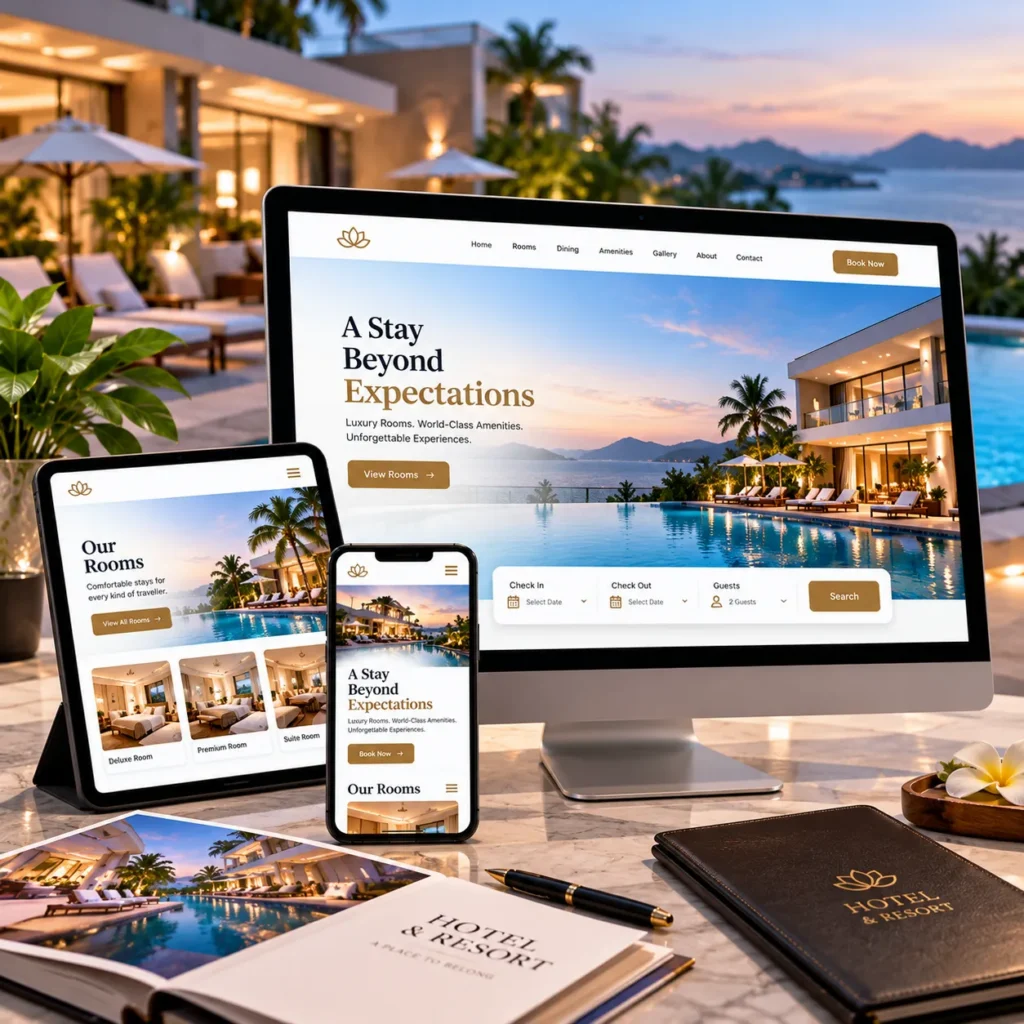
- Why It's Matters
Why Is Hotel Website Development Important for Your Hospitality Business?
Travelers often search online when comparing hotels, checking room facilities, reviewing amenities, and planning their stays. Before choosing a property, they may want to view room photographs, understand available facilities, compare room types, check location details, and explore booking options. If your hotel website is outdated, difficult to navigate, or unavailable on mobile devices, potential guests may find it harder to evaluate your property and complete a reservation. Professional Hotel Website Development helps you present your property, rooms, amenities, and hospitality services through a well-organized digital platform. A responsive design, clear room information, convenient booking options, and reliable technical performance can improve the guest experience. An SEO-friendly website structure also provides a foundation for promoting your property through organic search and other digital marketing activities.
Present your hotel through a website that reflects its brand, property style, facilities, and hospitality standards. Consistent branding, quality photographs, clear content, and organized layouts help visitors understand what your property offers.
Display room categories, photographs, facilities, dining options, event spaces, and other available amenities through dedicated website sections. Detailed property information helps prospective guests compare options and understand what to expect before making a reservation.
Make it easier for visitors to explore room options, check availability, and proceed with reservation enquiries or bookings. Suitable booking functionality can reduce unnecessary steps and help guests access the information they need to plan their stay.
Ensure your website works smoothly on smartphones, tablets, and desktop screens. Responsive Hotel Website Design makes room details, photographs, location information, and booking options easier to access while travelers browse on the go.
Give guests a convenient way to explore reservations through your own website. Depending on your requirements, integrations with booking engines, payment gateways, or enquiry forms can support direct reservation workflows and reduce reliance on external discovery platforms.
Build a website with descriptive URLs, organized room and service pages, appropriate metadata, and a logical internal linking structure. These foundations help search engines understand your property and support future SEO campaigns targeting relevant hotel and accommodation searches.
Provide accurate details about room facilities, check-in and check-out policies, amenities, location, contact information, and other important booking considerations. Clear and accessible information helps guests make better-informed decisions before contacting or booking your property.
Create a flexible website that can accommodate new room categories, additional facilities, restaurant pages, event spaces, promotional offers, or new property locations. A scalable website structure makes it easier to update your digital presence as your hospitality business evolves.
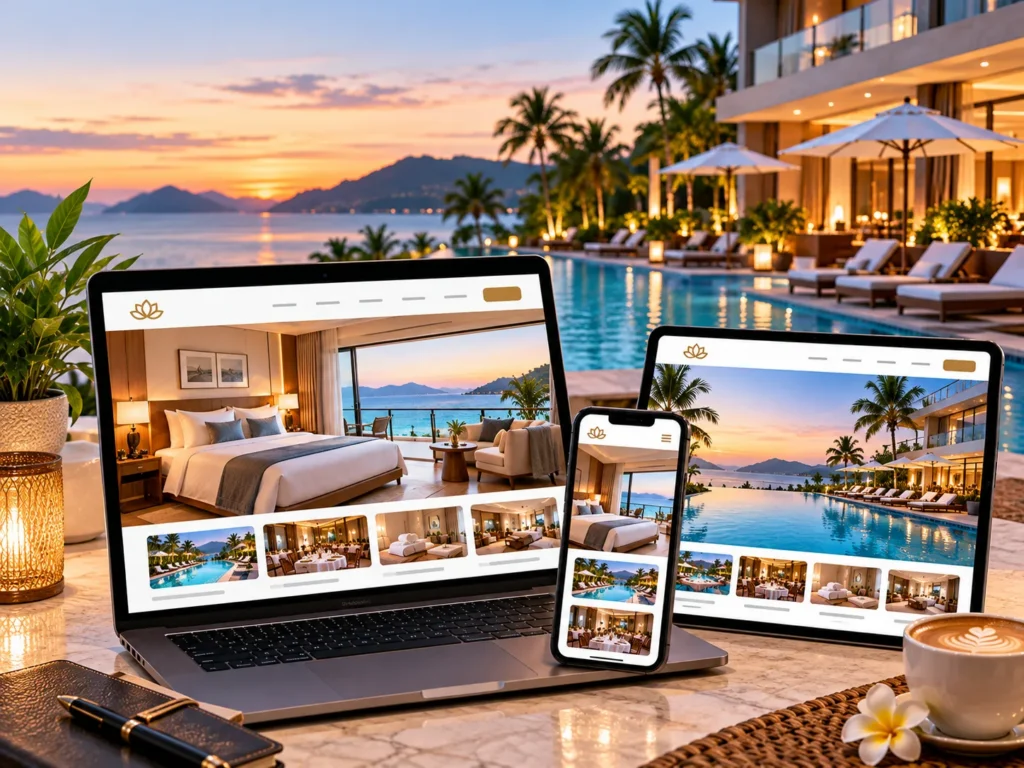
- Services
What Hotel Website Development ServicesDo We Offer for Your Business Growth?
DigitalClouds provides Hotel Website Development Services tailored to your property type, room categories, guest expectations, and business objectives. We create professional, responsive, and SEO-friendly websites that showcase your accommodation, highlight hospitality services, and simplify the guest journey from exploring your property to making a reservation.
Custom Hotel Website Design and Development
We design and develop websites that reflect your hotel's brand identity, atmosphere, and service standards. From visual layouts and page organization to tailored functionality, we create a digital platform suited to your property's requirements and guest expectations.
Hotel Room and Property Showcase
We present room categories, accommodation features, property photographs, amenities, and guest facilities through organized website sections. Detailed descriptions and image galleries help visitors compare room options and understand what your property offers before planning their stay.
Hotel Booking System Integration
We integrate suitable reservation systems based on your booking process and operational requirements. Depending on the selected solution, features can include room availability, reservation forms, booking confirmations, and payment processing to help guests complete their bookings conveniently.
Responsive UI/UX Design
We develop mobile-friendly interfaces with intuitive navigation, readable content, and clearly presented reservation options. Responsive layouts ensure guests can browse room details, explore amenities, and access important hotel information across smartphones, tablets, and desktop devices.
SEO-Friendly Hotel Website Structure
We organize your website with descriptive URLs, optimized metadata, structured headings, internal links, and logical navigation. This technical foundation supports search engine accessibility and future SEO campaigns targeting hotel accommodations, property amenities, and relevant location-based searches.
Payment Gateway and Third-Party Integrations
We connect your website with suitable payment gateways, booking engines, channel managers, maps, and other hospitality tools as required. Integrations are planned around your existing systems, provider compatibility, API availability, and intended reservation workflow.
Hotel Offers, Dining, and Event Pages
We create dedicated sections for special packages, restaurant services, conference facilities, wedding venues, and corporate events. These pages help guests discover additional offerings, explore available facilities, and consider more options during their stay.
Website Speed and Security Optimization
We improve website performance through image compression, caching configuration, mobile usability checks, HTTPS setup, and technical error resolution. Appropriate security measures and backup planning also help protect website operations and maintain a reliable browsing experience.
Hotel Website Maintenance and Support
We help keep your website current and functional with room information updates, offer revisions, software updates, backups, security checks, and technical troubleshooting. Depending on your maintenance plan, we also review booking forms and website performance to support ongoing operations.
- WHY DIGITALCLOUDS
Why Choose DigitalClouds for Hotel Website Development Services?
DigitalClouds combines website strategy, UI/UX design, development, and technical optimization to create websites suited to hospitality businesses. Our approach considers how guests explore properties, compare room options, review facilities, and make reservations. We tailor each project to your hotel’s requirements, whether you need a simple property showcase website or a more advanced platform with booking functionality and third-party integrations.
Hotel-Focused Website Strategy
We plan your website around your property type, room categories, amenities, target guests, and business objectives. This helps ensure that the structure and features reflect your actual hospitality services and provide relevant information to prospective guests.
Guest-Friendly Website Design
We focus on clear navigation, attractive room presentation, readable content, and convenient access to booking information. Our Hotel Website Design approach helps visitors explore your property and find essential details without unnecessary navigation.
Booking and Integration Planning
We assess your reservation process and recommend suitable booking functionality based on your requirements. Whether you need enquiry forms, booking engine integration, payment processing, or availability management, we plan the necessary features according to the selected technology and project scope.
Responsive Development and Technical Foundations
We develop responsive websites and review important technical elements, including page speed, mobile usability, search engine accessibility, and website functionality. These foundations support a better guest experience and make ongoing website improvements easier to manage.
Scalable Website Structure
We organize website pages so your property can add new room categories, amenities, restaurants, event facilities, or promotional sections as needed. A flexible structure helps accommodate future business requirements without requiring a complete redesign for every update.
Ongoing Support and Transparent Delivery
We follow a defined process covering requirements, design, development, testing, and launch. We communicate the agreed features, deliverables, and support scope clearly so you understand how your hotel website will be developed and maintained.
- Our Process
How Does Our Hotel Website Development Process Work?
Our Hotel Website Development process focuses on understanding your property, planning a clear website structure, creating an engaging design, and implementing the functionality your hospitality business needs. We begin by reviewing your property details, room categories, guest requirements, booking workflow, and existing online presence. Each stage addresses specific design, development, usability, security, and technical considerations to build a website that supports your business objectives.
Step 01 of 08 · Website Analysis
Hotel Website Audit and Competitor Analysis
Evaluate your existing website, understand your property requirements, and identify opportunities for improvement before development begins.
We review your current website, if available, to understand its design, functionality, content structure, and technical condition. We also assess relevant hotel websites to identify useful features, guest expectations, and opportunities to create a more effective digital experience for your property.
Our website audit and competitor analysis activities include:
- Existing Website Assessment: Review your current website's design, navigation, page structure, room information, and functionality to identify outdated elements and areas requiring improvement.
- Property Information Review: Evaluate how your hotel presents room categories, amenities, dining facilities, location details, and other services guests may want to explore before making reservations.
- Competitor Website Analysis: Examine relevant hotel websites to understand their layouts, room presentation, booking pathways, guest information sections, and features that support easier property exploration.
- Guest Journey Assessment: Identify the information visitors need when comparing rooms, checking facilities, reviewing policies, finding your property, and deciding whether to enquire or make a reservation.
- Mobile Usability Review: Assess how your website displays on smartphones and tablets, including navigation menus, room galleries, contact details, and booking elements that guests frequently access.
- Technical Performance Audit: Review page loading speed, broken links, HTTPS configuration, website responsiveness, and existing functionality to identify technical issues affecting usability or reliability.
- Content Gap Identification: Identify missing room descriptions, incomplete amenity details, outdated policies, unclear contact information, and other content gaps that may prevent guests from understanding your property.
- Development Opportunity Planning: Prepare a prioritized list of design improvements, required features, technical changes, and content updates based on your hotel's objectives and current website condition.
Step 02 of 08 · Website Planning
Hotel Website Structure and Requirement Planning
Establish a clear website structure that organizes your rooms, amenities, hospitality services, and booking options according to guest needs.
Website planning defines the pages, content sections, and features required to support your hotel's operations and online presence. We organize the information architecture around your property and reservation process, making it easier for visitors to explore accommodation options and locate important information.
Our website planning activities include:
- Website Sitemap Creation: Develop a structured sitemap covering the homepage, room categories, property information, amenities, contact details, and other relevant pages required for your hotel website.
- Room Category Planning: Organize different room types according to their names, occupancy details, facilities, photographs, and other information guests need when comparing accommodation options.
- Hospitality Service Mapping: Identify pages for restaurants, conference facilities, recreational amenities, wedding venues, or additional services that your property genuinely provides to guests.
- Guest Information Planning: Determine where to present check-in and check-out policies, location details, parking information, cancellation terms, contact options, and other essential booking information.
- Booking Workflow Planning: Map how visitors will explore rooms, check availability, submit enquiries, proceed to a booking engine, or complete reservations through the selected system.
- Functionality Requirement Documentation: Define requirements for enquiry forms, image galleries, maps, payment integrations, reservation features, and other functionality according to your property's operational needs.
- Content and Navigation Planning: Establish page relationships, menu categories, internal links, and content priorities so visitors can find room information and facilities without unnecessary navigation.
- Future Expansion Planning: Consider how additional room categories, facilities, promotional offers, or new property locations can be incorporated as your hospitality business grows.
Step 03 of 08 · UI/UX Design
Hotel Web Design and Guest Experience Planning
Create an attractive, intuitive design that showcases your property and makes essential information easy for guests to access.
The design stage transforms your requirements into a visual website experience. We plan layouts, typography, colors, photographs, navigation, and calls to action to reflect your property's identity while keeping room information and booking options easy to find.
Our UI/UX design activities include:
- Homepage Layout Design: Design a clear homepage that introduces your property, highlights key amenities, showcases selected rooms, and directs visitors toward important pages and reservation options.
- Room Page Design: Create consistent layouts for room photographs, descriptions, occupancy information, facilities, and other details guests need to compare available accommodation options.
- Property Showcase Design: Arrange professional property photographs, facility highlights, dining information, and recreational amenities into visually organized sections that communicate your hotel's features clearly.
- Navigation and Menu Design: Plan intuitive menus, page categories, and navigation pathways that help visitors move between room pages, facilities, location information, and contact sections.
- Booking Interface Design: Design clear booking buttons, enquiry forms, and reservation pathways that help guests understand how to check availability or proceed with the selected booking process.
- Typography and Visual Consistency: Select suitable typography, colors, spacing, and visual elements that support your hotel's brand identity while maintaining readability across different website sections.
- Mobile-First Layout Planning: Adapt important content and interactive elements for smaller screens so guests can comfortably browse room details, view photographs, and access contact options.
- Accessibility and Usability Review: Review text readability, color contrast, button placement, navigation clarity, and other relevant design considerations to make the website easier to use.
Step 04 of 08 · Website Development
Custom Hotel Web Development and Functionality
Convert the approved design into a working website with organized content, responsive layouts, and functionality suited to your hotel.
During development, we implement the approved page layouts, content structure, and agreed features. The technology and implementation approach depend on your requirements, content management needs, integrations, and future maintenance plans.
Our website development activities include:
- Frontend Website Development: Build the approved layouts, navigation, room sections, image galleries, and interactive elements to create a consistent experience across supported browsers and devices.
- Content Management System Setup: Configure a suitable content management platform, such as WordPress where appropriate, so authorized staff can update room information, photographs, and property details.
- Room and Facility Page Development: Create structured pages for room categories, amenities, dining facilities, recreational services, and other offerings your property provides to prospective guests.
- Homepage and Property Page Development: Implement the homepage, about section, property overview, location information, and other planned pages according to the approved website structure.
- Interactive Feature Implementation: Develop agreed features such as image sliders, expandable information sections, enquiry forms, maps, and other elements that support property exploration.
- Responsive Coding and Layouts: Implement layouts that adapt to mobile phones, tablets, laptops, and desktop screens while keeping important information and functionality accessible.
- Third-Party Integration Setup: Connect compatible external tools, such as booking engines, maps, payment gateways, or other hospitality platforms, according to the approved requirements.
- Website Functionality Validation: Check important pages, links, navigation menus, forms, and interactive features during development to identify problems before the formal testing stage.
Step 05 of 08 · Booking and Payment Integration
Hotel Reservation System and Booking Functionality Setup
Provide guests with a convenient reservation pathway that matches your hotel's booking process and operational requirements.
Booking functionality depends on how your hotel manages room availability, reservations, payments, and confirmations. We assess the required features and selected providers before implementation to ensure that the booking experience is practical for both guests and hotel staff.
Our booking and payment integration activities include:
- Booking Engine Integration: Connect a suitable third-party booking engine when required, allowing guests to continue through the provider's supported reservation workflow from your website.
- Room Availability Display: Configure room availability features through the selected booking system where supported, helping visitors explore available accommodation options before proceeding with a reservation.
- Reservation Form Development: Create enquiry or reservation forms that collect appropriate guest details and booking preferences according to your hotel's established reservation process.
- Payment Gateway Integration: Integrate a compatible payment provider when required, subject to provider approval, account configuration, technical access, and the agreed payment workflow.
- Booking Confirmation Configuration: Configure available confirmation messages, email notifications, or booking acknowledgements according to the capabilities of the selected reservation system and your requirements.
- Booking Policy Presentation: Display relevant information about check-in times, cancellation conditions, occupancy limits, payment requirements, and other booking policies to help guests understand the terms.
- Channel Manager Compatibility Review: Assess whether your selected channel manager can connect with the website's booking solution to support the required availability and reservation synchronization.
- Reservation Workflow Testing: Test the configured booking pathway, form submissions, payment steps, and confirmation behavior to identify issues before the website is launched.
Step 06 of 08 · SEO and Technical Optimization
SEO-Friendly Hotel Website Setup
Build a technical foundation that supports search engine discovery, website usability, and future hospitality SEO activities.
Hotel web development should consider website structure, metadata, page speed, mobile usability, and indexing accessibility from the beginning. We optimize relevant technical elements so search engines can better understand your property pages and visitors can access important information efficiently.
Our SEO and technical optimization activities include:
- SEO-Friendly URL Structure: Create descriptive URLs for room categories, property facilities, restaurants, event spaces, and other important pages to support clear website organization.
- Metadata and Heading Optimization: Configure relevant title tags, meta descriptions, and logical heading structures that describe each page accurately and help organize its content.
- Internal Linking Structure: Connect room pages, amenities, location information, offers, and supporting articles through relevant internal links to improve navigation and content discovery.
- Crawling and Indexing Checks: Review XML sitemaps, robots directives, indexing settings, and canonical signals where relevant to help search engines access the correct website pages.
- Website Speed Optimization: Assess image sizes, caching, scripts, and other performance factors to identify practical improvements that help visitors access room information more smoothly.
- Mobile Performance Review: Evaluate mobile layouts, image loading, navigation, readable text, and booking buttons to identify issues affecting visitors using smartphones and tablets.
- Structured Data Implementation: Review suitable structured data for the property and its content where applicable, ensuring markup accurately reflects visible information and follows search engine guidelines.
- Technical Error Resolution: Identify and address relevant broken links, incorrect redirects, duplicate URL issues, and other technical problems according to the website's configuration and development scope.
Step 07 of 08 · Content Integration and Quality Assurance
Hotel Website Content, Image Optimization, and Testing
Present accurate property information, showcase your facilities effectively, and verify the website before publication.
A hotel website should communicate room details, facilities, policies, and services clearly. We integrate approved content and property photographs into the planned layouts, then test the website to identify missing information, display inconsistencies, and functionality issues that could affect the guest experience.
Our content integration and quality assurance activities include:
- Room Description Integration: Add approved room descriptions, occupancy details, amenities, and relevant booking information to the appropriate pages so guests can compare accommodation options.
- Property and Facility Content: Organize approved information about dining, recreation, parking, event spaces, and other amenities to help visitors understand the facilities available at your property.
- Image Optimization and Gallery Setup: Organize property photographs into suitable galleries and optimize image sizes and formats to balance visual quality with website loading performance.
- Promotional Content Integration: Add approved packages, seasonal offers, special services, and other promotions while ensuring that displayed prices, conditions, and availability information are accurate.
- Content Accuracy and Consistency Checks: Review room names, contact details, policies, service descriptions, links, and other important information to identify inconsistencies before launch.
- Cross-Browser Compatibility Testing: Check key website pages and interactions across supported browsers to identify display problems, navigation issues, and inconsistent functionality.
- Responsive Website Testing: Review room galleries, text, menus, buttons, forms, and contact details on mobile phones, tablets, and desktop screens to confirm that the layouts remain usable.
- Form and Booking Feature Testing: Test configured enquiry forms, reservation links, confirmation messages, and other agreed features to verify that they function as intended before publication.
Step 08 of 08 · Launch and Ongoing Support
Hotel Website Launch, Maintenance, and Performance Review
Launch your website carefully and maintain its content, functionality, and technical condition as your hospitality business evolves.
The launch stage involves checking the website's technical configuration, verifying key pages, and confirming that agreed features work correctly. After launch, ongoing maintenance may be required to update room information, refresh offers, apply software updates, and address technical issues.
Our launch and support activities include:
- Pre-Launch Checklist: Review important pages, room information, facility details, contact information, navigation, and agreed functionality before making the website publicly accessible.
- Domain and Hosting Configuration: Assist with the required domain, hosting, HTTPS, and deployment settings according to the project's technical requirements and agreed responsibilities.
- Website Migration and Redirects: Where applicable, plan the migration of existing pages and configure appropriate redirects when URLs change during the website redesign or replacement process.
- Search Engine Setup: Review sitemap accessibility and indexing settings, with Google Search Console configuration included where agreed as part of the project.
- Post-Launch Functionality Checks: Verify important website sections, enquiry pathways, booking links, payment integrations, and technical settings after deployment to identify any launch-related issues.
- Content and Offer Updates: Support agreed updates to room descriptions, photographs, facilities, promotional packages, policies, and contact information as your property details change.
- Security and Backup Maintenance: Perform agreed software updates, security checks, and backup activities based on the website platform, hosting environment, and selected maintenance arrangement.
- Performance Review and Technical Support: Review reported website issues and relevant performance information to identify opportunities for improvements, troubleshooting, and future development based on your business needs.
What Are Event Management Website Development Services and Why Are They Important?
Hotel Website Development Services focus on creating a professional digital platform where travellers can explore your property, compare room options, review facilities, and make reservations. A well-planned website communicates your hotel’s identity, answers common guest questions, and helps visitors feel confident before choosing their accommodation. It also gives hotel owners greater control over their online presentation, promotional campaigns, and direct booking opportunities.
A professionally developed hotel website can contribute to your property’s growth in several ways:
- Present Your Property Professionally: Showcase your hotel rooms, reception areas, restaurants, landscaped spaces, and guest facilities through high-quality photographs and organised content that communicates the property’s comfort, atmosphere, and overall hospitality experience.
- Generate More Direct Reservations: Provide convenient access to room information, availability checks, booking forms, and reservation systems so travellers can book directly through your website instead of relying exclusively on third-party accommodation platforms.
- Improve Online Discoverability: Create a search-friendly website with relevant accommodation information, location details, and useful landing pages that help potential guests discover your property when researching hotels in their preferred destination.
- Build Confidence Before Arrival: Publish accurate information about room facilities, check-in procedures, cancellation conditions, payment methods, and guest policies so visitors can make informed decisions without contacting your hotel for every basic detail.
- Promote Additional Hospitality Services: Highlight your restaurant, conference facilities, banquet halls, airport transfers, recreational amenities, and other offerings to attract corporate clients, families, event organisers, and travellers with different requirements.
- Strengthen Your Hotel Brand: Use consistent visual elements, professional photography, distinctive messaging, and a well-organised layout to communicate your property’s positioning, whether it operates as a luxury hotel, business hotel, resort, or budget accommodation.
- Simplify Guest Enquiries: Integrate contact forms, click-to-call buttons, email links, and messaging options that help prospective guests ask about group accommodation, long stays, special requests, and customised packages.
- Support Long-Term Marketing: Establish a website that can accommodate future promotions, additional room categories, destination guides, seasonal campaigns, and new services as your hotel’s business objectives and marketing requirements evolve.
How Can Hotel Web Development Help Increase Room Reservations?
Hotel web development can help increase room reservations by making the accommodation discovery and booking process easier, clearer, and more convenient. Travellers often compare several properties before confirming a stay, so your website should explain the value of your rooms, communicate booking conditions, and provide a straightforward path from browsing to reservation. The final results depend on factors such as pricing, location, service quality, website usability, and demand.
The following website features and strategies can help encourage more bookings:
- Simplify the Reservation Process: Place clearly labelled booking buttons and availability options in prominent locations so visitors can move from viewing your rooms to checking dates and submitting reservations without navigating through confusing menus.
- Display Complete Room Details: Present room photographs, bed configurations, maximum occupancy, amenities, views, and applicable rates so guests can compare accommodation choices and select an option that suits their travel plans and budget.
- Explain Booking Conditions Clearly: Display check-in and check-out times, cancellation policies, advance payment requirements, extra guest charges, and refund conditions before confirmation to reduce uncertainty and prevent misunderstandings after reservations are made.
- Create Targeted Promotional Pages: Develop dedicated pages for family holidays, business stays, weekend packages, honeymoon arrangements, and seasonal offers to communicate relevant benefits to travellers searching for specific accommodation experiences.
- Optimise the Mobile Booking Experience: Ensure booking forms, date selectors, room galleries, and reservation buttons work smoothly on smartphones so travellers can explore accommodation and complete their bookings without struggling with small controls or crowded layouts.
- Integrate Suitable Booking Technology: Connect your website with an appropriate booking engine or property management system when required to manage availability, reservation details, rate information, and booking confirmations more efficiently.
- Build Credibility Throughout the Website: Include genuine guest feedback, accurate property photographs, transparent pricing information, and secure booking functionality to address common concerns that may otherwise discourage visitors from proceeding with a reservation.
- Encourage Enquiries for Special Bookings: Provide dedicated enquiry options for corporate stays, weddings, conferences, tour groups, and extended accommodation requests where guests may need customised pricing or additional information before confirming their plans.
What Services Should a Hotel Website Development Company Provide?
A hotel website development company should understand the relationship between property presentation, guest expectations, reservation management, and online marketing. Beyond creating an attractive layout, the company should plan the website around your accommodation categories, operational requirements, target audience, and long-term business goals. The scope of work should also clarify which features require third-party subscriptions, external integrations, or ongoing maintenance.
When evaluating a development partner, consider the following services:
- Website Strategy and Planning: Assess your hotel category, target guests, location, room inventory, facilities, competitors, and business priorities before preparing a sitemap and feature plan that supports both guest information needs and reservation goals.
- Custom Hotel Website Design: Develop a visual experience that reflects your property’s character, from a premium city hotel to a family resort, while maintaining readable content, consistent branding, accessible navigation, and clear booking prompts.
- Responsive Website Development: Build layouts that adapt to desktops, tablets, and smartphones, ensuring visitors can browse accommodation details, review facilities, navigate between pages, and use essential website functions across different screen sizes.
- Room and Facility Management: Create organised sections for room categories, restaurants, conference halls, recreational facilities, and other services, with a manageable content structure that allows authorised hotel staff to update information when necessary.
- Booking Engine Integration: Implement a suitable reservation solution based on your hotel’s booking process, with consideration for room availability, rate plans, guest information, booking confirmations, and integration requirements specified by the chosen provider.
- Hotel Website SEO: Optimise page titles, headings, URLs, image descriptions, internal links, and relevant accommodation content to improve search engine understanding and support visibility for suitable hotel and destination-related searches.
- Security and Technical Maintenance: Configure appropriate SSL protection, software updates, backups, access controls, and monitoring procedures to reduce avoidable technical risks and help keep your hotel’s website dependable after launch.
- Quality Testing and Launch Assistance: Test important pages, enquiry forms, booking links, mobile layouts, website speed, and navigation before launch, then provide handover guidance so your team understands how to manage the website.
How Is Hotel Website Design and Development Different From Regular Business Websites?
Hotel Website Design and Development must address the way travellers research accommodation, evaluate property facilities, compare room categories, and make reservations. A conventional business website may focus mainly on describing services and collecting enquiries, whereas a hotel website often needs detailed room presentations, booking functionality, guest policies, destination information, and hospitality-focused conversion paths.
These requirements influence the website’s design, structure, and technical functionality:
- Visual Storytelling: Hotel websites use property photography, room interiors, dining images, and destination visuals to help visitors understand the atmosphere and experience they can expect, rather than relying solely on written descriptions of services.
- Detailed Accommodation Presentation: Each room category may need its own information about bed arrangements, occupancy limits, amenities, room size, views, and included services so guests can compare options without repeatedly contacting reception.
- Reservation-Oriented Navigation: Menus, room pages, promotional sections, and calls to action should guide visitors towards availability checks and bookings while keeping essential information accessible throughout the website.
- Room Availability and Rate Management: Depending on the chosen technology, the website may connect with booking engines, property management systems, or channel managers to synchronise inventory and pricing across supported sales channels.
- Guest Policies and Stay Information: Dedicated sections should explain check-in procedures, cancellation conditions, deposits, additional guest charges, child policies, and other property rules that influence a traveller’s decision to reserve a room.
- Destination-Based Content: Hotels can publish useful information about nearby tourist attractions, transport links, business centres, restaurants, and local experiences to help travellers evaluate the property’s location before choosing their accommodation.
- Multiple Revenue Opportunities: In addition to room bookings, the website may promote restaurant reservations, conference facilities, wedding venues, spa services, and holiday packages that generate enquiries for other hotel offerings.
- Operational Software Connections: Depending on the property’s requirements, the website may need integrations with reservation platforms, payment gateways, property management systems, customer communication tools, or other software used by the hotel team.
What Pages Should a Professional Hotel Website Include?
A professional hotel website should organise information around the questions travellers typically ask before booking. Visitors need to understand the property’s location, room options, available facilities, pricing conditions, and reservation process without searching through unrelated content. The final sitemap should reflect the size of the hotel, its service offerings, and the information guests need to make a confident booking decision.
The following pages can form a useful foundation for a hotel website:
- Homepage: Introduce the hotel through an engaging headline, property photography, a concise overview, prominent booking options, key amenities, and location information that quickly helps visitors understand the property’s main benefits.
- Rooms and Suites Page: Present each accommodation category with suitable photographs, bed configurations, occupancy limits, room facilities, and relevant booking information so guests can compare available options before selecting their preferred stay.
- Amenities and Facilities Page: Explain the services available at the property, including Wi-Fi, parking, room service, accessibility features, recreational spaces, business facilities, and other amenities that may influence the guest’s accommodation decision.
- Restaurant and Dining Page: Showcase the hotel’s restaurant, cuisine options, dining atmosphere, operating hours, menu highlights, and reservation arrangements where applicable, helping guests understand the food services available during their stay.
- Offers and Packages Page: Promote suitable seasonal discounts, weekend stays, family packages, corporate accommodation, honeymoon arrangements, or extended-stay options, with clear eligibility conditions and booking instructions for each offer.
- About the Hotel Page: Share the property’s background, hospitality philosophy, distinctive features, and service approach to communicate its identity and help potential guests understand what differentiates it from competing accommodation providers.
- Location and Attractions Page: Provide the hotel address, map directions, transport information, nearby landmarks, business districts, and relevant tourist attractions so visitors can assess travel convenience before making their reservations.
- Contact and Booking Page: Display verified contact details, enquiry forms, reservation links, and essential booking guidance, allowing visitors to contact the hotel easily when they need assistance or personalised accommodation arrangements.
What Features Should a Hotel Website Have?
A hotel website needs features that support property discovery, room comparison, reservation enquiries, and communication with potential guests. The right functionality depends on whether your property accepts direct online bookings, manages reservations through external platforms, or handles enquiries manually. Choosing features according to actual operational requirements can improve the visitor experience without making the website unnecessarily complicated.
Consider including these important hotel website features:
- Online Booking Functionality: Provide a reservation interface that allows guests to select travel dates, review available accommodation, enter guest details, and proceed through the booking process according to the capabilities of your chosen booking solution.
- Room Gallery and Image Displays: Organise high-quality photographs by room category and facility, using descriptive labels and appropriately sized images to help visitors evaluate accommodation while maintaining reasonable page loading performance.
- Availability and Rate Information: Where supported by the booking system, display current room availability and applicable rates so travellers can compare options for their selected dates before proceeding with a reservation.
- Secure Payment Integration: If your hotel accepts online payments, integrate a suitable payment provider and clearly communicate the payment process, supported methods, transaction conditions, and relevant refund policies to guests.
- Mobile-Friendly Navigation: Use readable text, touch-friendly buttons, simple menus, and responsive layouts so guests can find room details, contact the property, and access booking options conveniently from smartphones and tablets.
- Guest Reviews and Testimonials: Present authentic guest feedback through appropriate website sections or supported review integrations, helping visitors understand previous customer experiences without making misleading claims or displaying unverified endorsements.
- Enquiry and Contact Forms: Allow visitors to submit questions about room availability, group accommodation, banquet bookings, or corporate rates, while collecting only the information necessary to respond to their requests.
- Content Management and Integration Options: Use a manageable content system and suitable third-party integrations so authorised staff can update room descriptions, offers, contact information, and other website content without requiring a developer for every routine change.
How Does Mobile-Friendly Hotel Website Development Improve the Guest Experience?
Mobile-Friendly Hotel Website Development ensures that travellers can access essential hotel information from smartphones and tablets without struggling with small text, poorly arranged content, or difficult booking forms. Many guests research accommodation while travelling or planning trips on mobile devices, making responsive design important for accessibility, convenience, and reservation enquiries. A mobile-friendly experience should provide the same essential information as the desktop website in a layout suited to smaller screens.
These improvements can make the website more convenient for mobile visitors:
- Improve Information Accessibility: Arrange room details, amenities, location information, and hotel policies into readable sections so visitors can find answers quickly without zooming in or navigating through oversized desktop-style layouts.
- Simplify Mobile Reservations: Optimise date selectors, guest-count fields, form controls, and booking buttons for touch interaction, reducing unnecessary effort when travellers check availability or submit their accommodation details.
- Make Contacting the Hotel Easier: Add click-to-call telephone links, accessible email options, and suitable messaging links so mobile visitors can contact reception without manually copying phone numbers or switching repeatedly between applications.
- Improve Image Display: Optimise room photographs and property visuals for different screen sizes, ensuring that guests can examine accommodation features clearly without excessive loading times or unnecessary mobile data consumption.
- Support Location-Based Decisions: Present the hotel address, map access, nearby landmarks, and transport information in a mobile-friendly format so travellers can evaluate the property’s location and navigate to it more conveniently.
- Reduce Booking Form Friction: Keep mobile forms concise, label fields clearly, and provide understandable validation messages so visitors can correct mistakes and complete reservation enquiries with less frustration.
- Maintain Consistent Brand Presentation: Apply consistent colours, typography, photography, and content structure across devices so visitors receive a professional impression whether they first discover the hotel on a phone or return later on a computer.
- Support Mobile Search Performance: Combine responsive layouts with efficient images, appropriate caching, and sound technical implementation to improve usability and support search engine performance, while recognising that rankings also depend on relevance, competition, and other SEO factors.
How Long Does Hotel Website Development Take?
The time required for hotel website development depends on the number of pages, design complexity, content readiness, booking requirements, third-party integrations, and approval process. A small property website with basic room information may require less work than a multi-property hotel platform with advanced reservation functionality and multiple room categories. A reliable timeline should account for planning, design, development, content entry, testing, and launch preparation.
The following factors commonly influence the project schedule:
- Project Planning and Requirements: The initial stage establishes your hotel’s objectives, target audience, website structure, room categories, required features, and technical dependencies, helping the development team estimate the work before implementation begins.
- Website Structure and Page Count: A website with a homepage, rooms page, amenities page, and contact page generally requires less content preparation and testing than a larger website covering restaurants, events, multiple properties, and destination guides.
- Custom Design Requirements: Bespoke layouts, specialised animations, interactive room presentations, and distinctive branding may require additional design reviews and revisions compared with a simpler layout based on an established website framework.
- Content and Photography Preparation: Delays can occur when room descriptions, facility information, policies, professional photographs, menus, or promotional details are unavailable, so preparing accurate materials early can help keep the project moving.
- Booking Engine Integration: Connecting the website to an external reservation platform may involve provider documentation, account configuration, technical testing, and commercial approvals that influence the overall delivery schedule.
- Payment and Software Integrations: Payment gateways, property management systems, channel managers, and other third-party tools can require additional configuration and testing, particularly when the hotel uses specialised software or custom operational workflows.
- Testing and Client Approvals: Time must be allocated for reviewing page layouts, checking mobile functionality, verifying booking links, correcting content issues, and receiving final approval before the website is made publicly available.
- Post-Launch Improvements: Website launch may be followed by further optimisation, content updates, analytics configuration, and usability improvements, allowing the property to refine its online experience based on actual visitor behaviour and business priorities.
How Much Do Hotel Website Development Services Cost in Bangalore?
The cost of Hotel Website Development Services in Bangalore depends on the website’s size, design requirements, booking functionality, integrations, content needs, and ongoing support arrangements. A basic hotel website with room information and enquiry forms has different development requirements from a reservation-enabled platform connected to hotel management software. An accurate estimate should identify the required deliverables and separate one-time development charges from recurring third-party or maintenance expenses.
These factors can influence the overall development budget:
- Number of Website Pages: A smaller website with essential hotel information generally involves less design and content work than a larger platform with individual room categories, restaurant pages, event facilities, destination guides, and dedicated promotional landing pages.
- Custom Design Complexity: A hotel requesting original visual concepts, detailed room galleries, specialised layouts, and tailored interactions may require more design and development effort than a property choosing a simpler, professionally customised theme.
- Booking Engine Requirements: Basic reservation enquiries usually involve less technical complexity than a direct booking system supporting date selection, availability checks, rate plans, guest information, and automated booking confirmations.
- Third-Party Integration Costs: Booking platforms, payment providers, property management systems, channel managers, and other software services may charge separate subscription, transaction, or implementation fees depending on the provider and chosen service plan.
- Content and Photography Services: Professional room photography, copywriting, property descriptions, destination content, and image editing may affect the project budget when these materials need to be created rather than supplied by the hotel.
- Search Engine Optimisation: Initial SEO setup, keyword research, technical optimisation, location-focused content, and structured page organisation can add to the project scope, especially when the hotel requires more than a basic website launch.
- Security and Maintenance Requirements: Ongoing backups, software updates, technical monitoring, security support, and content changes may require a separate maintenance agreement based on the website platform and expected level of assistance.
- Future Expansion and Scalability: Planning for additional room categories, new property locations, multilingual content, or more advanced booking functionality may influence the initial investment, but the appropriate approach depends on realistic business requirements and budget.
How Can Hotel Website Development Improve SEO and Online Visibility?
Hotel Website Development can support SEO by creating a technically sound website with organised pages, useful accommodation information, descriptive metadata, and content that matches what travellers search for. Search visibility also depends on competition, website authority, content quality, location relevance, and other factors beyond development alone. Combining website development with a structured SEO strategy can help your hotel improve its chances of appearing for relevant accommodation and destination-related searches.
The following practices can support your hotel’s search visibility:
- Create Search-Friendly Page Structures: Organise the homepage, room pages, amenities, dining services, and location information under a logical hierarchy so search engines and visitors can understand how the hotel’s content is connected.
- Optimise Titles and Meta Descriptions: Write relevant page titles and descriptions that accurately communicate the hotel’s accommodation, location, and services, helping search engines interpret each page and giving searchers useful context in results.
- Develop Location-Relevant Content: Include accurate destination information, nearby attractions, transport connections, and appropriate local accommodation terms to make the website more relevant to travellers researching stays in your hotel’s area.
- Improve Website Loading Performance: Optimise photographs, reduce unnecessary scripts, configure suitable caching, and review page performance so visitors can access room information and booking options without avoidable delays.
- Use Descriptive Image Information: Apply meaningful image filenames and appropriate alternative text to explain room photographs and hotel facilities, improving accessibility while helping search engines understand the visual content.
- Implement Suitable Structured Data: Use relevant structured data where appropriate, such as applicable lodging or local business information, and validate the implementation to help search engines interpret eligible details without guaranteeing enhanced search displays.
- Strengthen Internal Linking: Link related pages such as rooms, amenities, dining, offers, and location guides so visitors can explore relevant information while search engines discover the relationships between different website sections.
- Support Local SEO Efforts: Keep the hotel’s name, address, telephone number, and other important business details accurate, and align the website with its Google Business Profile and broader local search strategy.
Can Small Hotels and Independent Properties Benefit From a Professional Website?
Yes, small hotels, guesthouses, boutique properties, lodges, and independently managed accommodation businesses can benefit from a professional website. A smaller property does not necessarily need a complicated booking platform; it needs a website that communicates its value, displays accurate room information, and makes it easy for guests to enquire or reserve accommodation. The right approach depends on the property’s size, budget, booking process, and growth plans.
A professionally developed website can offer independent properties several advantages:
- Establish a Dedicated Online Presence: Create an official platform where travellers can find verified property information, photographs, contact details, room descriptions, and policies without depending entirely on listings controlled by external accommodation platforms.
- Highlight Unique Property Features: Present personal hospitality, local experiences, distinctive architecture, family-friendly facilities, peaceful surroundings, or other genuine advantages that help your accommodation appeal to the travellers most likely to choose it.
- Generate Direct Enquiries: Add simple contact forms, telephone links, and reservation options so visitors can ask about availability, group stays, room preferences, and special arrangements without navigating complicated booking processes.
- Manage Development Costs: Start with essential pages and practical features, then introduce more advanced functionality when the property’s requirements justify the additional investment rather than paying for unnecessary systems from the beginning.
- Improve Local Search Opportunities: Publish accurate location details and relevant accommodation content to support visibility for suitable local searches, particularly when travellers are comparing smaller properties within a specific destination or neighbourhood.
- Promote Seasonal Offers Independently: Publish holiday packages, weekend rates, long-stay offers, or local experience packages directly on the website, allowing the property to communicate its promotions without depending exclusively on third-party campaign options.
- Provide Clear Guest Information: Explain check-in arrangements, parking, amenities, house rules, payment conditions, and nearby attractions so visitors can assess whether the property suits their needs before contacting the owner.
- Build a Foundation for Expansion: Develop a manageable website that can accommodate additional room categories, new facilities, updated photography, and improved booking options as the business grows and guest expectations evolve.
Should Hotels Choose Custom Website Development or a Template-Based Website?
Hotels can choose custom website development or a template-based solution depending on their budget, branding requirements, operational complexity, and desired booking functionality. A template can provide a practical starting point for properties that need essential information and a straightforward online presence. Custom development may be more appropriate when a hotel requires distinctive layouts, specialised workflows, or integrations that standard templates cannot support efficiently.
Consider these differences before selecting your development approach:
- Initial Investment: Template-based development can be more economical when the hotel needs standard pages and familiar features, whereas a custom solution may require additional planning, design, and implementation work to meet specialised requirements.
- Design Flexibility: Custom development provides greater control over page layouts, visual interactions, and unique presentation requirements, while templates typically work within an established design system that may limit certain modifications.
- Project Delivery Time: A suitable template can shorten the initial development process because its foundational layouts already exist, while custom projects may need additional time for original design, implementation, and iterative review.
- Hotel Branding Requirements: Properties seeking a distinctive premium identity or highly specific visual presentation may benefit from custom design, while smaller hotels can often establish a professional presence through a carefully selected and customised template.
- Booking System Compatibility: Both approaches can support booking integrations, but compatibility depends on the chosen theme, development framework, reservation provider, and technical requirements rather than simply whether the website uses a template.
- Content Management and Updates: A well-configured content management system can allow hotel staff to update photographs, room details, offers, and policies in either approach, provided the website includes suitable editing controls and staff training.
- Future Scalability: Custom development can provide more control over specialised future features, while a template-based website may remain suitable for expansion if the underlying platform and integrations can accommodate the hotel’s evolving needs.
- Maintenance and Technical Support: The long-term effort depends on the platform, software dependencies, update practices, and custom functionality, so hotels should evaluate maintenance requirements rather than assuming one development approach is automatically easier to manage.
What Security Features Should a Hotel Website Have?
A hotel website should protect visitor information, support secure communication, and reduce the risk of unauthorised access to its content and administrative systems. Security requirements become especially important when the website collects guest details, processes payments, or connects to reservation software. The exact measures depend on the website platform, integrations, data handled, and responsibilities shared with third-party service providers.
These security practices can help protect your hotel’s website:
- SSL/TLS Encryption: Configure a valid HTTPS connection to encrypt information transmitted between visitors and the website, helping protect data in transit and ensuring guests can access the property through a secure connection.
- Secure Booking and Payment Providers: Use reputable reservation and payment services with appropriate security controls, and understand which provider handles payment information so your website does not unnecessarily store sensitive financial details.
- Strong Administrative Access Controls: Use unique passwords, appropriate user permissions, and multi-factor authentication where available to reduce the risk of unauthorised access to the website’s administrative dashboard and hotel content.
- Regular Software Updates: Keep the content management system, themes, plugins, and supported integrations updated to address known vulnerabilities and reduce avoidable risks associated with outdated website components.
- Reliable Website Backups: Maintain regular backups of website files and databases, store copies securely, and periodically test restoration procedures so the hotel can recover more effectively from technical failures or accidental content changes.
- Secure Guest Information Handling: Collect only the personal information required for legitimate booking or enquiry purposes, restrict access appropriately, and follow applicable privacy and data-protection requirements when managing guest information.
- Monitoring and Malware Protection: Apply suitable security monitoring, malware scanning, and access logging where appropriate to help identify suspicious activity and support timely investigation of potential website security incidents.
- Safe Forms and Integration Practices: Validate form inputs, protect administrative interfaces, and review third-party integration permissions so enquiry forms and connected services do not introduce unnecessary security weaknesses into the hotel’s website.
Can a Hotel Website Support Multiple Properties, Room Categories, and Locations?
Yes, a hotel website can be structured to support multiple room categories, different property locations, and additional hospitality services. The right architecture depends on whether you operate one hotel with several room types, multiple branches under the same brand, or a group of properties with separate facilities and booking arrangements. Planning the structure carefully helps guests find the right accommodation while giving the business room to expand.
A scalable hotel website can support the following requirements:
- Separate Property Pages: Create dedicated pages for each hotel location with its own address, photographs, facilities, room information, contact details, and directions, helping visitors understand the differences between properties before selecting where to stay.
- Organised Room Categories: Group standard rooms, deluxe rooms, suites, family accommodation, and other available categories into a clear structure, allowing guests to compare features and occupancy requirements within the correct property.
- Property-Specific Booking Options: Connect each location or room category to the appropriate reservation workflow so guests can check relevant availability and rates instead of submitting bookings for the wrong property.
- Consistent Brand Presentation: Maintain shared branding, typography, navigation patterns, and content standards across multiple property pages while allowing each location to highlight its distinctive facilities, services, and guest experiences.
- Centralised Content Management: Configure suitable administrative access so authorised staff can update property details, room descriptions, photographs, contact information, and promotional content without relying on separate disconnected website systems for every routine change.
- Location-Specific Search Optimisation: Develop useful landing pages for individual properties and destinations, ensuring each page contains accurate, distinctive information rather than repeating nearly identical content across locations.
- Different Service and Facility Listings: Present location-specific restaurants, banquet halls, parking facilities, recreational amenities, and business services so guests can understand which features are available at the property they intend to book.
- Flexible Future Expansion: Plan the website structure around realistic growth expectations so additional branches, room categories, and hospitality offerings can be incorporated without requiring a complete redesign whenever the business expands.
How Do You Choose the Right Hotel Website Design and Development Company in Bangalore?
Choosing a hotel website design and development company in Bangalore requires evaluating more than design quality or the lowest quoted price. Your development partner should understand hospitality websites, booking workflows, mobile usability, search visibility, and the practical requirements of managing hotel information. Reviewing the proposed scope, technical approach, communication process, and ongoing support arrangements can help you select a company that fits your business needs.
Evaluate potential development partners using these criteria:
- Review Relevant Portfolio Experience: Examine previous website projects for hotels, resorts, guesthouses, or similar hospitality businesses, paying attention to room presentation, navigation, mobile usability, and how clearly each website communicates its accommodation offerings.
- Assess Design and User Experience: Check whether the company’s proposed approach makes it easy for guests to locate room details, review facilities, understand policies, and proceed towards booking without unnecessary navigation or confusing page layouts.
- Confirm Booking Integration Capabilities: Discuss whether the team can implement your preferred booking engine, enquiry workflow, or third-party reservation system, including the provider requirements and any additional integration costs involved.
- Evaluate SEO Knowledge: Ask how the company will structure important pages, optimise technical elements, organise location-related content, and prepare the website for ongoing SEO activities after the initial development work is completed.
- Understand Security and Maintenance: Clarify who will manage backups, software updates, security monitoring, bug fixes, and technical assistance after launch, including which services are covered by the project price and which require a separate agreement.
- Request a Detailed Project Proposal: Review the deliverables, page count, functionality, timeline, payment milestones, revision limits, third-party costs, and handover arrangements so you understand exactly what the quoted development package includes.
- Check Communication and Project Management: Choose a team that explains technical decisions clearly, provides structured progress updates, responds to feedback, and establishes approval stages to reduce misunderstandings throughout the development process.
- Consider Long-Term Business Requirements: Select a development partner that can accommodate your current budget and functionality while providing a practical route for future improvements, additional pages, improved SEO, or more advanced reservation features.
How Can You Get Started With Hotel Website Development Services at DigitalClouds?
Getting started with Hotel Website Development Services involves identifying your property’s objectives, understanding your guests, selecting the necessary website features, and planning a realistic development budget. Before implementation begins, it is useful to establish whether your primary goal is to showcase the property, generate enquiries, accept direct bookings, promote additional facilities, or support multiple hotel locations. A clear project scope helps the development team recommend an appropriate website structure and avoid unnecessary complexity.
DigitalClouds can be considered for planning and developing a hotel website based on your property, business priorities, and technical requirements. The following steps can help organise the project:
- Define Your Hotel’s Business Objectives: Identify whether you want to increase direct reservations, improve property visibility, attract corporate guests, promote banquet facilities, or create a more professional digital presence for your existing accommodation business.
- Identify Your Target Guests: Consider whether your property mainly serves families, business travellers, tourists, couples, event attendees, or long-stay guests, as their expectations will influence website content, room presentation, and booking functionality.
- Prepare Property Information: Collect accurate room descriptions, amenities, check-in policies, pricing details, contact information, property photographs, and other essential materials so the development team can organise the website around reliable information.
- Select the Required Website Features: Determine whether you need enquiry forms, online reservations, payment integration, room galleries, promotional landing pages, multiple-property support, or connections with existing hotel management software.
- Establish a Realistic Budget: Discuss your initial development budget, third-party subscription costs, content requirements, SEO expectations, and ongoing maintenance needs to identify a practical solution that aligns with your business priorities.
- Plan the Website Structure and Design: Prepare a page hierarchy, navigation approach, content layout, and visual direction that represent your hotel’s identity while helping visitors locate accommodation details and booking options efficiently.
- Review Development and Testing Requirements: Establish how the website will be tested across devices, how booking links and enquiry forms will be verified, and what approvals are required before the final launch.
- Plan for Ongoing Improvement: After launch, review website performance, visitor behaviour, enquiry quality, reservation activity, and search visibility to identify improvements that can support your hotel’s long-term digital marketing and business goals.
For project enquiries, share your hotel details, website objectives, preferred features, and budget with DigitalClouds to discuss a suitable hotel website development approach.
- LET'S GROW YOUR BUSINESS
Ready to Grow with Hotel Website Development Services in Bangalore?
Ready to build a professional website for your hotel, resort, or hospitality business? DigitalClouds provides Hotel Website Development Services in Bangalore to help you showcase your property, present room options, organize guest information, and offer convenient reservation pathways. We tailor each website to your property’s needs, with attention to responsive design, booking functionality, technical performance, and future growth.
More Industry Solutions
Explore Other Website Development Services in Bangalore
Beyond hotel websites, DigitalClouds develops responsive, SEO-friendly websites for businesses across Bangalore. Explore tailored solutions for event management, real estate, ecommerce, healthcare, education, manufacturing, and more.
Event Management Website Development
Creative event websites featuring wedding and corporate event portfolios, planning services, photo galleries, and customer booking enquiries.
Event Management Website ServicesReal Estate Website Development
Professional property websites with project listings, image galleries, location information, and buyer enquiry options for developers.
Real Estate Website ServicesBusiness Website Development
Professional company websites featuring dedicated service pages, business profiles, clear navigation, and customer enquiry forms.
Business Website ServicesEcommerce Website Development
Responsive ecommerce websites featuring product catalogues, shopping carts, payment integration, and streamlined checkout experiences.
Ecommerce Website ServicesEducational Website Development
Educational websites for schools, colleges, and training institutes featuring course details, admissions, faculty profiles, and student enquiries.
Educational Website ServicesBeauty & Wellness Website Development
Elegant websites for salons, spas, and wellness centres with service menus, treatment galleries, and appointment enquiry options.
Beauty & Wellness Website ServicesManufacturing Website Development
Industrial websites showcasing product catalogues, production capabilities, technical specifications, and B2B quotation enquiries.
Manufacturing Website ServicesHealthcare Website Development
Professional websites for hospitals and medical centres featuring doctor profiles, medical departments, and patient appointment enquiries.
Healthcare Website ServicesDental Clinic Website Development
Patient-friendly dental websites with treatment information, dentist profiles, clinic details, and appointment enquiry options.
Dental Clinic Website ServicesCosmetic Clinic Website Development
Modern cosmetic clinic websites with treatment pages, specialist profiles, clinic galleries, and consultation enquiries.
Cosmetic Clinic Website ServicesLaw Firm Website Development
Professional legal websites presenting practice areas, lawyer profiles, consultation services, and client enquiries.
Law Firm Website ServicesAstrology Website Development
Customized astrology websites featuring practitioner profiles, consultation services, informative content, and booking enquiries.
Astrology Website ServicesHave a Website Project in Mind?
Explore the industries we serve or discuss your website requirements with our Bangalore team.
- Our Services
We Offer a Range of Other Premium Digital Solutions
- FAQs
Frequently Asked Questions About Hotel Website Development Services
What Should a Professional Hotel Website Include?
A professional hotel website should include an overview of the property, room categories, photographs, amenities, location information, contact details, and clear booking options. Depending on the property, it may also include restaurant pages, event facilities, special offers, guest policies, and frequently asked questions. The website should be responsive, easy to navigate, and regularly updated so guests can access accurate information before making a reservation.
How Much Do Hotel Website Development Services Cost in Bangalore?
The cost of Hotel Website Development Services in Bangalore depends on the number of pages, design requirements, booking functionality, payment integrations, content needs, and ongoing support requirements. A simple hotel showcase website generally requires less functionality than a website with an integrated reservation system or multiple third-party connections. Hosting, domain registration, booking engine subscriptions, and maintenance may be charged separately. A project estimate can be prepared after defining the scope.
Can You Develop a Hotel Website with Online Booking?
Yes, a hotel website can include online booking functionality through a suitable booking engine or reservation system. Depending on the selected solution, guests may be able to view room availability, submit reservations, make payments, and receive booking confirmations. The available features depend on the provider, technical compatibility, and your hotel’s operational requirements. We can assess these needs and recommend an appropriate integration approach.
Is WordPress Suitable for Hotel Website Development?
WordPress can be suitable for many hotels because it supports flexible page layouts, room and facility pages, blog publishing, and integrations with compatible booking tools. It also allows authorized staff to update photographs, room information, amenities, and offers. However, the right platform depends on your booking requirements, integrations, security needs, and maintenance capabilities. Proper configuration, backups, and regular updates remain important after launch.
How Long Does It Take to Develop a Hotel Website?
The development timeline depends on the number of pages, design complexity, content readiness, booking functionality, and required integrations. A basic property website may take less time than a custom booking website with payment processing and external system connections. The process generally includes planning, design, development, content integration, testing, and launch. A realistic timeline can be established once the features and project scope are confirmed.
Can a Hotel Website Help Increase Direct Bookings?
A well-designed hotel website can make it easier for guests to explore your property and access direct reservation options. Clear room information, attractive photographs, transparent policies, mobile-friendly design, and a convenient booking pathway can support the direct booking experience. However, actual booking volume depends on factors such as search visibility, pricing, property demand, competition, and the usability of the reservation process.
Can You Integrate Payment Gateways and Hotel Booking Engines?
Yes, compatible payment gateways and booking engines can be integrated based on your requirements. The selected tools may support room availability, reservation processing, payment collection, and booking notifications. The exact functionality depends on provider capabilities, account approvals, API access, and technical compatibility. Third-party subscription fees and transaction charges may apply separately from website development costs.
How Can Hotel Web Development Support SEO?
Hotel Web Development can establish a strong technical foundation for SEO through responsive layouts, descriptive URLs, appropriate metadata, organized room and facility pages, internal links, and search engine accessibility. Location-specific content can also help communicate where your property operates. These elements support future optimization, but search rankings depend on multiple factors, including competition, content quality, website authority, and ongoing SEO work.
Can You Redesign an Existing Hotel Website?
Yes, we can help redesign an existing hotel website to improve its visual presentation, navigation, mobile usability, room pages, and booking experience. The process begins with reviewing the current website and identifying which content and features should be retained, updated, or replaced. Where URLs change, suitable redirects and migration checks should be considered to reduce disruption to existing website pathways.
What Should I Consider When Choosing a Hotel Website Development Company?
Choose a company that understands your property’s requirements and can explain its approach to design, booking functionality, responsive development, security, and ongoing support. Review its experience with relevant website features, content management, integrations, and technical optimization. Confirm the project scope, timeline, costs, ownership and access arrangements, and maintenance responsibilities before starting. The final website should represent your property accurately and provide a convenient experience for prospective guests.
Still have questions? Contact us →