
Improve Property Rankings and Online Reach with Real Estate SEO Services
Looking for Real Estate SEO Services to improve your property website’s visibility? DigitalClouds helps real estate businesses strengthen their organic search presence, reach people searching for properties, and make their listings easier to discover online. Our SEO strategies focus on property-related keywords, local search visibility, website performance, and useful content to help real estate agents, builders, and property consultants attract relevant visitors and encourage more enquiries.
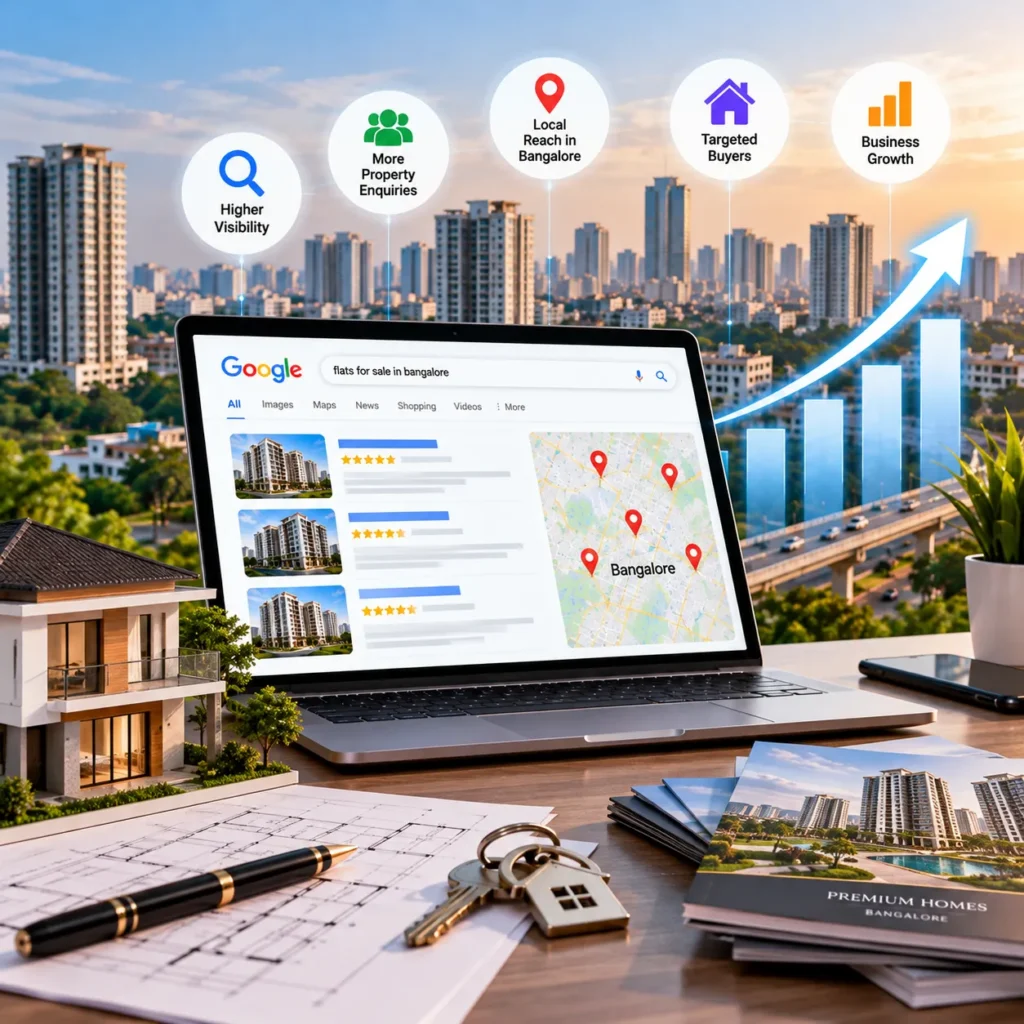
- BENEFITS OF REAL ESTATE SEO
Why Is Real Estate SEO Important for Property Businesses?
People increasingly use search engines to explore residential properties, commercial spaces, new projects, rental properties, and real estate services. If your website does not appear for relevant searches, potential buyers and tenants may discover competing businesses instead. Real Estate SEO helps improve your website’s visibility when people search for properties, locations, amenities, and real estate services related to your business. A structured SEO strategy also helps visitors understand your property offerings, compare relevant information, and take the next step when they find a suitable option. For real estate agents, builders, developers, and property consultants, organic search can become an important part of a long-term digital marketing strategy.
Make your property website easier to discover when people search for homes, apartments, plots, commercial properties, or real estate services. Relevant keyword targeting and page optimization help search engines understand your listings and connect them with appropriate searches.
Reach people searching for specific property types, budgets, amenities, and locations. Search-focused landing pages and informative listings help attract visitors whose interests are more closely aligned with your available properties and services.
Make it easier for visitors to explore listings, understand property details, and contact your team. Clear property information, visible contact options, and useful calls to action can encourage interested visitors to request further details or schedule a site visit.
Improve your visibility for property-related searches in the areas you serve. Local SEO can help real estate businesses appear for relevant location-based queries through accurate business information, Google Business Profile optimization, and useful location pages.
Provide clear descriptions of properties, project features, amenities, locations, and buying or renting considerations. Informative content helps visitors evaluate available options and understand your business before contacting your team.
Create dedicated website pages for residential projects, commercial developments, plotted layouts, and other genuine property offerings. Optimizing these pages helps people discover project information through relevant searches and explore the features that matter to them.
Organic search can contribute to your long-term digital visibility alongside paid campaigns, property portals, and social media marketing. Although SEO requires ongoing work and does not guarantee specific results, it can help your business build a sustainable source of relevant website traffic over time.
Track organic traffic, search impressions, clicks, landing-page performance, calls, and website enquiries where tracking is available. These insights help identify which property pages attract attention and where further optimization may improve the visitor experience.
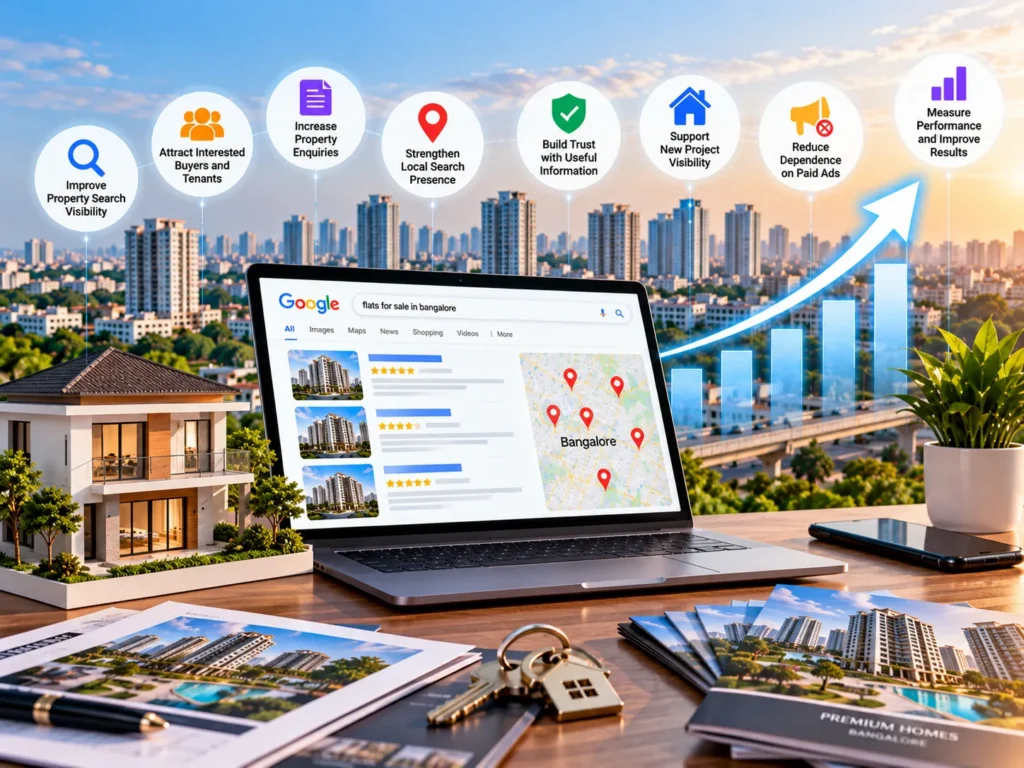
- Services
What Real Estate SEO Services Do We Offer for Your Business Growth?
DigitalClouds provides Real Estate SEO Services designed to improve website structure, property search visibility, local relevance, and organic performance. We tailor the strategy to your business model, property categories, target locations, website condition, and marketing objectives.
Website Audit and Competitor Analysis
Identify technical problems, content gaps, and search opportunities affecting your property website. We assess your website structure and review relevant competitors to understand how property categories, project pages, location pages, and supporting content can be improved.
Real Estate Keyword Research
Discover search terms related to property types, project names, locations, budgets, amenities, and real estate services. We evaluate search intent and keyword relevance to map suitable terms to the right pages and reduce unnecessary overlap between similar listings.
On-Page SEO Optimization
Improve title tags, meta descriptions, headings, URLs, property descriptions, image alt text, and internal links. We organize page content around clear topics so visitors can understand your offerings and search engines can interpret the purpose of each page.
Technical SEO for Real Estate Websites
Review crawling, indexing, website speed, mobile usability, redirects, XML sitemaps, canonical tags, and other technical elements. We identify issues that may prevent search engines from accessing important property pages or make the website harder to use.
Local SEO for Real Estate
Strengthen local search visibility for the areas your business genuinely serves. Our work may include Google Business Profile optimization, business information consistency, location-based keyword research, and useful area-specific landing pages.
Property Listing and Category Optimization
Improve the organization and presentation of property listings and category pages. We review property titles, descriptions, location details, filters, internal links, and page structure to help visitors navigate available properties more easily.
Real Estate Content Optimization
Improve the organization and presentation of property listings and category pages. We review property titles, descriptions, location details, filters, internal links, and page structure to help visitors navigate available properties more easily.
Real Estate Content Optimization
Develop and improve content around property types, project details, localities, amenities, buying considerations, rental information, and frequently asked questions. Content is planned around genuine audience needs and the services or properties your business offers.
Off-Page SEO and Link Building
Review your website's backlink profile and identify relevant opportunities to strengthen its online presence. Activities may include competitor backlink research, suitable industry directories, local citations, and legitimate editorial or business-related mentions.
Multi-Location Real Estate SEO
Support businesses operating across multiple locations with relevant location pages, area-specific keyword research, internal linking, and performance tracking. Each page should provide useful, location-specific information rather than repeating generic content with only the place name changed.
SEO Performance Monitoring
Monitor organic search traffic, impressions, clicks, keyword visibility, landing-page performance, and measurable website actions. Regular reviews help identify changes, evaluate completed work, and prioritize future SEO improvements based on available data.
- WHY DIGITALCLOUDS
Why Choose DigitalClouds for Real Estate SEO Services?
DigitalClouds combines SEO planning, website optimization, content strategy, and performance monitoring to help real estate businesses improve their online presence. Our approach considers the way people search for properties, compare locations, explore project details, and contact real estate professionals.
Industry-Focused SEO Strategy
We develop SEO plans around your property categories, business model, target locations, and marketing objectives. Whether you are a real estate agent, builder, developer, property consultant, or rental service provider, the strategy should reflect the properties and services you genuinely offer.
Location-Based Search Optimization
We focus on relevant location-based searches to help your website reach people exploring properties in your service areas. Keyword research, useful locality pages, internal linking, and local business optimization can strengthen your presence for appropriate geographic searches.
Property Page and Website Structure Improvements
We review how your website organizes projects, property listings, categories, and locations. A clear structure helps visitors find relevant information and supports search engines in understanding the relationship between different pages.
Relevant and Informative Content
We optimize property descriptions and supporting content to explain important details clearly. Our content approach prioritizes useful information about property features, amenities, locations, and services instead of relying on repetitive keyword placement.
Technical SEO and Website Usability
We identify technical issues affecting crawling, indexing, mobile usability, page speed, and navigation. Addressing these areas helps search engines access important pages and gives visitors a smoother experience while browsing property information.
Transparent Performance Monitoring
We use available search and analytics data to evaluate website performance. Reporting can include organic traffic, search visibility, landing-page activity, and tracked enquiries, helping you understand progress and decide which areas need further attention.
- Manufacturing SEO Process
How Does Our Real Estate SEO Process Work?
Our Real Estate SEO strategy is designed to help property businesses reach people actively searching for homes, commercial spaces, plots, and real estate services. DigitalClouds evaluates your website, property portfolio, target markets, and competitors before defining the optimization strategy. From identifying high-value property searches to improving listing pages and measuring enquiries, we focus on making your website more discoverable to relevant audiences and supporting your business’s lead generation objectives.
Step 01 of 08 · Website Evaluation
Real Estate Website Audit and Market Competitor Analysis
Discover what is limiting your website's visibility in competitive property markets.
We start by examining how your website performs in search engines and how effectively it presents your property inventory. Our team reviews technical problems, page quality, navigation, and competitor strategies to establish which improvements can make the biggest difference to your online presence.
Our website evaluation activities include:
- Website Health Assessment: Examine indexing problems, broken URLs, redirect chains, sitemap errors, and other issues that may prevent search engines from accessing important pages.
- Listing Quality Review: Check property pages for missing descriptions, insufficient details, repeated content, and incomplete information that may affect their usefulness.
- Market Competitor Benchmarking: Study competing brokers, developers, property portals, and consultants to understand how they attract organic search traffic.
- Search Opportunity Identification: Find property-related topics, service searches, and location queries that offer potential opportunities for improved visibility.
- Navigation and Page Hierarchy Review: Assess how users move between property listings, project details, service pages, and location-based sections.
- Audit-Based Action Plan: Prioritize recommendations according to SEO impact, business relevance, website limitations, and the needs of your target market.
Step 02 of 08 · Search Demand Research
Property Keyword Research and Search Intent Analysis
Understand how customers search before choosing a property or real estate service.
We research the language people use when comparing properties, exploring neighbourhoods, searching for real estate professionals, or evaluating investment options. This research considers the purpose behind each search, helping us select keywords that are relevant to your services rather than focusing on search volume alone.
Our keyword research activities include:
- Property Type Keyword Discovery: Research searches for flats, independent houses, villas, residential plots, office spaces, shops, and other property categories you offer.
- Local Property Search Analysis: Identify searches associated with specific neighbourhoods, residential communities, business districts, and nearby landmarks.
- Real Estate Service Keyword Selection: Research terms related to property brokerage, real estate consultancy, project sales, leasing, and property management where relevant.
- Customer Intent Classification: Separate informational searches from property comparisons, transactional queries, and searches indicating a readiness to contact an agent.
- Competitor Search Analysis: Identify relevant keywords for which competing real estate websites gain visibility and assess whether those terms fit your business.
- Keyword Allocation Strategy: Match selected keywords with suitable listing pages, project details, service pages, local landing pages, and supporting articles.
Step 03 of 08 · Page-Level Optimization
On-Page SEO for Property Listings and Real Estate Services
Present property information clearly while improving its relevance to search queries.
Every important page should communicate its purpose, location, and property offering without leaving visitors searching for essential details. We refine page elements and content to help search engines interpret each URL and help prospective customers assess whether a property or service meets their requirements.
Our on-page optimization activities include:
- Listing Content Enhancement: Improve property descriptions with meaningful details about configuration, usable space, amenities, surroundings, and availability where information is provided.
- Metadata Refinement: Write relevant page titles and meta descriptions that distinguish individual properties, real estate projects, and service offerings.
- Heading and Content Organization: Arrange information into logical sections covering property features, facilities, location advantages, and other important considerations.
- Contextual Internal Linking: Link related listings, residential projects, locality guides, and service pages to help visitors explore relevant information.
- Image Search Optimization: Improve image filenames and alternative text to describe property photographs accurately and support accessibility.
- Content Overlap Management: Review similar listings and competing landing pages to reduce unnecessary duplication and clarify the purpose of each page.
Step 04 of 08 · Technical Foundations
Technical SEO and Website Performance Optimization
Make property information accessible to search engines and convenient to browse.
Real estate websites often contain numerous listings, changing availability, search filters, and location-specific URLs. These features can create technical challenges if they are not managed properly. We review your website's underlying structure and performance to help search engines discover valuable pages and visitors access property information efficiently.
Our technical optimization activities include:
- Index Coverage Management: Investigate pages that are excluded from search results and check whether important property URLs are accessible for indexing.
- Performance Improvement: Evaluate loading speed and Core Web Vitals to identify technical factors that may affect browsing and user experience.
- Responsive Website Testing: Check property galleries, listing layouts, navigation menus, and enquiry forms across mobile and desktop screen sizes.
- Property URL Management: Review URL patterns, outdated listing addresses, redirect rules, and broken links caused by website updates.
- Duplicate URL Control: Assess filter-generated URLs, tracking parameters, and repeated listing paths to determine appropriate canonicalization and indexing rules.
- Structured Data Validation: Check applicable organization, local business, and other supported structured data to ensure markup accurately represents the information shown on the website.
Step 05 of 08 · Listing and Project Optimization
Property Listing, Project Page, and Category SEO
Improve the discoverability of individual properties and real estate developments.
Property pages need more than a name and a collection of photographs to serve prospective customers effectively. We optimize listing details, project information, and category structures so users can understand available options and search engines can distinguish between different properties and offerings.
Our property optimization activities include:
- Individual Listing Improvement: Enhance property pages with accurate descriptions, configurations, amenities, location details, and other available specifications.
- Category Structure Development: Organize residential, commercial, rental, and investment property options into meaningful categories that simplify property discovery.
- New Project Page Optimization: Improve development pages with relevant information about project features, unit types, amenities, location, and availability.
- Locality Landing Page Creation: Build useful area-specific pages that address property options, connectivity, local facilities, and the markets your business serves.
- Property Image and Gallery Improvements: Optimize image descriptions and alternative text while ensuring photographs support the information presented on each listing.
- Enquiry Journey Refinement: Make relevant contact details, viewing requests, consultation options, and enquiry forms easy to find on important pages.
Step 06 of 08 · Content Strategy
Real Estate Content Development and Marketing
Help property seekers make informed decisions with relevant website content.
A strong real estate content strategy addresses the questions people have before contacting an agent or exploring a project. We plan content around property selection, neighbourhood research, buying and selling procedures, and relevant market information to support your main service and listing pages.
Our content development activities include:
- Property Buying Resources: Develop guides covering property selection, home-buying considerations, documentation, and other topics relevant to prospective purchasers.
- Neighbourhood Information Pages: Create useful content about locality characteristics, transport access, nearby facilities, and other relevant property considerations.
- Selling and Rental Guides: Prepare resources addressing property selling, rental searches, landlord considerations, and tenant questions where these topics match your services.
- Market and Investment Articles: Develop fact-based content about property market developments and investment considerations using appropriate, reliable information.
- Content Opportunity Assessment: Compare your existing resources with relevant customer questions and competitor coverage to identify useful missing topics.
- Editorial and Fact Verification: Confirm property specifications, project details, pricing information, and other business claims before content goes live.
Step 07 of 08 · Online Authority
Real Estate Link Building and Off-Page SEO
Build relevant online references that support your real estate website's credibility.
Your website's online presence extends beyond its own pages. We assess opportunities to earn relevant mentions and links from credible property platforms, local business resources, and industry-related websites. The objective is to strengthen your website's broader visibility through legitimate, relevant off-page activities.
Our off-page SEO activities include:
- Existing Link Evaluation: Examine referring domains and backlink patterns to understand your website's current link profile.
- Property Platform Research: Identify suitable real estate directories, property portals, and business platforms for accurate company listings.
- Business Information Consistency: Review your business name, address, contact details, and other relevant information across appropriate online directories.
- Competitor Link Opportunity Analysis: Investigate relevant websites that mention competing real estate businesses and assess potential opportunities for your brand.
- Industry Relationship Opportunities: Research property publications, local organizations, and relevant business websites for potential editorial coverage and legitimate links.
- Link Profile Monitoring: Track new and lost backlinks and review potentially problematic patterns as part of ongoing SEO management.
Step 08 of 08 · Results and Refinement
Real Estate SEO Performance Reporting and Continuous Improvement
Use search data and enquiry metrics to guide future optimization.
SEO performance should be assessed through more than keyword rankings alone. We review how your website appears in search results, which property pages attract visitors, and whether relevant users take meaningful actions. These insights help identify which areas deserve further attention and where the strategy may need adjustment.
Our performance monitoring activities include:
- Organic Visit Analysis: Review search-driven website visits to understand changes in traffic and the pages attracting prospective property customers.
- Search Visibility Measurement: Examine impressions, clicks, and click-through rates for priority property, service, and locality searches.
- Keyword Position Tracking: Monitor selected keywords to identify ranking changes and opportunities for further page improvements.
- Property Page Performance Review: Compare the performance of listings, project pages, category pages, and location landing pages.
- Enquiry Conversion Measurement: Track calls, contact form submissions, property viewing requests, and other agreed conversion actions where reliable tracking is available.
- Data-Led Strategy Updates: Use reporting insights to recommend further technical fixes, listing improvements, content updates, and new search opportunities.
What Is Real Estate SEO and How Can It Generate Property Enquiries?
Real estate SEO improves a property business’s visibility in search engines when people look for homes, apartments, plots, commercial spaces, or real estate services. It helps builders, brokers, property consultants, and developers connect with relevant audiences during their property search. By optimising listing pages, project information, location content, and website performance, businesses can attract organic visitors and create more opportunities for qualified property enquiries.
Our real estate SEO activities include:
- Property Keyword Research: Identify search terms related to apartments, villas, residential plots, commercial spaces, and property investment. Prioritise keywords based on buyer intent, property availability, location relevance, and the specific offerings of your real estate business.
- Property Listing Optimisation: Improve individual property pages with accurate descriptions, location details, specifications, amenities, and relevant search terms. Well-organised listings help potential buyers understand the property and discover relevant options through organic search.
- Real Estate Website Structure: Organise listings into logical categories based on property type, price range, location, and purpose. A clear structure helps search engines understand your inventory while allowing visitors to narrow down their choices.
- Local SEO: Strengthen your visibility for property searches within the locations you genuinely serve. Optimise relevant business information and location pages so buyers, sellers, tenants, and investors can discover your services.
- Property Content Development: Publish useful guides about buying homes, evaluating locations, understanding property documentation, and comparing residential or commercial investments. Helpful content can attract visitors who are researching properties before contacting an agent or developer.
- Enquiry Conversion Optimisation: Make property enquiry forms, callback requests, site visit options, and contact details easy to find. A straightforward enquiry process helps interested visitors connect with your sales team without unnecessary steps.
How Can SEO Help Real Estate Companies Reach More Buyers and Sellers?
Real estate companies need to reach people at different stages of their property journey, from researching neighbourhoods to comparing listings and arranging site visits. SEO helps businesses appear for relevant searches by connecting property information, location-specific pages, and educational content with audience needs. A focused strategy can improve organic discovery, strengthen the visibility of available properties, and create opportunities to engage buyers, sellers, landlords, tenants, and investors.
Our real estate SEO activities for attracting buyers and sellers include:
- Buyer-Focused Keyword Targeting: Identify searches related to buying apartments, villas, plots, and commercial properties. Match these terms with relevant inventory pages so prospective buyers can discover properties that align with their requirements.
- Seller Service Page Optimisation: Create useful pages for property owners looking for assistance with selling, marketing, or listing their properties. Explain your services, working process, and service areas clearly to encourage relevant seller enquiries.
- Property Search Landing Pages: Build focused pages around meaningful combinations of property type, location, and buyer requirements. Each page should offer useful listings or information instead of repeating generic descriptions to target additional keywords.
- Real Estate Content Marketing: Develop articles covering property selection, neighbourhood comparisons, ownership considerations, and common transaction questions. These resources help potential clients research important decisions while introducing your business as a source of relevant property information.
- Property Inventory Visibility: Optimise the pages that showcase currently available properties and projects. Keep descriptions, specifications, pricing information, and availability details accurate so visitors can evaluate suitable options before contacting your team.
- Lead Journey Optimisation: Connect informative articles, location pages, property listings, and enquiry forms through relevant internal links. This creates a clearer route from initial research to property discovery, consultation requests, and site visit enquiries.
What Should You Expect From a Real Estate SEO Agency in Bangalore?
A real estate SEO agency should understand property search behaviour, listing-heavy websites, local competition, and the information buyers need before arranging a site visit. The agency should review your existing website, identify opportunities across property categories and locations, and establish a measurable strategy. You should expect clear deliverables, practical recommendations, transparent reporting, and ongoing optimisation rather than promises of instant rankings or guaranteed property sales.
Our real estate SEO agency services include:
- Property Website Audit: Examine your website’s technical health, listing structure, page quality, indexing, metadata, and mobile experience. The audit should identify problems affecting property discovery and opportunities to improve the visibility of important listings.
- Real Estate Competitor Analysis: Review how competing brokers, developers, property portals, and real estate companies organise their websites and target search demand. Use the findings to identify gaps without copying competitor listings or marketing content.
- Property Search Strategy: Research keywords for residential projects, commercial properties, plots, rentals, and property services. Map relevant terms to suitable pages according to search intent, available inventory, and the locations your business serves.
- On-Page SEO: Improve page titles, headings, property descriptions, internal links, and metadata across priority pages. These improvements help search engines understand individual listings and make property information easier for potential customers to evaluate.
- Local Search Optimisation: Improve eligible business profiles, location landing pages, and consistent business details. This supports discovery among people searching for property consultants, builders, brokers, and real estate services within relevant service areas.
- Website Performance Improvements: Identify slow pages, inefficient images, navigation problems, and mobile usability issues. Property websites often contain many photographs and listings, so performance improvements can help visitors browse available properties more comfortably.
- SEO Reporting: Monitor organic impressions, clicks, keyword visibility, listing engagement, and available enquiry actions. Reports should explain which activities were completed, how performance changed, and what the agency recommends improving next.
- Ongoing Strategy Management: Review results and adjust priorities as property inventory, search behaviour, and competition change. Continuous optimisation helps maintain relevant pages and supports long-term organic growth as your real estate business develops.
How Can Local SEO Help Real Estate Businesses Attract Property Buyers?
Property decisions are strongly influenced by location, neighbourhood facilities, connectivity, and access to workplaces or essential services. Local SEO helps real estate businesses become more discoverable when people search for properties or property professionals in specific areas. By combining accurate business information, useful neighbourhood pages, and location-relevant listings, businesses can connect their property inventory with people exploring suitable locations and looking for professional assistance.
Our local real estate SEO activities include:
- Google Business Profile Optimisation: Maintain accurate business details, relevant categories, operating hours, contact information, and website links. A complete profile helps property seekers discover your business and understand how to contact your team about available services.
- Neighbourhood Keyword Research: Identify relevant searches involving actual localities, residential communities, and commercial areas within your service region. Use these terms naturally on appropriate pages that provide useful information about properties and local conditions.
- Location-Specific Landing Pages: Create informative pages for the areas where you genuinely offer properties or real estate services. Include relevant listings, property types, connectivity information, and local details instead of publishing near-identical pages for every neighbourhood.
- Local Property Inventory Pages: Organise available properties by meaningful locations and property categories. Accurate listing information helps buyers compare relevant options without having to search through unrelated inventory from other areas.
- Local Business Information Consistency: Keep your company name, address, phone number, and website information consistent across relevant platforms. Correct business details reduce confusion and help prospective clients reach the appropriate real estate office.
- Neighbourhood Content Development: Publish useful guides covering connectivity, nearby facilities, residential characteristics, and commercial activity where reliable information is available. Such content helps buyers understand the area before comparing properties or requesting a site visit.
- Review Management: Encourage genuine customer feedback and respond professionally without revealing private transaction details. Authentic reviews can help prospective clients assess your service, while respectful responses demonstrate that your business takes customer experiences seriously.
- Local Performance Tracking: Monitor relevant local search visibility, profile interactions, website visits, calls, and available enquiries. These insights help determine whether local SEO is improving discovery and connecting your business with potential property clients.
How Should Real Estate Companies Choose Keywords for Property Listings?
Real estate keyword research should reflect the way people search for properties, including their preferred location, property type, budget, and intended use. Someone searching for a ready-to-move apartment has different requirements from someone researching commercial property or a residential plot. Mapping these search patterns to relevant listing and category pages helps real estate companies attract appropriate visitors while keeping their property inventory organised and discoverable.
Our real estate keyword research activities include:
- Property Type Keyword Research: Identify searches related to apartments, independent houses, villas, residential plots, office spaces, and retail properties. Map these terms to relevant inventory pages so users can discover the types of properties your business actually offers.
- Location-Based Keyword Research: Research property searches that include relevant cities, neighbourhoods, and residential or commercial areas. Prioritise locations where you have genuine inventory or service coverage instead of targeting places without a meaningful business connection.
- Buyer Intent Analysis: Separate general property research from searches indicating a stronger interest in available listings, prices, or site visits. This helps you decide which terms belong on educational articles, category pages, and individual property listings.
- Budget and Requirement Keywords: Explore searches related to price ranges, property sizes, bedroom configurations, and other relevant requirements. Use these terms where matching inventory exists and ensure listing information supports the expectations created by the search.
- Keyword-to-Page Mapping: Assign relevant primary and supporting keywords to individual property pages, category pages, and location pages. This reduces unnecessary overlap and gives each page a clear role within your overall real estate SEO strategy.
- Competitor Keyword Analysis: Review search terms used by competing real estate websites to identify overlooked property categories and location opportunities. Use this research to develop original content that reflects your inventory rather than duplicating competing listings.
- Search Demand and Competition Assessment: Compare keyword relevance, estimated demand, competition, and the likelihood of attracting suitable enquiries. Prioritise realistic opportunities that align with your inventory and business objectives instead of selecting keywords based only on volume.
- Ongoing Keyword Refinement: Review search performance as property demand, inventory, and market conditions change. Update keyword targets when new projects become available or when existing pages no longer match the properties and services your business offers.
What Type of Content Helps Real Estate Websites Attract Qualified Leads?
Property buyers and investors often need more than listing photographs and asking prices before they contact a real estate business. They may compare neighbourhoods, evaluate property configurations, research ownership considerations, or look for guidance on the buying process. Useful website content addresses these questions with accurate information and connects readers to relevant listings, helping real estate businesses attract visitors whose interests align with their available properties and services.
Our real estate content development activities include:
- Property Buying Guides: Create practical resources explaining how to shortlist properties, compare available options, prepare for site visits, and assess personal requirements. Useful guides help prospective buyers make more informed comparisons before contacting your sales team.
- Neighbourhood and Area Guides: Develop pages explaining relevant local facilities, connectivity, residential characteristics, and commercial activity using reliable information. These resources help buyers evaluate whether an area matches their lifestyle, commuting needs, or business requirements.
- Property Comparison Content: Explain the differences between relevant property types, configurations, and location options. Balanced comparisons help readers understand the factors involved in choosing a property without making unsupported claims about investment performance.
- Project Information Pages: Present accurate details about residential or commercial developments, including available configurations, amenities, location information, and relevant project documentation. Clear project pages help interested buyers evaluate the offering before requesting further information.
- Property Investment Education: Publish responsible educational content about property ownership considerations, rental demand factors, and investment evaluation. Avoid promising guaranteed returns or presenting speculative appreciation forecasts as certain outcomes.
- Real Estate FAQs: Answer common questions about property listings, site visits, documentation, financing considerations, and transaction procedures. Keep answers practical and accurate, and direct readers to qualified professionals when legal or financial advice is required.
- Property Listing Descriptions: Write distinct descriptions that explain each property’s actual features, layout, location, and relevant amenities. Avoid repetitive descriptions and unsupported superlatives that make different listings appear identical or misrepresent their qualities.
- Lead-Focused Internal Linking: Connect guides, project pages, location content, and relevant property listings using descriptive links. This helps readers move from general research towards suitable inventory and gives them clear options for requesting additional information.
Why Is Technical SEO Important for Real Estate Websites With Multiple Listings?
Real estate websites can contain hundreds or thousands of listings, property filters, location pages, and project details. Without a sound technical structure, search engines may struggle to discover important pages or spend resources crawling low-value URL variations. Technical SEO helps improve crawlability, indexing, website performance, and navigation so users can browse properties efficiently while search engines identify the pages most relevant to property searches.
Our technical SEO activities for real estate websites include:
- Listing Indexation Management: Review which property pages should appear in search results and identify accidental indexing restrictions. Ensure valuable listings are accessible while preventing unnecessary URL variations from creating an unmanageable collection of low-value pages.
- Property Filter URL Management: Assess URLs generated by filters such as price, bedrooms, property type, and amenities. Establish appropriate technical controls so filter combinations do not create excessive duplicate or near-duplicate pages.
- Website Speed Optimisation: Review large property photographs, scripts, page templates, and other resources that affect loading performance. Efficient pages help visitors browse listings more comfortably, particularly when accessing the website through mobile connections.
- Mobile-Friendly Property Search: Test search filters, image galleries, enquiry forms, and navigation across mobile screen sizes. A usable mobile experience helps property seekers compare options and contact your team without struggling with difficult controls.
- Website Architecture and Internal Links: Organise property categories, location pages, project pages, and individual listings into a logical hierarchy. Strong internal linking helps search engines discover important inventory and helps visitors move between relevant property options.
- Property Sitemap Management: Maintain XML sitemaps that reflect the website’s indexable URLs and follow appropriate sitemap rules. Update the sitemap process as properties are published, removed, or changed so search engines can discover relevant pages.
- Structured Data Implementation: Assess whether eligible structured data, such as appropriate organisation or breadcrumb markup, can be implemented accurately. Any markup must reflect visible page content and should not claim unsupported property ratings, availability, or features.
- Broken Link and Redirect Audits: Identify expired listing links, incorrect redirects, broken images, and outdated page destinations. Handle removed or sold properties appropriately so visitors do not repeatedly encounter unavailable inventory or misleading search results.
How Long Does SEO Take to Generate Results for Real Estate Businesses?
The time required for real estate SEO to improve visibility depends on website quality, listing volume, competition, location demand, and the current authority of the website. Some technical corrections can be implemented relatively quickly, while stronger rankings and consistent property enquiries generally require ongoing work. Businesses should evaluate progress across relevant listings, location pages, and enquiry actions rather than expecting every property to rank within a fixed timeframe.
Our real estate SEO progress management activities include:
- Initial Website Benchmarking: Record current organic traffic, indexed pages, keyword positions, and available property enquiry data. These benchmarks establish a reference point for measuring future performance and identifying which parts of the website need attention.
- Technical SEO Corrections: Prioritise crawlability, indexing, duplicate URL, and website performance issues that prevent valuable pages from performing effectively. Resolving these problems creates a stronger foundation for subsequent listing and content optimisation.
- Priority Listing Optimisation: Focus first on important property categories, active projects, and available listings with meaningful search potential. Prioritisation helps direct resources towards inventory that matches your current business objectives and customer demand.
- Location Content Development: Build useful pages for genuine service areas and property markets. Progress depends on the relevance of the content, local competition, search demand, and whether the pages provide meaningful information beyond location keywords.
- Consistent Content Publishing: Develop relevant buying guides, property comparisons, project information, and neighbourhood resources. A planned publishing schedule helps the website address additional search needs without creating thin or repetitive content.
- Monthly Performance Analysis: Compare organic impressions, clicks, rankings, listing engagement, and available enquiries over time. Reviewing longer-term trends helps identify which pages are improving and where additional optimisation may be worthwhile.
- Inventory-Based Adjustments: Update pages as properties become available, prices change, or projects reach different sales stages. Maintaining accurate inventory information helps preserve a useful website experience and prevents outdated listings from misleading visitors.
- Realistic Results Evaluation: Treat SEO as an ongoing acquisition channel rather than a guaranteed source of immediate sales. Rankings, enquiries, and conversions can vary according to market conditions, competition, and the quality of your website.
How Can You Measure the Performance of Real Estate SEO Services?
Real estate SEO performance should be evaluated through search visibility, relevant website engagement, and property enquiries rather than rankings alone. A website may attract substantial traffic without generating interest in its available inventory. Tracking organic clicks, listing visits, location page performance, callback requests, and site visit enquiries provides a more useful understanding of how search optimisation supports the business and where further improvements are needed.
Our real estate SEO measurement activities include:
- Organic Search Traffic: Monitor visits from unpaid search results and compare performance over time. Analyse traffic by property category, location, project, and listing page to understand which sections of the website attract relevant searchers.
- Search Impressions and Clicks: Use Google Search Console to assess how often important pages appear in search results and how frequently people click them. These metrics help identify pages that may benefit from improved titles, descriptions, or content.
- Property Keyword Visibility: Track selected keywords for available property types, projects, and locations. Ranking trends can reveal changes in search visibility, but they should be interpreted alongside traffic quality and actual enquiry behaviour.
- Listing Page Engagement: Review how visitors interact with property descriptions, image galleries, specifications, and related listings. Engagement data can help identify pages that attract attention but may need clearer information or easier navigation.
- Property Enquiry Tracking: Measure callback requests, contact form submissions, phone interactions, and site visit requests where reliable tracking is available. These actions help connect organic website activity with potential opportunities for the sales team.
- Location Page Performance: Compare organic visibility and engagement across relevant neighbourhood and property-market pages. This helps determine which areas attract search interest and where additional local content may be useful.
- Conversion Tracking Accuracy: Test analytics events and enquiry tracking to confirm that genuine actions are recorded correctly. Reliable tracking is essential because duplicate events or missing conversions can distort conclusions about SEO performance.
- Regular Reporting and Recommendations: Review completed activities, performance trends, and upcoming priorities in a consistent reporting cycle. Reports should distinguish measured outcomes from estimates and explain how SEO work supports your business objectives.
What Is the Cost of Real Estate SEO Services in Bangalore?
The cost of real estate SEO services in Bangalore depends on the website’s size, the number of property listings, competition, location coverage, and the amount of technical and content work required. A local broker with a small website may need a different scope from a developer managing several projects or a portal with extensive inventory. A suitable proposal should define deliverables according to your website and business priorities.
Our real estate SEO pricing assessment considers:
- Website Size and Complexity: Evaluate the number of pages, listing templates, categories, location pages, and technical issues before estimating the workload. Websites with complicated filters or large inventories may require additional technical planning and implementation.
- Property Inventory Volume: Determine how many active listings and project pages need optimisation. Large inventories require a structured approach to prioritising valuable pages and maintaining accurate information as property availability changes.
- Local and National Competition: Assess the competitive environment for your target property types and locations. Highly competitive searches may require sustained content development, technical improvements, and more extensive optimisation than narrowly focused local markets.
- Content Development Requirements: Identify whether existing property descriptions need improvement or whether new location pages, buying guides, and project content are required. The quantity and complexity of content affect the overall project scope.
- Technical SEO Requirements: Review indexing, filter-generated URLs, site speed, mobile usability, and website architecture. The level of technical work required can influence both initial implementation effort and ongoing maintenance.
- Location Coverage: Establish whether your business targets one local market or multiple cities and property areas. Wider coverage may require additional location pages, keyword research, content planning, and performance reviews.
- Reporting and Ongoing Support: Clarify the reporting frequency, communication arrangements, and continuing optimisation activities included in the proposal. Defined deliverables make it easier to compare providers and understand the work covered by each plan.
- Scope and Budget Alignment: Select a plan that matches your business objectives, available resources, and current inventory. A transparent proposal should explain the included services and exclusions without guaranteeing rankings, enquiries, or property sales.
Can SEO Help a New Real Estate Agency Compete With Established Companies?
A new real estate agency may initially have limited brand recognition, few established rankings, and a smaller inventory than larger competitors. SEO can help build visibility by focusing on relevant property categories, genuine service areas, useful market information, and well-organised listings. Rather than competing for every broad keyword immediately, a new agency can develop a focused online presence that helps potential clients discover its services and available properties.
Our SEO activities for new real estate agencies include:
- Website Foundation Setup: Establish a clear website structure with dedicated pages for property services, locations, and available inventory. A well-organised foundation helps search engines understand your business and helps visitors find relevant property information.
- Focused Property Category Pages: Start with the property types and locations most relevant to your current inventory. Focused pages can provide clearer information and more realistic optimisation opportunities than a broad website with minimal detail.
- Local Business Profile Development: Create or optimise an eligible Google Business Profile with accurate details and relevant categories. This helps local property seekers discover your agency and understand how to contact your team.
- Location-Specific Search Targeting: Research relevant searches for neighbourhoods and markets where you genuinely operate. Build pages around real services and available properties instead of targeting locations simply because they appear to have high search demand.
- Unique Property Listings: Publish accurate, distinct descriptions with relevant specifications, photographs, location details, and enquiry options. Quality listings help potential buyers understand the offering and reduce confusion caused by incomplete or repetitive property information.
- Helpful Real Estate Content: Create practical resources about property selection, neighbourhood comparisons, and the buying process. Useful content can attract people during early research and introduce them to the properties and services your agency provides.
- Enquiry Tracking Setup: Configure suitable measurement for contact forms, calls, callback requests, and site visit enquiries. Establishing tracking early helps you identify which pages and search queries contribute to relevant business opportunities.
- Gradual SEO Expansion: Review performance data and expand into additional property categories or locations as your inventory and resources grow. This allows the agency to build on demonstrated opportunities instead of spreading effort too thinly at the beginning.
How Can SEO Improve the Visibility of Residential and Commercial Properties?
Residential and commercial properties attract different audiences and serve different purposes. Homebuyers may focus on layout, neighbourhood facilities, and daily convenience, while commercial buyers may prioritise access, business suitability, floor space, and location characteristics. SEO helps real estate businesses organise these offerings into relevant pages and provide useful information for each audience, making it easier for people to discover properties that match their requirements.
Our residential and commercial property SEO activities include:
- Separate Property Category Pages: Organise residential apartments, villas, plots, office spaces, retail units, and other available property types into relevant sections. Clear categories help visitors find suitable inventory without navigating unrelated listings.
- Residential Property Optimisation: Improve apartment, villa, and house listings with accurate configuration details, location information, amenities, and relevant photographs. These details help buyers compare residential options according to their actual requirements.
- Commercial Property Optimisation: Create focused pages for available office spaces, retail properties, warehouses, and other commercial offerings. Include relevant specifications and intended-use information where verified so business buyers can assess suitability more effectively.
- Property-Specific Keyword Research: Identify search terms appropriate to residential and commercial audiences. Map keywords to the relevant pages rather than expecting a general property page to rank for every type of real estate search.
- Project and Development Pages: Present useful information about residential developments and commercial projects, including location, available configurations, facilities, and verified project details. Accurate pages help interested visitors assess the offering before contacting the sales team.
- Location and Accessibility Content: Explain relevant neighbourhood characteristics, road connectivity, and nearby facilities using reliable information. This helps buyers evaluate the location without relying on vague promotional claims or unsupported investment predictions.
- Relevant Internal Linking: Connect property category pages, location pages, project information, and individual listings. Meaningful links help visitors explore related options and allow search engines to understand how the property’s pages fit together.
- Category-Level Performance Tracking: Monitor search visibility, clicks, listing engagement, and available enquiries separately for residential and commercial sections. This helps determine which audiences and property categories respond best to your SEO strategy.
How Should You Choose Between a General SEO Company and a Real Estate SEO Agency?
Choosing an SEO provider requires understanding whether the team can manage property listings, location-focused searches, project pages, and the technical challenges of real estate websites. A general SEO company may have the necessary capabilities, while a real estate-focused agency may better understand property search behaviour and listing management. Evaluate the provider’s actual process, technical knowledge, content quality, and reporting before deciding which option suits your business.
Our recommended SEO provider evaluation criteria include:
- Real Estate Industry Understanding: Ask how the provider approaches property categories, listing optimisation, location pages, and buyer search intent. Look for a practical explanation of the strategy rather than relying solely on claims of industry specialisation.
- Property Website Audit: Check whether the agency evaluates your listing structure, indexing, technical performance, content gaps, and current organic visibility. Recommendations should address your website’s actual issues rather than present an identical package to every client.
- Keyword Research Method: Review how the provider identifies property, location, and commercial-intent keywords. The strategy should reflect your inventory, genuine service areas, target audience, and the type of enquiries your business wants to attract.
- Property Content Quality: Examine how the agency plans to create unique listing descriptions, location guides, and project pages. Content should provide accurate information and avoid repetitive descriptions or unsupported claims about property quality and investment returns.
- Technical SEO Capabilities: Confirm that the provider can handle listing indexation, filter-generated URLs, website speed, internal linking, and mobile usability. These skills matter particularly for real estate websites with large inventories and multiple search filters.
- Reporting Transparency: Ask which performance indicators will be tracked and how results will be communicated. Useful reporting should connect organic visibility with listing engagement and available enquiries rather than focusing exclusively on keyword positions.
- Ethical SEO Practices: Avoid providers promising guaranteed first-page rankings, immediate leads, or certain property sales. Ask about their approach to link acquisition, content quality, and compliance with search engine guidelines.
- Clear Scope and Communication: Compare deliverables, timelines, reporting arrangements, and responsibilities before signing an agreement. A clearly defined scope helps you understand the work included and evaluate the provider’s value fairly.
Can DigitalClouds Help Real Estate Businesses Target Multiple Locations?
Real estate businesses operating across several neighbourhoods, cities, or property markets need a website structure that helps visitors find relevant inventory in each area. Simply duplicating one page and changing the location name can create thin content and confuse potential clients. A multi-location SEO strategy should combine accurate business information, useful local pages, relevant property listings, and location-level performance tracking to improve discoverability across genuine service areas.
Our multi-location real estate SEO activities include:
- Location and Market Assessment: Identify the cities, neighbourhoods, and property markets your business genuinely serves. Map the available inventory and services to each area before creating location pages or assigning location-specific keyword targets.
- Location-Specific Keyword Research: Research relevant searches for properties and real estate services in each target market. Prioritise terms according to actual inventory, local search demand, competition, and the services available in each location.
- Unique Location Landing Pages: Create pages with useful details about local properties, neighbourhood characteristics, and available services. Each page should offer meaningful information that distinguishes the area rather than repeating the same generic content.
- Local Business Profile Management: Maintain accurate profiles for eligible physical business locations and keep their information consistent with official details. Correct profiles help people discover the right office and contact the appropriate team.
- Location-Based Property Listings: Organise available properties according to their actual locations and relevant categories. Accurate addresses, specifications, and availability details help visitors compare suitable options without confusion between different markets.
- Internal Linking Between Locations: Connect location pages with relevant property categories, projects, and available listings. A logical linking structure helps visitors explore the website and supports search engines in discovering the most important pages.
- Consistent Business Information: Review addresses, phone numbers, operating details, and website links across relevant platforms. Consistent information reduces uncertainty and helps potential clients reach the correct office or property team.
- Location-Level Performance Reporting: Track organic visibility, website visits, listing engagement, and available enquiries separately for each target market. This helps identify which locations are gaining traction and where additional content or optimisation may be needed.
How Do You Choose the Best Real Estate SEO Company in Bangalore?
Choosing the best real estate SEO company in Bangalore involves evaluating its understanding of property search behaviour, website requirements, location competition, and lead generation objectives. The right provider should explain how it will improve listing visibility, organise location pages, and measure relevant enquiries. Rather than selecting an agency based only on price or ranking promises, assess its process, deliverables, communication, and ability to support your actual property business goals.
Our checklist for evaluating a real estate SEO company includes:
- Business Objective Alignment: Confirm that the proposed SEO strategy reflects your priorities, such as selling residential projects, promoting commercial inventory, or generating property owner enquiries. The agency should understand your objectives before recommending its activities.
- Website Audit Quality: Look for a detailed review of your website structure, listing pages, technical issues, keyword visibility, and competitors. Specific recommendations demonstrate that the agency has evaluated your website instead of relying on a generic sales proposal.
- Property Keyword Strategy: Ask how the company will research and prioritise keywords for property types, locations, and relevant services. A strong strategy considers search intent, available inventory, competition, and the quality of enquiries each page may attract.
- Content and Listing Standards: Review how the provider plans to improve property descriptions, project pages, and local content. Accurate, distinct information is essential for helping visitors compare listings and avoiding repetitive or misleading website content.
- Technical SEO Expertise: Check whether the team can address listing indexation, property filter URLs, website speed, mobile usability, and internal linking. Technical recommendations should be practical and tailored to the scale of your website.
- Local SEO Capabilities: Understand how the company approaches business profiles, location landing pages, and local property searches. The strategy should reflect your genuine operating areas and avoid creating misleading location information.
- Reporting and Accountability: Request a clear reporting schedule covering visibility, traffic, listing performance, and available enquiries. Useful reporting should explain the work completed, the changes observed, and the next actions recommended.
- Transparent Pricing and Expectations: Compare the actual scope of services rather than choosing solely by the lowest fee. Be cautious of guaranteed rankings, promised sales volumes, and contracts that do not clearly define deliverables.
How Can You Get Started With Real Estate SEO Services at DigitalClouds?
Getting started with real estate SEO services at DigitalClouds begins with understanding your property business, available inventory, target locations, and lead generation goals. This information helps establish a strategy suited to your website and audience. By reviewing existing performance, prioritising important property pages, and defining measurable activities, your business can work towards better organic visibility and more relevant opportunities to connect with prospective buyers, sellers, tenants, and investors.
Our process for getting started includes:
- Discuss Your Property Business Goals: Explain whether you focus on residential sales, commercial properties, property rentals, development projects, or brokerage services. This helps establish which audiences, property categories, and locations should receive priority.
- Review Your Existing Website: Assess the website’s current structure, listing inventory, location pages, technical condition, and organic search performance. The review identifies existing strengths and areas that may require immediate improvement.
- Understand Your Target Audience: Identify the buyers, sellers, tenants, investors, or business owners you want to reach. Understanding their property requirements helps shape keyword research, page priorities, and content planning.
- Develop a Property Keyword Strategy: Research relevant property types, locations, project searches, and service-related queries. Assign keywords to suitable pages according to search intent and the actual inventory or services your business provides.
- Prioritise Important Website Pages: Identify which listings, project pages, categories, and location pages deserve attention first. Prioritisation helps direct resources towards relevant opportunities instead of spreading optimisation efforts across every page at once.
- Plan Technical and Content Improvements: Establish which indexing fixes, listing updates, location guides, and educational resources should be developed. A clear implementation plan helps organise work according to business importance and available resources.
- Set SEO Performance Benchmarks: Record baseline data for search visibility, organic traffic, listing engagement, and available enquiry actions. These benchmarks provide a reference for assessing progress and identifying areas that need further attention.
- Begin Ongoing SEO Optimisation: Implement the agreed activities, review performance regularly, and update priorities as inventory and market conditions change. Consistent optimisation helps develop a sustainable search presence without relying on guaranteed rankings or property sales.
- LET'S GROW YOUR BUSINESS
Ready to Grow with Real Estate SEO Services in Bangalore?
Ready to strengthen your property website’s online presence and reach more interested buyers and tenants? DigitalClouds provides Real Estate SEO Services to help improve search visibility through targeted keyword research, property page optimization, technical SEO, and local search strategies. We work to make your property offerings easier to discover and help visitors find the information they need to take the next step.
- FAQs
Frequently Asked Questions About Real Estate SEO Services
How Can SEO Help Property Listings Get Discovered Online?
SEO helps property listings become easier to discover by improving page titles, property descriptions, URLs, internal links, and relevant content. Each listing should clearly communicate its property type, location, features, and other available details. A well-organized website also helps visitors navigate between similar properties and explore suitable options. Actual visibility depends on competition, website quality, listing availability, and how well each page matches relevant searches.
Should Every Property Listing Have a Separate URL?
A separate URL can be useful when each property has distinct information that visitors may want to find through search engines. Individual pages can present property-specific details, images, amenities, and location information. However, real estate websites should manage duplicate listings, expired properties, and URL variations carefully. The ideal structure depends on the number of listings, how frequently properties change, and whether individual pages provide lasting value.
How Should Real Estate Websites Handle Sold or Rented Properties?
The right approach depends on whether a property is temporarily unavailable, permanently removed, or likely to become available again. A page may remain useful if it provides accurate status information and offers relevant alternatives. Permanently removed pages may require a suitable redirect when an equivalent page exists. Otherwise, returning an appropriate status code may be preferable. The decision should consider user experience, existing search visibility, and the property’s future relevance.
What SEO Strategy Works Best for Commercial Real Estate?
Commercial real estate SEO should reflect the different requirements of people searching for office spaces, retail units, warehouses, industrial properties, and other commercial assets. Dedicated category pages can organize listings by property type, location, size, and relevant features. Supporting content may explain accessibility, business-area characteristics, available facilities, and other verified details. Keyword selection and page structure should match the actual commercial properties offered and the audience the business intends to reach.
How Can Real Estate SEO Support New Property Launches?
SEO can support a property launch through a dedicated project page containing accurate information about the location, property types, amenities, specifications, and other confirmed details. Supporting content and internal links can help visitors discover the project through relevant searches. As the launch progresses, the page should be updated to reflect changes in availability, specifications, and other important information. Early planning also allows time to address technical and content requirements before promotion begins.
How Can Property Images Be Optimized for SEO?
Property images can be optimized through descriptive filenames, appropriate alternative text, suitable image dimensions, and efficient compression. These improvements help search engines interpret image context and support accessibility and page performance. Images should accurately represent the property and should not be misleading or unnecessarily duplicated. Real estate websites should also consider responsive image delivery and image loading behaviour so visitors can browse photographs without unnecessary delays.
What Role Do Property Filters Play in Real Estate SEO?
Property filters help visitors narrow listings by factors such as location, price range, property type, number of bedrooms, and amenities. However, filters can generate many URL variations that may create crawling and indexing challenges. A real estate SEO strategy should determine which filtered pages offer meaningful search value and which should remain accessible primarily for navigation. Appropriate technical controls can help prevent unnecessary URL duplication while preserving a useful property browsing experience.
How Can Real Estate Businesses Avoid Duplicate Content Across Property Pages?
Duplicate content can occur when similar listings use identical descriptions, the same property appears under multiple URLs, or location pages contain only minor wording changes. Businesses can address this by writing accurate property-specific descriptions, organizing categories clearly, reviewing URL variations, and using suitable canonical or redirect signals where appropriate. Each important URL should have a clear purpose and provide useful information rather than simply repeating content from other pages.
Can Real Estate SEO Work Alongside Property Portals and Paid Advertising?
Yes. Real estate SEO can complement property portals, paid search campaigns, social media, and other marketing channels. Property portals can provide access to established audiences, while paid campaigns can support specific promotions or time-sensitive launches. SEO focuses on improving the website’s organic search presence over time. Coordinating these channels can create a more consistent property marketing approach, with each channel evaluated according to its costs, audience, visibility, and measurable contribution.
Can an Existing Real Estate Website Be Improved Without Rebuilding It?
In many cases, an existing real estate website can be improved through targeted SEO and usability updates without requiring a complete rebuild. Work may include correcting technical issues, improving property pages, refining navigation, updating metadata, strengthening internal links, and optimizing mobile performance. However, a rebuild or larger structural changes may be appropriate if the current platform has significant limitations. A website audit helps identify which improvements can be implemented within the existing setup and which may require development work.
Still have questions? Contact us →