
Generate More Relevant Legal Enquiries with the Best Law Firm Meta Ads Agency in Bangalore
Looking for a reliable Law Firm Meta Ads Agency in Bangalore to promote your legal services and strengthen your firm’s digital presence? DigitalClouds helps law firms, advocates, legal consultants, and legal service businesses plan targeted Facebook and Instagram advertising campaigns aligned with their practice areas and business objectives. Our Law Firm Meta Ads in Bangalore approach combines audience research, campaign planning, persuasive ad creatives, relevant landing pages, conversion tracking, and continuous performance optimization. We focus on helping your firm communicate its services professionally, reach suitable audiences, measure advertising activity, and make informed decisions about campaign growth.
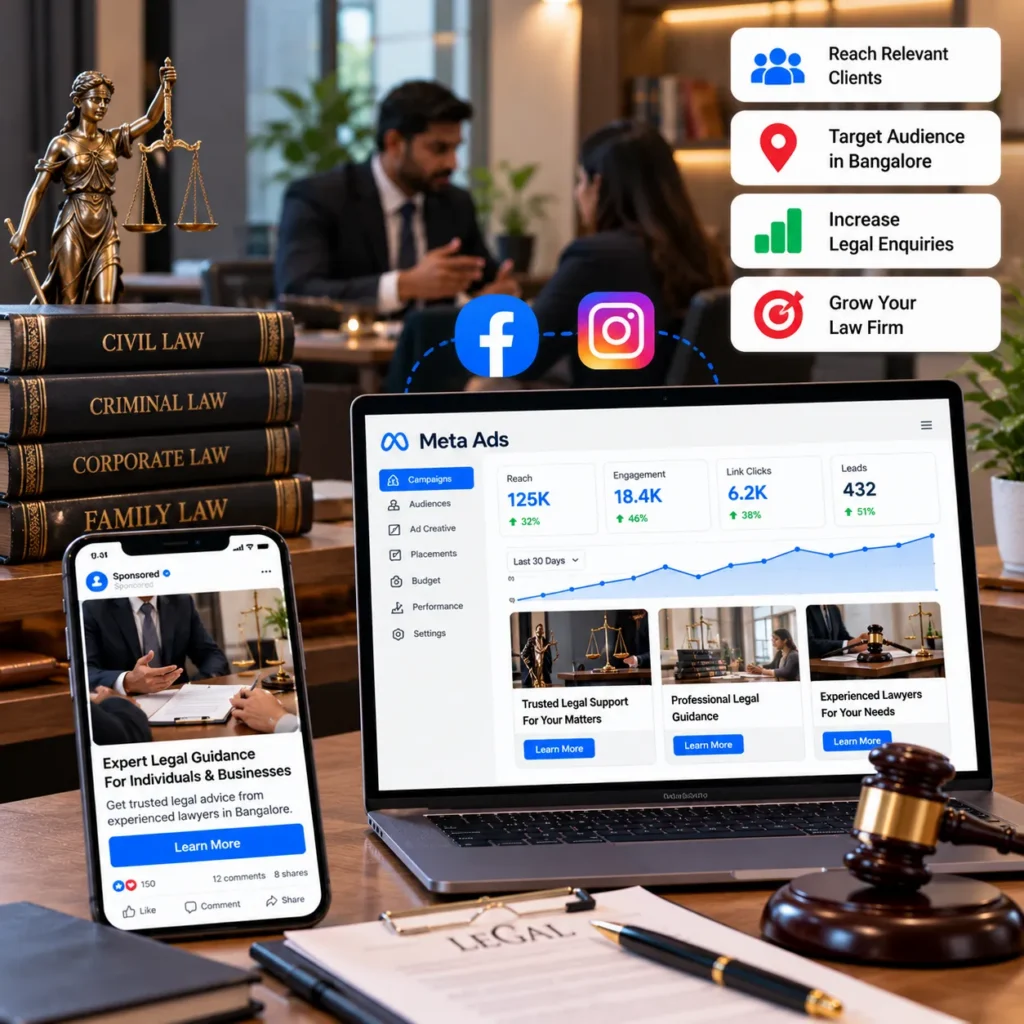
- Why It's Matters
Why Are Law Firm Meta Ads Important for Growing Legal Practices?
People discover professional services through social media while browsing local information, educational content, business updates, and community discussions. For law firms, Facebook and Instagram advertising can provide an additional way to introduce relevant legal services, share useful information, and direct interested audiences to appropriate website pages. Unlike campaigns that depend entirely on people actively searching for a lawyer, Meta advertising can help your firm build awareness among relevant audiences and encourage them to explore your services. A structured advertising strategy gives your firm greater control over campaign objectives, geographic coverage, creative formats, and budget allocation. It also creates opportunities to test different messages and measure actions such as landing-page visits, calls, and enquiry submissions where tracking is available. With clear reporting and responsible advertising practices, Law Firm Meta Ads can become a measurable part of your marketing strategy rather than an activity based on impressions alone.
Introduce your legal practice to relevant audiences through Facebook and Instagram placements. Well-planned campaigns help communicate your services beyond existing followers while maintaining a clear connection between your advertisements, practice areas, and business objectives.
Make people more familiar with your firm’s practice areas through informative advertisements, service highlights, and educational content. Consistent messaging helps audiences understand what your firm offers and where they can find additional information.
Direct interested users to suitable service pages, contact pages, or approved enquiry pathways. Clear advertisements and relevant landing pages can make it easier for visitors to learn about your services and decide whether to contact your firm.
Use appropriate geographic settings to focus campaigns on Bangalore and other genuine service areas. Location planning helps align advertising delivery with your firm’s operating locations, consultation arrangements, and intended markets without unnecessarily extending campaigns to unsuitable areas.
Present verified information about your practice areas, professional background, and available legal services through carefully developed advertising content. Clear, responsible messaging helps audiences understand your firm’s capabilities without relying on exaggerated claims or guaranteed legal outcomes.
Compare suitable creative concepts, headlines, formats, and calls to action to understand which approaches attract relevant engagement. Structured testing helps your firm make advertising decisions based on observed performance instead of relying entirely on assumptions about audience preferences.
Review available data such as reach, impressions, clicks, landing-page visits, and tracked enquiry actions. When conversion tracking is correctly configured, these insights help explain how campaigns perform and where adjustments may improve efficiency.
Start with clearly defined objectives and use campaign results to guide future decisions about budgets, audiences, and creative development. A measured approach allows your firm to explore growth opportunities while keeping spending and performance expectations under review.
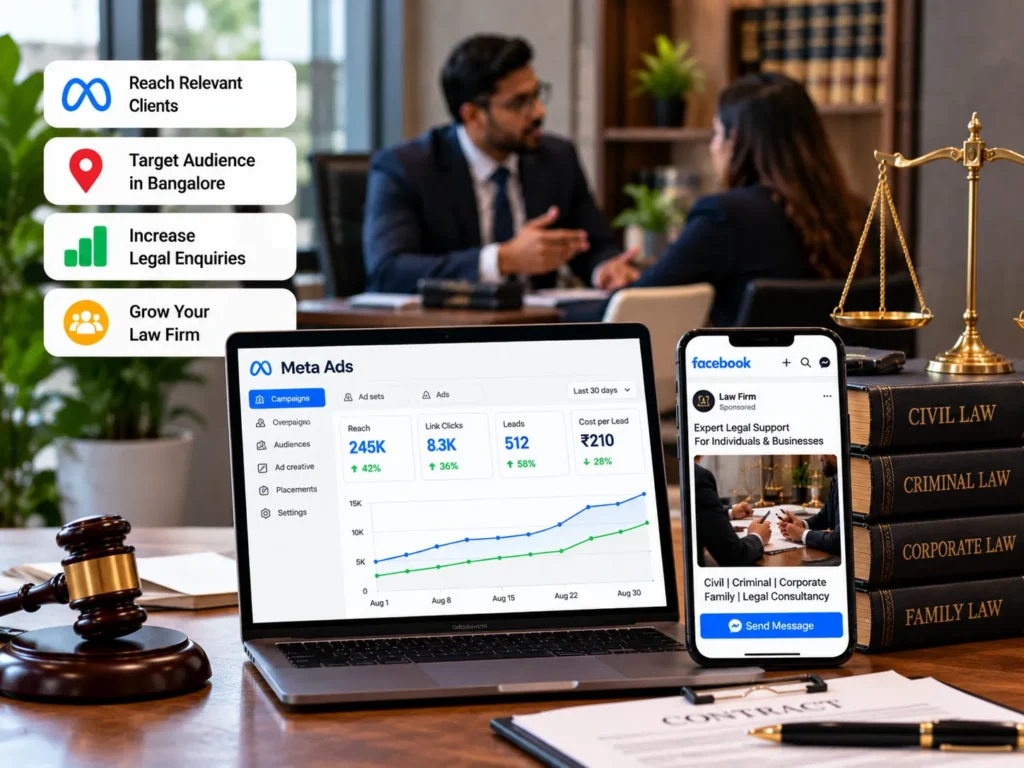
- Services
What Law Firm Meta Ads Services Do We Offer for Your Business Growth?
DigitalClouds provides Law Firm Meta Ads services designed around your firm’s practice areas, target locations, advertising budget, and growth objectives. We combine campaign strategy, audience planning, creative development, landing-page recommendations, conversion measurement, and ongoing optimization to help your firm approach social media advertising systematically. Our focus is on improving campaign relevance, communicating legal services clearly, and measuring progress against practical business goals.
Law Firm Meta Ads Strategy and Campaign Planning
Develop a clear advertising plan based on your legal services, business priorities, geographic coverage, and intended campaign outcomes. We establish campaign objectives, define the role of Facebook and Instagram advertising within your wider marketing activities, and plan how budgets and creative resources should be allocated.
Facebook and Instagram Ads for Legal Services
Create campaigns that introduce your legal services through suitable Facebook and Instagram placements. We align advertisements with the selected objective, audience, and destination page while adapting creative formats to the requirements of each placement. The approach can support brand awareness, website traffic, and eligible enquiry-focused campaigns.
Audience Research and Geographic Targeting
Identify appropriate audience and location settings based on your firm's service coverage, marketing objectives, and campaign eligibility. We review geographic relevance, available targeting options, and audience size to avoid unnecessary restrictions or overly broad delivery. All targeting is planned in accordance with applicable Meta advertising policies and relevant legal-service requirements.
Legal Ad Copy and Creative Development
Develop professional advertising messages, headlines, visuals, and calls to action that explain your services clearly. We tailor the creative direction to your practice areas and campaign goals while avoiding misleading promises, unsupported success claims, or language that implies knowledge of a viewer's private legal circumstances.
Landing Page and Enquiry Pathway Optimization
Assess whether the destination page supports the promise made in your advertisement and provides visitors with clear next steps. We recommend improvements to service descriptions, page structure, contact options, mobile usability, and enquiry forms so interested visitors can explore your firm's services with less confusion.
Meta Pixel and Conversion Tracking Setup
Review or configure suitable Meta Pixel and, where appropriate, Conversions API measurement to track eligible website actions. Implementation depends on your website, technical setup, consent requirements, and available integrations. Accurate event configuration helps distinguish meaningful actions from general engagement and supports more informed campaign evaluation.
Remarketing and Audience Re-Engagement
Where permitted and eligible, plan appropriate audience re-engagement strategies for people who have interacted with your firm's public content or website. We review available audience sources, consent requirements, and Meta's restrictions before recommending implementation. Sensitive legal circumstances should not be inferred or used to create inappropriate advertising audiences.
Campaign Testing and Performance Optimization
Evaluate campaign results to identify opportunities to improve creative relevance, audience settings, placement choices, budgets, and conversion performance. We use available data to prioritize adjustments and avoid making major decisions based on limited evidence or short-term fluctuations.
Reporting, Consultation, and Growth Planning
Provide structured performance reviews covering relevant campaign metrics, advertising spend, tracked actions, and optimization priorities. We explain what the data indicates, identify areas requiring attention, and recommend practical next steps based on your firm's objectives, the quality of available tracking, and the results observed.
- WHY DIGITALCLOUDS
What Makes DigitalClouds the Best Law Firm Meta Ads Agency in Bangalore?
DigitalClouds approaches legal-service advertising with an emphasis on professional communication, structured campaign management, responsible audience selection, and measurable performance. We consider your practice areas, service locations, website experience, and marketing objectives before recommending a campaign direction. Our process is designed to give your firm greater clarity about what is being promoted, how advertising is managed, and how progress is evaluated.
Campaign Planning Around Your Legal Services
We organize advertising around the legal services your firm actually provides, helping campaigns communicate relevant information to suitable audiences. This creates a clearer connection between your marketing objectives, advertisement messages, and the website pages where visitors can explore your services.
Professional and Responsible Ad Messaging
We develop advertisements that communicate your firm's services without relying on exaggerated claims or promises of specific legal outcomes. Our approach prioritizes accurate descriptions, clear calls to action, and content that reflects your professional positioning and applicable advertising requirements.
Location-Focused Campaign Management
We plan geographic settings around Bangalore and other relevant service areas where your firm operates. Location-focused campaign planning helps keep advertising aligned with your consultation arrangements and business priorities while allowing performance to be evaluated across appropriate geographic segments.
Creative Testing and Continuous Improvement
We assess different suitable advertising concepts, formats, and messages to identify which approaches generate relevant engagement. Testing and performance reviews help guide future creative decisions and reduce reliance on unverified assumptions about what will resonate with your intended audience.
Clear Tracking and Performance Reporting
We review available campaign data and configured conversion events to explain how advertising activity relates to website interactions and enquiries. Transparent reporting helps your firm understand spending, evaluate campaign progress, and identify where tracking or landing-page improvements may be necessary.
Growth Decisions Based on Campaign Data
We use observed performance, enquiry feedback where available, and your business objectives to recommend next steps. Instead of promising guaranteed results, we focus on practical optimization, controlled testing, and informed budget decisions that support sustainable campaign development.
- Our Process
How Does Our Law Firm Meta Ads Process Work?
Our Law Firm Meta Ads process follows eight stages, from understanding your legal practice and defining campaign goals to audience planning, creative development, conversion tracking, and ongoing performance review. We begin by assessing your services, target locations, existing marketing activities, website, and advertising budget. Each stage establishes a clear foundation for campaign execution, responsible advertising, and measurable evaluation.
Step 01 of 08 · Business Analysis
Law Firm Advertising Audit and Competitor Analysis
Understand your firm's current marketing position and identify suitable opportunities for social media advertising.
Before launching campaigns, we review your practice areas, existing advertising activity where available, website, service pages, and marketing objectives. We also assess publicly visible competitor messaging and relevant market positioning. This initial review helps establish campaign priorities, identify gaps in your current approach, and determine which improvements should be addressed before spending begins.
Our business analysis activities include:
- Legal Service Assessment: Review your firm's actual practice areas, consultation options, service locations, and business priorities to determine which offerings are suitable for promotion through paid social media campaigns.
- Existing Advertising Review: Examine available Meta Ads account data, campaign settings, creative assets, and historical results to identify configuration issues, spending patterns, and opportunities to improve campaign organization.
- Competitor Advertising Research: Review publicly visible competitor advertisements and marketing messages where available, looking for differences in service presentation, creative formats, and positioning without assuming access to private competitor campaign data.
- Website and Landing Page Assessment: Evaluate the pages intended for advertising traffic, checking service clarity, contact options, mobile usability, and enquiry pathways before recommending campaigns that direct users to those destinations.
- Target Location Review: Confirm the areas where your firm genuinely provides services or consultations, helping ensure that geographic targeting aligns with your operating model and the audiences your business intends to reach.
- Marketing Objective Identification: Establish whether the immediate priority is awareness, website visits, eligible enquiry generation, or another measurable outcome so that campaign setup reflects a clearly defined business purpose.
- Tracking Readiness Assessment: Review available website analytics, Meta Pixel configuration, conversion events, and consent arrangements to identify whether meaningful campaign measurement can be implemented reliably.
- Campaign Opportunity Roadmap: Prepare a prioritized list of recommendations covering campaign objectives, creative requirements, audience settings, landing-page improvements, tracking needs, and budget considerations before campaign implementation begins.
Step 02 of 08 · Campaign Strategy
Law Firm Meta Ads Strategy and Objective Selection
Choose a campaign direction that matches your firm's marketing priorities and available resources.
A clear strategy helps determine how paid social media advertising should support your firm's broader marketing activities. We select campaign objectives based on the desired outcome, the available destination pages, the account's measurement readiness, and the type of audience interaction being sought. We also establish practical evaluation criteria so campaign performance can be reviewed against agreed goals.
Our campaign strategy activities include:
- Objective Selection: Identify the primary campaign outcome, such as awareness, website traffic, or eligible enquiry generation, and choose an appropriate Meta campaign objective based on the current platform options.
- Service Prioritization: Determine which legal practice areas should receive initial advertising attention according to business priorities, service availability, geographic relevance, and the firm's ability to respond to incoming enquiries.
- Campaign Structure Planning: Decide whether campaigns should be separated by service category, location, creative approach, or objective, balancing reporting clarity with the need to gather sufficient data for meaningful evaluation.
- Budget Planning: Establish an initial spending framework based on your available advertising budget, intended test duration, campaign priorities, and expected learning requirements without treating projected results as guaranteed outcomes.
- Audience Approach Planning: Review suitable audience settings and campaign eligibility requirements, ensuring that targeting decisions comply with Meta policies and do not rely on sensitive personal legal circumstances.
- Creative Direction Planning: Define the messages, visual formats, and calls to action that will communicate your services clearly while matching the selected campaign objective and the experience offered on the destination page.
- Performance Measurement Planning: Identify the metrics and conversion actions that will be used to evaluate campaign progress, distinguishing between exposure, engagement, website activity, and meaningful enquiry events.
- Launch Readiness Planning: Document campaign settings, creative requirements, destination URLs, tracking needs, and approval responsibilities so implementation can proceed with fewer avoidable omissions or configuration problems.
Step 03 of 08 · Audience and Location Targeting
Meta Ads Audience Research for Legal Services
Reach appropriate audiences through carefully selected geographic and eligible targeting settings.
Audience planning determines where advertisements may appear and which permitted targeting options are suitable for your campaign. For law firms, geographic relevance and clear service messaging are important considerations. We review the targeting options currently available in Meta Ads and avoid approaches that infer sensitive legal problems, personal hardships, or confidential circumstances from audience behavior.
Our audience and location targeting activities include:
- Geographic Audience Planning: Select relevant locations based on where your firm operates and can provide services, helping reduce unnecessary exposure in areas that fall outside your intended geographic coverage.
- Audience Size Assessment: Review the potential size of eligible audiences to avoid settings that are unnecessarily restrictive or too broad for your budget and campaign objective.
- Permitted Audience Selection: Evaluate available demographic, interest, or other eligible settings only where appropriate under current Meta policies, avoiding assumptions about an individual's legal status or personal circumstances.
- Broad Targeting Evaluation: Consider broader eligible audience settings when they suit the objective and available campaign data, allowing the platform to find relevant engagement without excessive manual restrictions.
- Audience Exclusion Review: Assess suitable exclusions that improve campaign relevance while respecting platform rules and privacy requirements, ensuring that exclusions do not depend on sensitive or improperly inferred legal information.
- Placement Suitability Review: Evaluate available Facebook and Instagram placements according to creative format, objective, budget, and performance needs rather than assuming every placement will be equally effective.
- Audience Testing Plan: Where appropriate, compare eligible audience approaches through controlled tests, using meaningful performance measures to determine whether further targeting adjustments are justified.
- Policy Compliance Checks: Review audience settings against current Meta advertising requirements, especially restrictions relating to personal attributes and sensitive information, before publishing or materially changing campaigns.
Step 04 of 08 · Ad Copy and Creative Development
Professional Facebook and Instagram Ads for Law Firms
Present your legal services through clear messaging and creative assets designed for social media.
Creative quality influences how effectively an advertisement communicates its purpose while people browse social platforms. We develop messages and visual concepts that explain the firm's services, professional approach, and appropriate next steps. Content is reviewed for accuracy, clarity, and compliance, avoiding guarantees, misleading claims, or statements that suggest the advertiser knows the viewer's private legal situation.
Our ad copy and creative activities include:
- Ad Message Development: Write concise advertising messages that explain the relevant legal service, the firm's professional offering, and the intended next step without promising a specific case outcome or implying that success is assured.
- Headline and Description Writing: Develop clear headlines and supporting copy that communicate the advertisement's purpose quickly, maintain consistency with the destination page, and give users an accurate understanding of the service being promoted.
- Creative Concept Development: Plan suitable image, graphic, or video concepts that reflect the firm's professional identity and the campaign objective, ensuring that visual presentation supports rather than distracts from the message.
- Practice-Area Creative Variations: Create distinct creative directions for relevant service categories when needed, ensuring each advertisement communicates an appropriate service message instead of using generic copy for every legal practice.
- Call-to-Action Selection: Choose suitable calls to action that direct users toward a relevant website page, service overview, or approved contact pathway without suggesting that clicking the advertisement guarantees legal assistance or a particular result.
- Platform Format Adaptation: Prepare or adapt approved creative assets for eligible Facebook and Instagram placements, considering aspect ratios, text readability, visual hierarchy, and the display requirements of each format.
- Creative Variation Testing: Develop alternative messages or visual concepts for structured testing, comparing available performance data to identify which creative approaches deserve further investment or refinement.
- Accuracy and Policy Review: Check creative content for unsupported claims, misleading statements, inappropriate personal-attribute references, and relevant platform restrictions before publication, helping reduce avoidable disapprovals and reputational risks.
Step 05 of 08 · Campaign Setup and Launch
Law Firm Meta Ads Campaign Configuration and Publishing
Configure campaign settings carefully so your advertising is ready for review and delivery.
Once the strategy, audiences, and creative assets are prepared, we configure the campaign in Meta Ads Manager. This includes selecting objectives, setting budgets, assigning advertisements, connecting destination pages, and reviewing available measurement settings. Before publishing, we check essential details to reduce avoidable errors and ensure that the campaign reflects the agreed plan.
Our campaign setup activities include:
- Campaign Objective Configuration: Select the appropriate available objective and settings according to your intended outcome, ensuring that the campaign is designed to optimize for the activity that best matches your advertising plan.
- Campaign and Ad Set Organization: Arrange campaigns and ad sets to support clear management of budgets, audiences, placements, and creative variations, avoiding unnecessary duplication that could complicate performance interpretation.
- Budget and Schedule Setup: Enter the agreed spending limits and schedule, reviewing delivery settings and campaign duration so advertising activity remains consistent with the approved budget and planned evaluation period.
- Audience and Location Implementation: Apply the selected geographic and eligible audience settings, confirming that the configured locations and targeting choices match your firm's actual service coverage and the campaign's approved strategy.
- Creative and Copy Upload: Add the approved images, videos, headlines, descriptions, and calls to action, checking that each advertisement accurately represents the service and uses the intended destination URL.
- Destination URL Verification: Test the website links associated with advertisements to confirm that users are directed to the correct service page or approved contact pathway rather than a broken or unrelated destination.
- Tracking Configuration Review: Connect available pixel events, conversion settings, or other agreed measurement tools, checking that the campaign can report relevant activity as reliably as the technical setup permits.
- Pre-Publication Quality Check: Review budgets, schedules, creative assets, destination links, audience settings, and policy-sensitive content before publishing, helping catch configuration mistakes before they affect campaign delivery.
Step 06 of 08 · Landing Page and Conversion Tracking
Legal Service Landing Pages and Enquiry Measurement
Create a clear path from advertisement engagement to relevant website actions.
Campaign performance depends not only on the advertisement but also on the experience users encounter after clicking. We review the destination page and its enquiry pathways, then assess how key actions can be measured. Any technical changes are planned according to the website setup, privacy requirements, and agreed scope of work.
Our landing page and conversion tracking activities include:
- Landing Page Relevance Review: Check that the destination page clearly explains the advertised legal service and matches the message shown in the advertisement, helping visitors understand what the firm offers before deciding whether to enquire.
- Contact Pathway Assessment: Review the placement and clarity of phone numbers, email links, enquiry forms, and other contact options so interested visitors can identify the appropriate next step without navigating through unnecessary sections.
- Mobile Experience Review: Assess page readability, loading behavior, form usability, and contact options on mobile devices, ensuring that users arriving from social media advertisements can access the essential information comfortably.
- Form Conversion Configuration: Where technically supported, configure tracking for successful enquiry form submissions and test whether the event reflects a completed action rather than a button click or incomplete form interaction.
- Meta Pixel Review: Check the relevant pixel installation and event configuration to identify missing or duplicate events, ensuring that reported website activity is as accurate as the available implementation allows.
- Conversions API Assessment: Where appropriate and technically feasible, assess whether Conversions API integration can support measurement reliability, with implementation respecting consent requirements, privacy obligations, and current platform documentation.
- Event Testing and Validation: Test configured conversion events where access permits, reviewing available diagnostics and recorded activity to identify issues that could distort campaign reporting or optimization decisions.
- Conversion Reporting Setup: Organize available reporting around agreed actions such as landing-page views, completed forms, or tracked calls where supported, making clear which actions are measured and which require independent verification.
Step 07 of 08 · Campaign Monitoring and Optimization
Law Firm Meta Ads Performance Improvement
Use campaign data to identify practical opportunities for improving advertising relevance and efficiency.
After campaigns begin delivering, we review performance trends and investigate areas that may need adjustment. Optimization may involve creative testing, budget allocation, placement review, audience settings, or destination-page recommendations. We assess changes against the campaign objective and available data, recognizing that performance can vary with competition, audience response, and the firm's service offerings.
Our campaign optimization activities include:
- Campaign Performance Review: Monitor relevant metrics such as reach, impressions, frequency, clicks, landing-page views, and tracked conversions to understand how the campaign is delivering against its agreed objective.
- Creative Performance Evaluation: Compare available results across creative variations to identify messages and formats that appear more relevant, considering conversion activity and audience quality rather than relying solely on engagement totals.
- Budget Allocation Review: Assess how spending is distributed across campaigns and ad sets, recommending adjustments when performance evidence and business priorities indicate that a different allocation may be more appropriate.
- Audience Delivery Assessment: Review available audience and geographic performance data to identify whether campaign delivery aligns with the intended service areas and whether targeting settings require careful adjustment.
- Placement Performance Analysis: Examine available placement-level results where sufficient data exists, identifying opportunities to improve creative suitability or placement settings without making decisions based on small or inconclusive samples.
- Conversion Pathway Evaluation: Compare clicks and landing-page activity with tracked enquiry events to identify possible issues in the transition from advertisement engagement to meaningful website actions.
- Controlled Optimization Testing: Make considered changes to creative, budget, or targeting settings and evaluate the results over an appropriate period, reducing the risk of drawing conclusions from short-term fluctuations.
- Optimization Priority Management: Maintain a practical list of improvements ranked by expected relevance, available evidence, implementation effort, and business objectives, then review their impact before making further campaign changes.
Step 08 of 08 · Reporting and Growth Planning
Law Firm Meta Ads Reporting and Ongoing Strategy Review
Understand campaign outcomes and make informed decisions about the next stage of advertising.
Regular reporting helps your firm understand where advertising spend is going, how audiences are responding, and which actions are being recorded. We summarize available metrics, explain changes, and recommend next steps based on campaign evidence. Reports distinguish between advertising engagement, tracked enquiries, qualified prospects, and actual business outcomes, which may require separate verification by your team.
Our reporting and growth planning activities include:
- Campaign Summary Reporting: Present key metrics such as reach, impressions, clicks, spending, and available conversion events in a structured report that helps your firm understand the campaign's overall activity.
- Cost and Conversion Analysis: Evaluate available cost metrics alongside properly configured conversion data, explaining how measurement limitations, attribution settings, and incomplete tracking may affect the interpretation of campaign performance.
- Enquiry Quality Review: Where your team can provide appropriate feedback, assess whether recorded enquiries are relevant to the firm's services and service areas, avoiding the assumption that every tracked form submission represents a qualified prospect.
- Creative and Audience Insights: Summarize which creative approaches, placements, or eligible audience settings show promising patterns, using available evidence to guide future testing rather than making unsupported performance claims.
- Budget Utilization Review: Compare actual advertising spend with the agreed budget and campaign priorities, identifying unusual delivery patterns or opportunities to adjust spending based on the firm's objectives and the results observed.
- Tracking Accuracy Review: Revisit conversion events and reporting configurations when results appear inconsistent, helping identify potential measurement gaps before using the data to make significant advertising decisions.
- Next-Step Recommendations: Develop a prioritized action plan covering creative refreshes, campaign adjustments, landing-page improvements, or tracking corrections, with each recommendation tied to an observed issue or a defined marketing objective.
- Growth Strategy Review: Reassess campaign performance, service priorities, target locations, and available resources with your firm, using the findings to decide whether to maintain, refine, or carefully expand advertising activity.
What Are Law Firm Meta Ads and How Can They Help Legal Practices?
Law Firm Meta Ads are paid advertising campaigns run across Meta platforms, including Facebook and Instagram, to promote legal services, introduce a law firm’s expertise, and encourage relevant enquiries. Unlike search advertising, which generally reaches people based on what they are actively searching for, Meta advertising can help firms present useful legal service information through visual creatives, educational content, and carefully planned audience targeting. Campaigns can support awareness, website visits, and enquiry generation when the advertised services, messaging, and landing pages are relevant to the firm’s actual practice areas.
Law firms can use Meta advertising to support their marketing objectives in several ways:
- Promote Legal Practice Areas: Create separate campaigns for family law, corporate law, property disputes, employment matters, or other services the firm genuinely handles, allowing advertisements to communicate relevant information to appropriate audiences.
- Increase Brand Awareness: Introduce the firm’s name, practice areas, location, and professional approach through informative advertisements that help people become familiar with its services before deciding whether to seek legal assistance.
- Encourage Website Visits: Direct interested audiences to relevant service pages that explain the firm’s legal offerings, consultation process, contact information, and other practical details needed to make an informed enquiry.
- Generate Relevant Enquiries: Use suitable lead forms or website contact options to help prospective clients initiate a conversation about legal services without suggesting that advertising itself guarantees representation or a particular legal outcome.
- Promote Educational Content: Share general legal information, explanatory videos, and practical articles that help audiences understand common legal processes while maintaining appropriate boundaries around personalised legal advice.
- Reach Local Audiences: Use appropriate geographic settings to introduce the firm’s services to people in Bangalore or other areas where the practice is able and permitted to serve clients.
- Measure Campaign Activity: Review impressions, clicks, landing-page visits, and suitable enquiry indicators to understand how audiences interact with advertisements and where improvements may be worthwhile.
- Support Consistent Marketing: Combine paid campaigns with the firm’s website, organic content, and other suitable communication channels to maintain a more coordinated approach to online visibility and prospective client engagement.
How Can Meta Ads Help Law Firms Generate More Client Enquiries?
Meta advertising can help law firms introduce their services to audiences who may not yet be actively searching for a lawyer but could benefit from learning about the firm’s practice areas. Facebook and Instagram campaigns can present educational content, explain consultation options, and direct interested visitors to relevant website pages or enquiry forms. The quality of enquiries depends on the audience, campaign objective, creative messaging, service relevance, and follow-up process. A successful strategy focuses on attracting appropriate enquiries rather than promising a specific number of clients or guaranteed case outcomes.
Law firms can strengthen their enquiry-generation process through these approaches:
- Promote Specific Legal Services: Build advertisements around the firm’s actual practice areas, such as business agreements, property matters, family law, or employment disputes, so the message reflects the legal assistance genuinely available.
- Use Suitable Lead Forms: Create clear forms that request only the information necessary for an initial enquiry, helping prospective clients understand the next step without unnecessarily collecting confidential case details.
- Develop Relevant Landing Pages: Direct visitors to pages explaining the particular legal service, the firm’s consultation process, and available contact options instead of sending every audience member to a general homepage.
- Create Educational Advertisements: Share useful information about legal procedures, documentation, or common process-related questions to help audiences understand the firm’s expertise without implying that a general advertisement provides personalised legal advice.
- Test Different Creative Formats: Compare suitable image advertisements, short videos, carousels, and other eligible formats to determine which presentation communicates the firm’s services clearly and encourages relevant engagement.
- Make Consultation Steps Clear: Explain how prospective clients can request an appointment, contact the office, or submit an enquiry, ensuring that the advertised process matches the firm’s actual availability and procedures.
- Review Enquiry Quality: Evaluate whether incoming enquiries relate to the advertised legal service and whether the firm can reasonably accommodate the requested consultation, using appropriate privacy-conscious feedback.
- Improve Follow-Up Procedures: Establish a consistent process for reviewing new enquiries and responding appropriately, because clear communication and timely handling can influence whether interested prospects proceed to a consultation.
What Should You Expect From a Law Firm Meta Ads Agency in Bangalore?
A Law Firm Meta Ads agency in Bangalore should understand the advertising requirements of legal practices, including how to communicate legal services accurately, develop suitable creative content, select appropriate campaign objectives, and measure enquiry activity. Its responsibilities may include campaign strategy, audience planning, advertisement development, lead-generation setup, landing-page recommendations, budget management, and reporting. The agency should also understand applicable Meta advertising policies, professional conduct requirements, and privacy considerations. Before launching campaigns, the law firm should receive a clear explanation of the proposed approach and the work covered by the management agreement.
When evaluating an agency, consider whether it can provide the following services:
- Legal Industry Campaign Planning: Develop a strategy around the firm’s actual practice areas, service locations, consultation capacity, and marketing objectives rather than applying the same advertising approach to every professional services business.
- Audience and Location Planning: Configure appropriate audience and geographic settings based on the firm’s service area, while avoiding targeting methods that could violate platform rules or exploit sensitive personal circumstances.
- Professional Ad Creative Development: Prepare clear visual advertisements, captions, and calls to action that explain legal services accurately without unsupported claims, misleading guarantees, or language that creates unrealistic expectations.
- Lead Generation Setup: Configure suitable lead forms or website enquiry campaigns, ensuring that questions are relevant to the initial contact and do not unnecessarily request confidential case information.
- Landing-Page Recommendations: Review the website pages connected to advertisements to ensure they explain the relevant service, present accurate firm information, and make the enquiry process straightforward for visitors.
- Campaign Budget Management: Monitor advertising expenditure and performance indicators, recommending adjustments based on campaign evidence, business priorities, and the firm’s ability to handle incoming enquiries.
- Privacy and Policy Reviews: Check advertising content, data collection practices, and campaign settings against applicable platform policies and relevant legal or professional obligations before and during campaign management.
- Transparent Reporting and Communication: Provide understandable reports covering campaign activity, spending, enquiry indicators, completed work, and proposed improvements so the firm can evaluate the advertising strategy responsibly.
How Are Law Firm Meta Ads Different From Google Ads for Legal Services?
Law Firm Meta Ads and Google Ads can both support legal marketing, but they reach audiences in different ways. Meta advertising typically introduces legal services through content shown on Facebook and Instagram, while Google Search Ads can connect with people actively searching for particular legal services. Meta campaigns can be useful for awareness, educational content, and selected enquiry-generation objectives, whereas search campaigns may be better suited to capturing existing service-related search intent. The right choice depends on the firm’s objectives, audience, advertising eligibility, budget, and ability to follow up on enquiries.
Law firms should understand these differences when planning their advertising strategy:
- Audience Discovery: Meta advertisements can introduce the firm’s services to people browsing social platforms, while Google Search Ads generally respond to searches that indicate an existing interest in a legal service.
- Creative Presentation: Facebook and Instagram support visual storytelling through images, short videos, carousels, and educational creatives, giving firms different ways to explain their practice areas and consultation process.
- Campaign Objectives: Meta campaigns can focus on awareness, engagement, website visits, or eligible lead-generation objectives, depending on the firm’s goals and the available advertising features.
- Search Intent Differences: Google Search campaigns may capture people looking for a lawyer or specific legal service at that moment, while Meta audiences may need more information before deciding to enquire.
- Content Opportunities: Meta can support educational posts and legal awareness content that introduce general procedures, while search advertisements can connect queries with pages directly addressing the requested service.
- Privacy and Targeting Considerations: Both platforms require careful handling of sensitive information, and law firms should avoid using confidential case details or inappropriate personal attributes for audience targeting.
- Performance Measurement: Compare the platforms using appropriate indicators such as relevant enquiries, cost per enquiry, and website activity rather than judging performance exclusively by clicks or engagement.
- Complementary Marketing Roles: Some firms may use Meta for educational awareness and Google Search for active service demand, provided the combined strategy fits the budget and complies with applicable advertising rules.
Which Legal Services Can Law Firms Promote Through Meta Ads?
Law firms may use Meta advertising to introduce eligible legal services, explain their practice areas, and direct interested audiences to relevant information. The campaign should reflect the firm’s genuine expertise, the services it is authorised to provide, and the locations it can serve. Different legal services may require different messaging because business clients, individuals involved in property matters, and people seeking family law assistance have different information needs. Advertising content should remain factual, avoid guarantees about legal results, and comply with applicable platform policies and professional obligations.
Depending on the firm’s practice areas and advertising eligibility, campaigns may promote:
- Corporate and Commercial Law: Introduce services involving business agreements, commercial documentation, company-related legal matters, and other relevant work, while accurately describing the firm’s actual capabilities and consultation arrangements.
- Property and Real Estate Law: Explain eligible legal services concerning property documentation, agreements, transactions, or disputes, ensuring that advertisements do not promise a particular result in a legal matter.
- Family Law Services: Provide general information about eligible family law consultations and relevant procedures, using respectful language that avoids exploiting personal distress or making assumptions about an individual’s circumstances.
- Employment and Labour Law: Promote services related to workplace agreements, employment disputes, or applicable labour matters, with clear explanations of the service offered and the firm’s consultation process.
- Civil Litigation Services: Introduce the firm’s work involving eligible civil disputes and legal proceedings, explaining the general nature of the practice without predicting how a court or opposing party will act.
- Intellectual Property Services: Advertise eligible assistance involving trademarks, copyright, licensing, or related legal documentation where these services fall within the firm’s expertise and permitted advertising scope.
- Contract Drafting and Review: Explain services involving commercial contracts, business agreements, or other relevant documents, helping prospective clients understand what type of legal support the firm offers.
- Legal Consultation Services: Promote initial consultations where available, clearly communicating the appointment process, consultation format, and information prospective clients should review before contacting the firm.
What Makes an Effective Meta Ads Campaign for a Law Firm?
An effective Meta advertising campaign for a law firm combines a clear objective, accurate legal messaging, suitable creative content, relevant audience settings, and an easy enquiry process. It should help people understand the firm’s services without implying guaranteed legal outcomes or using personal circumstances in an inappropriate way. Campaign performance also depends on whether the website or lead form provides useful information and whether the firm can manage incoming enquiries. Regular reviews allow the firm to assess spending, engagement, and enquiry relevance before making informed changes.
A well-planned campaign should include the following elements:
- Clearly Defined Campaign Objectives: Decide whether the campaign should increase awareness, introduce a particular practice area, generate suitable enquiries, or encourage visits to a service page before choosing the campaign setup.
- Service-Specific Creative Content: Develop advertisements that explain one legal service or practice area at a time, helping audiences understand the message without combining unrelated legal offerings into a confusing advertisement.
- Accurate and Responsible Copy: Describe the firm’s services and experience truthfully, avoiding guaranteed case results, unsupported superiority claims, misleading urgency, or language that could create unrealistic expectations about legal assistance.
- Suitable Audience Settings: Choose appropriate audience and geographic configurations that fit the firm’s service area and campaign objective, while respecting restrictions involving sensitive personal attributes and legal advertising.
- Relevant Landing Pages: Connect each advertisement to a page that explains the advertised service, provides accurate firm details, and offers a straightforward way to make an enquiry or request a consultation.
- Privacy-Conscious Lead Collection: Request only information needed for an initial enquiry and avoid collecting detailed case histories or confidential documents through advertising forms that are not designed for secure legal communication.
- Appropriate Performance Tracking: Measure suitable campaign interactions and enquiry indicators using a compliant setup, ensuring that confidential client information is not unnecessarily transmitted through advertising or analytics tools.
- Ongoing Performance Reviews: Examine creative performance, spending, audience relevance, and enquiry quality at suitable intervals, using the available evidence to guide changes rather than relying on engagement numbers alone.
How Can Law Firm Meta Ads in Bangalore Help Attract Local Clients?
Law Firm Meta Ads in Bangalore can help legal practices introduce their services to relevant audiences in the city and selected surrounding areas. A local campaign can use suitable geographic settings, professional creatives, and service-specific website pages to explain what the firm offers and how prospective clients can make contact. The strategy should reflect the firm’s office location, consultation arrangements, practice areas, and ability to serve clients in the intended jurisdiction. Geographic targeting may improve relevance, but it does not guarantee enquiries from nearby residents or suitable legal matters.
Law firms seeking local visibility can consider these approaches:
- Define the Relevant Service Area: Identify the locations the firm can serve based on its office, practice areas, consultation arrangements, and applicable jurisdictional requirements instead of targeting Bangalore without a clear business objective.
- Use Local Service Messaging: Mention Bangalore naturally when it helps explain the firm’s location or service availability, ensuring that advertisements accurately reflect where consultations are offered and which legal services are available.
- Create Location-Relevant Landing Pages: Provide accurate office details, contact information, consultation arrangements, and relevant practice-area descriptions so visitors can assess whether the firm is suitable for their enquiry.
- Separate Campaigns by Practice Area: Where appropriate, organise campaigns for different legal services so people see information relevant to the service being promoted rather than a broad advertisement covering every legal matter.
- Choose Appropriate Geographic Settings: Review available location options and select settings that fit the intended audience, while recognising that platform location signals do not guarantee that every person reached is physically nearby.
- Promote Educational Legal Content: Share general information about legal processes or documentation that may interest local audiences, ensuring the content remains accurate and does not substitute for personalised legal advice.
- Maintain Consistent Business Information: Keep the firm’s name, address, contact details, and consultation information accurate across the website and relevant business profiles to avoid confusion when prospective clients investigate the practice.
- Evaluate Local Enquiry Relevance: Review whether incoming enquiries relate to the advertised services and intended service area, then use appropriate feedback to refine campaign messaging and geographic priorities.
How Long Does It Take for Law Firm Meta Ads to Generate Enquiries?
Meta advertisements may begin delivering after campaign approval and activation, but the time required to generate relevant legal enquiries varies between firms. Performance depends on the practice area, audience, creative quality, budget, landing-page experience, competition, and advertising eligibility. Some campaigns may attract early engagement, while others require changes to messaging, targeting, or the enquiry process. Law firms should evaluate results over an appropriate period and distinguish between social engagement, genuine service enquiries, and consultations that are actually suitable for the practice.
To assess early campaign performance realistically, law firms can follow these steps:
- Prepare the Campaign Before Launch: Confirm that advertisements, service pages, lead forms, contact details, and campaign settings are ready, reducing avoidable problems that could interfere with delivery or prospective client enquiries.
- Allow for Advertisement Review: Account for Meta’s advertisement review process and any additional checks that may apply to the content, claims, or targeting methods used in legal service promotion.
- Start With Defined Practice Areas: Focus the initial campaign on selected services with clear objectives, allowing the firm to understand audience response without spreading a limited budget across too many unrelated legal offerings.
- Monitor Early Delivery: Review impressions, reach, clicks, and other suitable indicators to establish whether advertisements are being delivered and whether the intended audience is engaging with the content.
- Check the Enquiry Journey: Test lead forms, website contact options, and appointment instructions to make sure prospective clients can submit an enquiry without encountering technical issues or unclear next steps.
- Assess the Relevance of Responses: Review whether enquiries concern the advertised legal service and whether they fit the firm’s expertise, rather than treating every form submission as a suitable prospective client.
- Make Changes Based on Evidence: Use sufficient campaign information to assess creative, audience, and landing-page performance before making major adjustments that could disrupt learning or create unnecessary management complexity.
- Set Practical Evaluation Periods: Agree on review milestones and appropriate indicators with the campaign manager, recognising that no fixed timeframe can guarantee a particular volume of enquiries or signed clients.
How Much Does Law Firm Meta Ads Management Cost in Bangalore?
The cost of Law Firm Meta Ads management in Bangalore depends on the number of practice areas being promoted, campaign complexity, creative requirements, audience strategy, advertising budget, and level of ongoing support. The amount paid to Meta for advertising is separate from the professional fee charged by an agency. A small practice promoting one service may require a different setup from a larger firm advertising several departments or locations. Before committing, law firms should understand the management scope, expected deliverables, additional charges, and how advertising expenditure will be reported.
When preparing a budget for legal advertising, consider these factors:
- Monthly Advertising Spend: Decide how much to allocate to Meta based on the firm’s objectives, available resources, and intended campaign scope, recognising that spending alone cannot guarantee a specific number of enquiries.
- Agency Management Fees: Clarify whether the professional fee includes campaign strategy, advertisement setup, audience planning, optimisation, reporting, and client communication, or whether some activities are charged separately.
- Number of Practice Areas: Assess whether corporate law, property matters, family law, or other services need separate campaigns and creative assets, which can affect the amount of planning and management required.
- Creative Production Requirements: Check whether the proposal includes advertisement design, copywriting, video editing, creative variations, and ongoing content updates or whether these services require an additional production budget.
- Landing-Page Development: Determine whether website improvements, dedicated service pages, enquiry form updates, or technical changes are included in the agency’s fee or billed as separate projects.
- Tracking and Reporting Needs: Understand the costs associated with suitable conversion measurement, analytics configuration, reporting tools, and any additional technical work required to assess campaign performance responsibly.
- Ongoing Optimisation Scope: Confirm how frequently the agency will review campaigns, what changes are included in routine management, and whether major restructuring or new campaign launches incur extra charges.
- Transparent Cost Breakdown: Request a written estimate separating advertising expenditure, management fees, creative production, taxes, and optional services so the firm’s financial commitment is clear before the campaign begins.
How Can Law Firms Improve the Quality of Meta Ads Leads?
For law firms, a useful lead is not simply someone who submits a form; the enquiry should relate to a service the firm provides and fit its professional capacity. Campaigns may attract low-relevance responses when advertisements are vague, forms request insufficient context, or the audience is not aligned with the firm’s practice areas. Improving lead quality requires consistent messaging, a clear consultation process, and appropriate evaluation of incoming enquiries. Law firms must also take care not to expose confidential information through advertising forms, audience lists, or marketing measurement systems.
Law firms can improve lead relevance through the following measures:
- Define the Intended Enquiry: Establish which types of legal enquiries are relevant to the firm’s practice areas, allowing campaign objectives and creative content to focus on the services the firm can genuinely provide.
- Use Clear Service-Specific Messaging: Explain the legal service being promoted and the general nature of the consultation so prospective clients can decide whether the advertisement is relevant to their needs.
- Improve Lead Form Questions: Ask a small number of appropriate initial questions that help identify the requested service without encouraging users to submit confidential documents or detailed sensitive case information.
- Match Advertisements With Landing Pages: Ensure that each advertisement leads to relevant service information, helping visitors understand the firm’s offering before deciding whether to make an enquiry.
- Test Suitable Creative Variations: Compare different approved headlines, images, and calls to action to learn which versions communicate the service most clearly and attract more relevant responses.
- Review Enquiry Handling: Establish a process for assessing new enquiries and responding appropriately, while ensuring that staff follow suitable confidentiality and information-handling procedures.
- Measure Meaningful Indicators: Evaluate relevant enquiry activity and, where appropriate, consultation outcomes through compliant reporting rather than assuming that clicks, likes, or form submissions automatically represent valuable leads.
- Refine Campaigns Gradually: Use accumulated information about audience relevance, creative performance, and enquiry patterns to make informed adjustments instead of changing multiple campaign elements without a clear reason.
Can Small Law Firms and Independent Lawyers Benefit From Meta Ads?
Small law firms and independent lawyers may use Meta advertising to introduce their practice areas, share general legal information, and make consultation options easier to discover. They do not necessarily need a large advertising budget or campaigns covering every legal service. A focused approach can prioritise one or two relevant practice areas and a clearly defined service location. However, advertising suitability depends on the firm’s objectives, available resources, applicable professional rules, and ability to handle incoming enquiries responsibly.
Smaller legal practices can consider these approaches when planning Meta campaigns:
- Promote Core Practice Areas: Start with the legal services that best reflect the firm’s expertise and business priorities, allowing advertisements to communicate a clear message rather than promoting every possible legal matter.
- Set a Manageable Budget: Choose an advertising amount that the practice can sustain while gathering useful campaign information, avoiding commitments based on assumed lead volumes or guaranteed client acquisition.
- Focus on Relevant Locations: Select appropriate geographic settings based on the office location and service area, ensuring that local advertising aligns with the firm’s practical and jurisdictional ability to provide legal services.
- Use Educational Creative Content: Share general information about legal procedures, documentation, and common process-related questions to introduce the firm’s expertise without presenting advertisements as personalised legal advice.
- Build a Professional Website Presence: Ensure that service pages explain the practice areas, consultation process, firm details, and contact options clearly so visitors can assess the service before submitting an enquiry.
- Keep Enquiry Collection Simple: Use an appropriate contact form that gathers only necessary initial information and directs detailed case discussions to suitable private communication channels.
- Review Campaign Activity Regularly: Monitor expenditure, audience engagement, enquiry relevance, and website performance so the practice can identify whether its advertising approach remains aligned with its objectives.
- Expand When the Evidence Supports It: Consider additional practice areas, creative formats, or locations when the available budget, campaign performance, and capacity to handle enquiries justify a wider advertising strategy.
Should a Law Firm Manage Meta Ads In-House or Hire an Agency?
A law firm can manage Meta Ads internally if its team has the necessary advertising knowledge, time, creative resources, and understanding of applicable professional and platform requirements. Hiring an agency may provide dedicated campaign management, creative support, structured reporting, and ongoing optimisation. Neither option guarantees better results, because performance depends on the firm’s services, audience, messaging, budget, and enquiry process. The appropriate choice should reflect the practice’s resources and the complexity of its advertising requirements.
Law firms can compare the two approaches using these considerations:
- Internal Advertising Skills: Assess whether the team understands Meta campaign objectives, audience settings, creative testing, budget management, reporting, and the advertising restrictions relevant to legal services.
- Time for Campaign Management: Consider whether staff can regularly review campaign delivery, update creative content, assess incoming enquiries, and resolve technical issues while meeting their existing legal and administrative responsibilities.
- Creative Production Capacity: Determine whether the firm can consistently produce clear advertisements, educational content, and suitable visual assets or would benefit from outside assistance with content development.
- Agency Experience and Process: If considering an agency, ask how it plans legal service campaigns, checks advertising policies, manages creative testing, and communicates performance findings to clients.
- Budget and Resource Comparison: Compare agency fees and advertising expenditure with the cost of internal staff time, creative production, training, and any tools needed to manage campaigns effectively.
- Coordination With Legal Teams: Establish how campaign managers will receive accurate information about practice areas, consultation availability, professional requirements, and updates to the firm’s services.
- Privacy and Account Security: Ensure that the chosen approach includes suitable account permissions, careful enquiry-data handling, and appropriate controls over the information shared with advertising and analytics platforms.
- Ownership and Accountability: Confirm who controls the advertising account, approves creative content, manages billing, reviews performance, and authorises changes, regardless of whether campaigns are handled internally or externally.
What Meta Advertising Policies Should Law Firms Understand Before Launching Campaigns?
Law firms should review Meta’s current advertising standards and applicable legal professional requirements before launching campaigns. Advertisements must accurately describe the services being offered and should not make misleading promises, imply guaranteed case outcomes, or use prohibited targeting practices. Privacy also requires careful consideration because legal enquiries may contain sensitive personal circumstances or confidential case details. Requirements can vary according to the content, targeting method, and jurisdiction, so the firm should assess its specific campaign rather than assume that all legal advertising is automatically eligible.
Before launching campaigns, law firms should review the following areas:
- Accurate Service Claims: Describe the firm’s actual legal services and experience honestly, avoiding unsupported statements about success rates, guaranteed outcomes, or claims that could create unrealistic expectations about representation.
- Professional Conduct Requirements: Check the applicable rules governing legal advertising, solicitation, professional communications, and client confidentiality in the jurisdiction where the firm intends to promote its services.
- Respectful Advertising Language: Avoid messaging that exploits fear, financial pressure, family disputes, or other difficult personal circumstances to pressure people into submitting an enquiry or requesting a consultation.
- Appropriate Audience Targeting: Review the available audience settings and avoid targeting methods that violate platform rules or rely on sensitive personal characteristics and inferred legal circumstances.
- Privacy-Conscious Lead Forms: Request only necessary initial contact information and avoid collecting detailed case histories, identity documents, or confidential legal records through unsuitable advertising forms.
- Responsible Tracking Practices: Review website tags, conversion measurement, and analytics configurations to reduce the risk of transmitting confidential enquiry information or other sensitive details to advertising platforms.
- Transparent Website Information: Ensure that landing pages clearly identify the firm, accurately describe available services, and provide appropriate contact details without misleading visitors about the nature of the offering.
- Ongoing Policy Monitoring: Review advertisement approvals, account notifications, and relevant policy updates periodically so the firm can identify potential issues and make appropriate corrections when requirements change.
Can Meta Ads Promote Multiple Legal Practice Areas and Office Locations?
Meta Ads can support campaigns for multiple legal practice areas and office locations when the account is organised around clear objectives and the firm’s actual capabilities. A firm offering corporate law, property law, employment law, and other services may need separate creative approaches because each audience has different information requirements. Firms with several offices may also need location-specific messaging and landing pages. A structured account helps maintain relevance, allocate spending, and evaluate performance without combining unrelated services into a single broad campaign.
Law firms with multiple services or locations can consider these campaign practices:
- Organise Campaigns by Practice Area: Separate major legal service categories where appropriate so advertisements communicate a clear message and the firm can assess performance without mixing unrelated audience interests.
- Create Relevant Service Pages: Direct visitors to pages explaining the advertised practice area, consultation process, and contact options rather than relying on a single generic page for every legal service.
- Differentiate Office Locations: Use accurate location information and suitable campaign structures where necessary to help prospective clients identify the correct office and understand where consultations are available.
- Maintain Consistent Brand Communication: Keep the firm’s name, visual identity, contact information, and professional messaging consistent across campaigns while adapting each advertisement to its particular service and audience.
- Allocate Budgets by Priority: Distribute spending according to business objectives, service demand, available resources, and campaign evidence rather than automatically dividing the budget equally across every department or office.
- Adapt Creative Content to Services: Develop suitable images, videos, and copy for each practice area so prospective clients receive relevant information instead of advertisements that attempt to explain unrelated legal services simultaneously.
- Track Performance by Campaign: Use appropriate reporting to compare engagement and relevant enquiry indicators across services and locations without collecting or sharing confidential case information unnecessarily.
- Expand in Manageable Stages: Introduce additional practice areas or locations after reviewing the existing campaign structure, available budget, creative requirements, and the firm’s ability to respond to new enquiries.
How Do You Choose the Right Law Firm Meta Ads Agency in Bangalore?
Selecting a suitable Law Firm Meta Ads agency in Bangalore requires reviewing its campaign strategy, understanding of legal advertising requirements, creative capabilities, reporting methods, and communication practices. The agency should be able to explain how it will promote the firm’s services, choose suitable campaign objectives, measure relevant enquiry activity, and handle privacy considerations. It should also provide realistic expectations instead of promising guaranteed clients or case outcomes. Before entering an agreement, the law firm should understand the services included, account ownership, fees, and responsibilities of each party.
Use these criteria when comparing agencies:
- Understanding of Legal Services: Ask how the agency would approach your particular practice areas and whether its proposed advertising strategy reflects the firm’s actual services, consultation process, and professional responsibilities.
- A Clearly Explained Strategy: Request a practical plan covering campaign objectives, audience settings, creative formats, target locations, landing-page requirements, budget allocation, and the method for reviewing performance.
- Awareness of Advertising Requirements: Confirm that the agency checks applicable Meta policies and legal professional rules, particularly those concerning misleading claims, solicitation, audience targeting, and confidentiality.
- Transparent Pricing and Deliverables: Obtain a written breakdown of management fees, advertising expenditure, creative production, landing-page work, taxes, and any optional services that may incur additional charges.
- Useful Performance Reporting: Ensure that reports explain campaign spending, delivery, relevant engagement, enquiry indicators, completed tasks, and proposed improvements in a way the firm’s decision-makers can understand.
- Realistic Campaign Expectations: Be cautious of agencies that guarantee a fixed number of clients, legal cases, or returns without considering the firm’s practice areas, competition, budget, and ability to convert enquiries.
- Privacy and Security Practices: Ask how the agency manages advertising account access, lead forms, conversion tracking, and data handling to reduce unnecessary exposure of confidential information.
- Clear Communication and Ownership: Establish who approves advertisements, controls the account, manages billing, reviews enquiries, and communicates changes, ensuring the firm retains appropriate access and oversight of its advertising activity.
How Can Your Law Firm Get Started With Meta Ads at DigitalClouds?
Getting started with Law Firm Meta Ads at DigitalClouds can begin with an assessment of your practice areas, target locations, website, advertising objectives, and available budget. This initial discussion helps establish which legal services may be suitable for promotion and which campaign objectives fit the firm’s priorities. The proposed approach can include creative planning, audience configuration, lead-generation setup, landing-page recommendations, and appropriate performance measurement. Campaign decisions should reflect the firm’s actual capabilities, relevant advertising policies, and professional responsibilities rather than assuming that paid advertising guarantees new clients.
Law firms can prepare the following information before discussing a campaign:
- Identify Your Main Practice Areas: List the legal services you intend to promote, such as corporate law, property matters, employment law, or family law, ensuring the proposed advertisements reflect services the firm actually provides.
- Define Your Marketing Objectives: Clarify whether your priority is increasing awareness, promoting selected services, attracting relevant enquiries, or encouraging visitors to review specific legal service pages before making contact.
- Confirm Your Target Locations: Identify the cities or areas your firm serves and explain whether the campaign should focus on one office, several branches, or a broader service area.
- Share Your Website Details: Provide the firm’s website address so its practice-area pages, professional information, contact options, mobile usability, and enquiry process can be assessed before campaign launch.
- Establish an Advertising Budget: Decide how much the firm can allocate to Meta advertising and whether the overall plan also needs creative production, campaign management, or website development support.
- Discuss Creative and Content Requirements: Explain whether you already have suitable images, videos, educational content, and brand assets or need assistance preparing campaign materials that communicate legal services accurately.
- Plan Privacy-Conscious Measurement: Determine how appropriate enquiry actions will be assessed while avoiding unnecessary collection of confidential case information and following applicable platform and professional requirements.
- Agree on Reporting and Reviews: Establish how advertising expenditure, campaign delivery, relevant enquiries, and optimisation recommendations will be communicated so the firm can assess progress and make informed decisions.
If your firm is exploring Law Firm Meta Ads in Bangalore, DigitalClouds can be considered for campaign planning, creative development, audience setup, lead-generation campaigns, and performance reporting. Share your practice areas, website, target locations, and approximate budget to discuss an approach suited to your firm’s objectives. Campaign eligibility and results depend on applicable advertising policies, audience response, competition, budget, and the services being promoted.
- LET'S GROW YOUR BUSINESS
Ready to Grow Your Legal Practice with Law Firm Meta Ads in Bangalore?
Want to strengthen your firm’s online visibility and make your advertising investment more measurable? DigitalClouds provides Law Firm Meta Ads in Bangalore to help legal professionals promote their services through structured Facebook and Instagram campaigns. We combine audience planning, professional ad creatives, relevant landing-page recommendations, conversion tracking, and ongoing performance reviews to help your firm understand what is working and where improvements may be needed. Our focus is on responsible advertising, transparent reporting, and informed decisions that support your long-term marketing goals.
- FAQs
Frequently Asked Questions About Law Firm Meta Ads
How Can Law Firm Meta Ads Help Promote Legal Services?
Law Firm Meta Ads can introduce your practice areas to eligible audiences on Facebook and Instagram through informative advertisements and relevant creative content. Campaigns can direct interested users to service pages or appropriate contact pathways. Their effectiveness depends on campaign objectives, creative relevance, audience settings, landing-page experience, budget, and the accuracy of conversion tracking.
Are Facebook and Instagram Ads Suitable for Law Firms in Bangalore?
Facebook and Instagram advertising may be suitable for law firms seeking to increase awareness, promote educational content, or direct audiences to relevant service pages. Geographic settings can help align campaigns with Bangalore and other genuine service areas. Before launch, the firm should review applicable professional advertising requirements and Meta’s current policies to ensure that the proposed messaging and campaign structure are appropriate.
What Is the Budget Required for Law Firm Meta Ads?
The required budget depends on your campaign objective, geographic coverage, competition, creative requirements, and the amount of data needed to evaluate performance. A suitable starting budget should be agreed upon after reviewing your objectives and available resources. Advertising spend does not guarantee enquiries or clients, so campaigns should be monitored and adjusted using reliable performance information.
Can Law Firm Meta Ads Generate Client Enquiries?
Yes, eligible Meta campaigns can be configured to support enquiry-focused objectives when suitable campaign options, landing pages, and tracking are available. The quality and quantity of enquiries depend on the service being promoted, audience relevance, creative messaging, website experience, and the firm’s response process. Tracking and appropriate sales feedback help distinguish recorded conversions from genuinely qualified enquiries.
What Legal Services Can Be Promoted Through Meta Ads?
The services promoted should reflect your firm’s actual practice areas and comply with applicable professional rules and platform policies. Depending on eligibility and local requirements, campaigns may communicate information about services such as corporate law, family law, property law, or other legal practice areas. Advertisements should remain accurate, avoid guaranteed case outcomes, and undergo appropriate compliance review before publication.
How Do You Target the Right Audience for Law Firm Meta Ads?
Audience planning begins with your firm’s service locations, campaign objective, and the type of information you want to communicate. We assess eligible geographic and other permitted targeting settings while following Meta’s current restrictions. Campaigns should not infer sensitive personal legal problems or use private circumstances to create inappropriate audience segments.
How Do You Measure Law Firm Meta Ads Performance?
Performance can be measured through available metrics such as reach, impressions, clicks, landing-page views, spending, and properly configured enquiry events. Where suitable tracking and business feedback are available, reporting can also help evaluate enquiry relevance. These measurements should be interpreted carefully because platform-reported conversions are not automatically verified prospects, retained clients, or completed legal engagements.
How Long Does It Take to Evaluate a Law Firm Meta Ads Campaign?
Campaigns may begin delivering after approval, but meaningful evaluation requires enough data to understand audience response and conversion activity. The timeline depends on budget, audience size, creative performance, tracking readiness, and the firm’s enquiry process. We review early delivery for technical issues and use accumulated performance data to guide more substantial optimization decisions.
Can DigitalClouds Manage Both Facebook and Instagram Ads for Law Firms?
DigitalClouds can plan campaigns for eligible Facebook and Instagram placements through Meta Ads Manager, depending on your objectives, creative assets, account setup, and current platform options. We assess which placements suit the campaign and review their available performance data. Using both platforms does not automatically improve results; placement choices should be guided by campaign needs and evidence.
Why Choose a Law Firm Meta Ads Agency in Bangalore?
A suitable agency should understand campaign structure, creative development, geographic targeting, conversion measurement, and the requirements of promoting professional legal services. DigitalClouds focuses on clear planning, responsible ad messaging, performance monitoring, and transparent recommendations. Before starting, discuss the proposed scope, management fees, advertising budget, account access, reporting arrangements, and how campaign performance will be evaluated.
Still have questions? Contact us →