
Boost Search Rankings with Healthcare SEO Services
Looking for Healthcare SEO Services to strengthen your healthcare website’s online presence? DigitalClouds helps hospitals, clinics, diagnostic centres, and healthcare providers improve search visibility, connect with people searching for medical services, and make essential information easier to find. Our SEO strategies focus on service pages, local search optimization, technical performance, and trustworthy healthcare content to help your organization encourage appointment enquiries and build a stronger digital presence.
- HEALTHCARE SEO SERVICES
Why Is Healthcare SEO Important for Healthcare Providers?
People often use search engines to find hospitals, doctors, clinics, diagnostic services, and healthcare facilities near them. They may search for a specific medical specialty, a healthcare provider in their locality, available diagnostic tests, or information about a particular service. If your website does not appear for relevant searches, people may find other healthcare providers before discovering your organization. Healthcare SEO helps improve your website’s organic visibility and makes it easier for people to find accurate information about your services, facilities, locations, and appointment procedures. A well-planned SEO strategy also supports website usability, local discovery, and trust by organizing healthcare information clearly and making important details accessible.
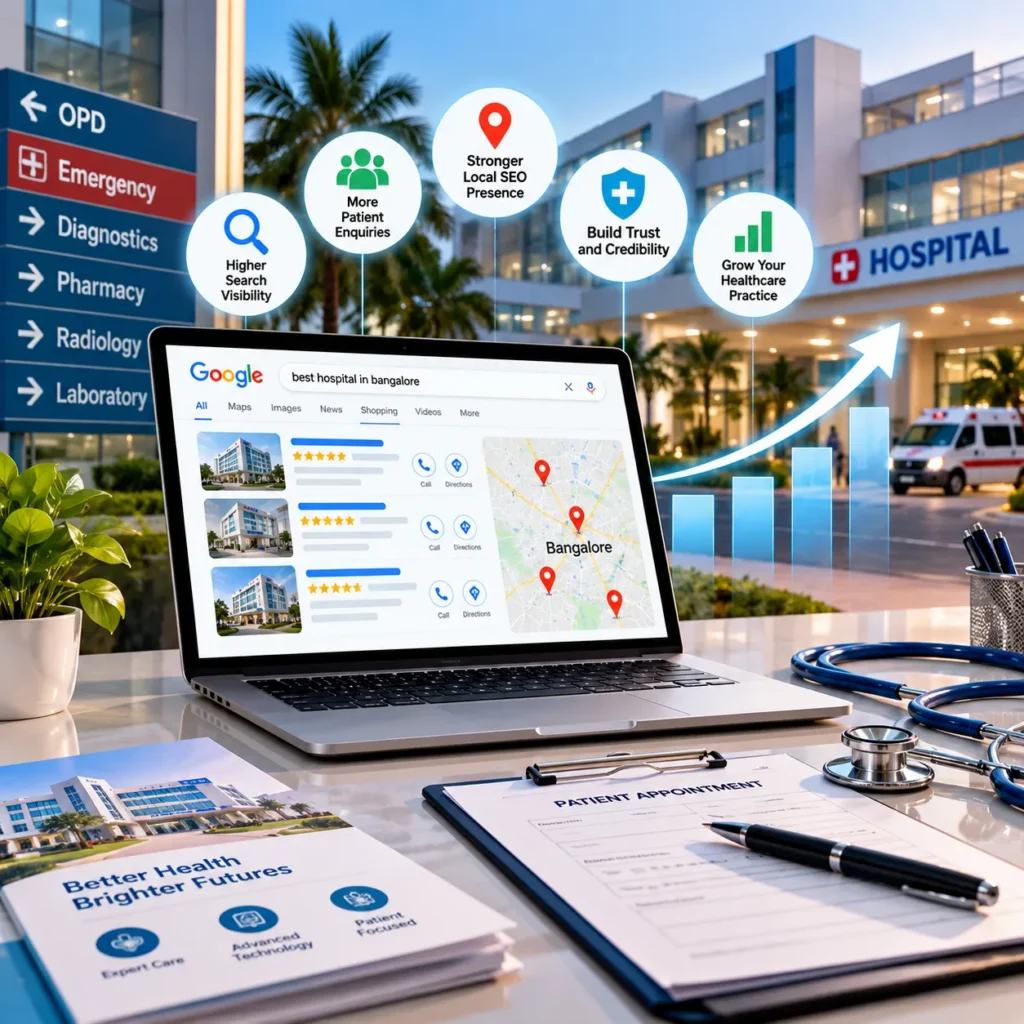
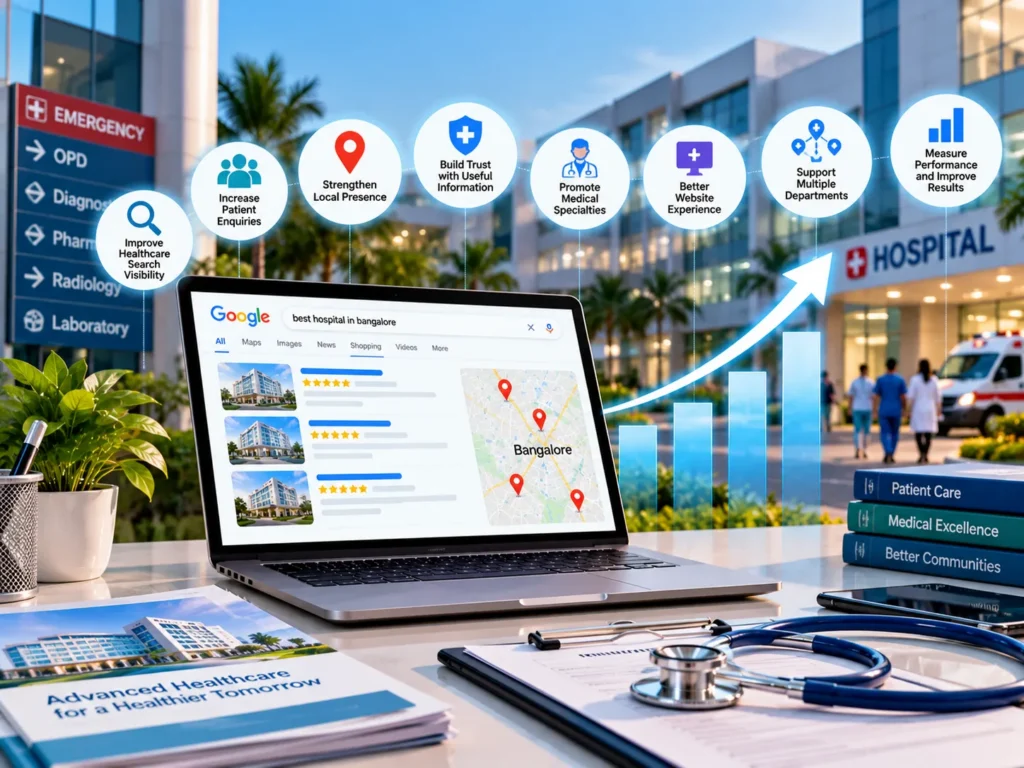
Help people discover your hospital, clinic, diagnostic centre, or healthcare practice when they search for relevant services. Targeted keyword research, optimized service pages, and a well-organized website can strengthen your visibility for searches related to your specialties and facilities.
Make it easier for website visitors to understand your services and take the next step. Clear doctor profiles, service information, contact details, appointment options, and location information can encourage people to enquire about consultations or available healthcare services.
Improve your visibility when people search for healthcare providers in specific areas. Local SEO activities, accurate business information, Google Business Profile optimization, and useful location pages can help your organization appear for relevant geographic searches.
Provide clear, accurate, and accessible information about your healthcare services, facilities, specialties, and patient procedures. Well-organized content helps people understand what your organization offers and where they can find further information before contacting your team.
Help people discover the specialties and services your organization genuinely provides. Dedicated pages for departments, consultations, diagnostic procedures, and other healthcare services can make your offerings easier to understand and improve their relevance to specific searches.
A healthcare website should make essential information easy to access across desktop and mobile devices. SEO-related improvements to navigation, page speed, readability, and appointment pathways can help visitors find relevant services without unnecessary difficulty.
Healthcare organizations with several departments, branches, or facilities need a clear website structure. SEO can help organize specialty pages and genuine location pages so visitors can find the right service and facility more easily.
Monitor organic traffic, search impressions, clicks, landing-page activity, and appointment enquiries where appropriate tracking is available. These insights help identify which pages attract attention and where further improvements may strengthen your healthcare website’s performance.
- Healthcare SEO Services
What Healthcare SEO Services Do We Offer for Your Business Growth?
DigitalClouds provides Healthcare SEO Services designed to improve search visibility, website accessibility, local relevance, and organic performance. We tailor our approach to your healthcare organization, specialties, target locations, website structure, and marketing objectives.
Healthcare Website Audit and Competitor Analysis
Identify technical issues, assess competing healthcare websites, uncover content gaps, and prioritize improvements to strengthen your search performance. We review your website structure, important service pages, local presence, and existing organic visibility to develop an SEO plan suited to your organization.
Healthcare Keyword Research
Find relevant search terms based on your medical specialties, healthcare services, target locations, and audience search intent. We identify opportunities for hospital, clinic, doctor, diagnostic, and treatment-related searches and map appropriate keyword themes to relevant website pages.
On-Page SEO Optimization
Optimize page titles, meta descriptions, headings, URLs, service descriptions, images, and internal links. We improve the relevance and organization of healthcare pages so search engines can better understand your services and visitors can find the information they need.
Technical SEO for Healthcare Websites
Address crawling, indexing, page speed, mobile usability, redirects, XML sitemaps, and other technical issues. We review your website's technical health to help search engines access important pages and provide visitors with a smoother browsing experience.
Local SEO for Healthcare Providers
Improve your local search presence through Google Business Profile optimization, location-specific keyword research, accurate business information, and useful location pages. We focus on the areas where your organization genuinely operates and provides healthcare services.
Medical Content Optimization
Improve healthcare service pages, specialty descriptions, doctor profiles, and educational resources. We identify content gaps and opportunities to make information more useful, accurate, and understandable, with appropriate review by qualified healthcare professionals where necessary.
Doctor and Specialty Page SEO
Optimize doctor profiles and specialty pages to communicate relevant qualifications, areas of practice, consultation details, and available services accurately. Clear page organization and appropriate internal links help visitors navigate between doctors, departments, and related healthcare information.
Off-Page SEO and Link Building
Review your backlink profile and identify relevant opportunities to strengthen your healthcare website's online presence. Activities may include legitimate healthcare directories, relevant local citations, competitor backlink research, and suitable editorial or professional mentions.
Multi-Location Healthcare SEO
Improve search visibility across the locations your organization serves through location-based keyword research, useful facility pages, internal linking, and location-specific performance tracking. Each page should provide meaningful information about the relevant facility and its services.
Healthcare SEO Performance Monitoring
Track organic traffic, search impressions, clicks, keyword visibility, important landing pages, and appointment-related actions where suitable tracking is available. Regular performance reviews help identify opportunities and guide ongoing technical, content, and local SEO improvements.
- WHY DIGITALCLOUDS
Why Choose DigitalClouds for Healthcare SEO Services?
DigitalClouds combines SEO strategy, website optimization, content planning, and performance monitoring to help healthcare organizations strengthen their online presence. Our approach considers how people search for healthcare services, evaluate facilities, explore specialties, and find information about appointments.
Healthcare-Focused SEO Strategy
We plan SEO activities around your healthcare services, specialties, business model, target audience, and locations. Whether you manage a hospital, clinic, diagnostic centre, or individual healthcare practice, the strategy should reflect your actual services and organizational goals.
Service and Specialty Page Optimization
We help organize healthcare services into clear, relevant website pages. A structured approach can make it easier for visitors to explore departments, understand available services, and navigate between related specialties without encountering confusing or repetitive information.
Local Search Optimization
We focus on the geographic areas relevant to your healthcare organization. Local keyword research, Google Business Profile optimization, accurate business details, and useful facility pages can help strengthen visibility for relevant location-based searches.
Trust-Focused Healthcare Content
Healthcare content requires particular attention to accuracy, clarity, and responsible communication. We help improve service descriptions, doctor profiles, and educational resources while recommending appropriate review by qualified healthcare professionals for medical claims and clinical information.
Technical SEO and Website Usability
We review website accessibility, crawling, indexing, page speed, mobile usability, and navigation. Addressing relevant technical issues helps search engines access important pages and supports a smoother experience for visitors looking for healthcare information.
Transparent Reporting and Continuous Improvement
We evaluate available search and analytics data to understand how your website performs. Reporting can cover organic traffic, search visibility, landing-page activity, and tracked appointment enquiries, helping you make informed decisions about future SEO priorities.
- Healthcare SEO Process
How Does Our Healthcare SEO Process Work?
Our Healthcare SEO strategy helps hospitals, clinics, diagnostic centres, and healthcare providers improve their online visibility and reach people searching for medical services. At DigitalClouds, we examine your website, healthcare specialties, patient search behaviour, and competing providers to identify opportunities for improvement. From specialty-based keyword research to local search optimization, medically accurate content, and enquiry tracking, our process focuses on helping people find relevant healthcare information and connect with suitable providers.
Step 01 of 08 · Website Assessment
Healthcare Website Audit and Competitive Analysis
Identify barriers that prevent patients from finding your healthcare services online.
We evaluate how your website presents medical services, communicates essential information, and performs in organic search. Our assessment examines technical health, specialty pages, patient navigation, and competing healthcare websites to identify weaknesses and opportunities for better search visibility.
Our healthcare website audit includes:
- Technical Website Assessment: Identify crawling errors, indexing problems, broken links, and other technical issues affecting important healthcare pages.
- Medical Service Page Review: Examine specialty descriptions, treatment information, practitioner details, and missing content across your website.
- Healthcare Competitor Analysis: Study competing hospitals, clinics, and diagnostic centres to understand their service coverage and search visibility.
- Patient Search Opportunity Analysis: Discover relevant healthcare queries and medical service topics that your website may not adequately address.
- Website Navigation Review: Assess how easily visitors can locate departments, doctor profiles, diagnostic services, clinic information, and appointment options.
- SEO Prioritization Plan: Establish improvement priorities based on website findings, healthcare service requirements, search demand, and business objectives.
Step 02 of 08 · Keyword Research
Healthcare Keyword Research and Patient Search Intent
Connect your healthcare services with people searching for relevant medical information.
Healthcare searches range from understanding symptoms and exploring treatment options to finding specialists and locating nearby medical facilities. We research these search patterns to identify relevant keywords for your specialties, services, and target locations while distinguishing informational searches from queries indicating an interest in consulting a provider.
Our healthcare keyword research activities include:
- Medical Specialty Keyword Research: Identify searches related to cardiology, dermatology, orthopaedics, gynaecology, paediatrics, and other specialties your facility offers.
- Treatment and Procedure Keywords: Research terms associated with consultations, medical procedures, therapies, and treatments provided by your healthcare professionals.
- Doctor and Specialist Searches: Identify relevant searches for doctors, consultants, specialists, and healthcare professionals based on their actual qualifications and services.
- Local Healthcare Keyword Research: Find searches combining medical services with relevant cities, neighbourhoods, and nearby locations.
- Search Intent Evaluation: Separate informational queries, treatment research, specialist searches, and appointment-related searches to guide page targeting.
- Keyword-to-Service Mapping: Match selected keywords with suitable department pages, doctor profiles, diagnostic services, location pages, and educational resources.
Step 03 of 08 · Website Content Optimization
On-Page SEO for Healthcare Websites
Present medical services and practitioner information with clarity and accuracy.
Healthcare website content must help visitors understand available services and locate relevant information without confusion. We optimize page titles, descriptions, headings, internal links, and service content to improve search relevance while maintaining clear language and avoiding unsupported medical claims.
Our on-page SEO activities include:
- Healthcare Service Page Optimization: Improve department and specialty pages with accurate service descriptions, treatment information, and relevant patient guidance.
- Metadata Optimization: Write relevant page titles and meta descriptions for medical specialties, diagnostic services, practitioners, and healthcare locations.
- Medical Content Organization: Structure pages around services offered, consultation information, procedures, patient considerations, and relevant frequently asked questions.
- Doctor Profile Optimization: Present verified qualifications, professional credentials, specialties, and experience in a clear and organized format.
- Internal Linking Strategy: Connect related departments, treatment pages, doctor profiles, diagnostic services, and educational resources.
- Content Accuracy Review: Identify outdated details, duplicate descriptions, unclear explanations, and unsupported claims that may undermine content quality.
Step 04 of 08 · Technical SEO
Healthcare Website Technical SEO and Performance
Improve website accessibility, mobile usability, and the patient browsing experience.
Patients may visit healthcare websites to review services, check facility details, find a specialist, or request an appointment. We address technical problems that affect search engine access and website usability, helping visitors reach important information across different devices.
Our technical SEO activities include:
- Crawling and Indexing Management: Review XML sitemaps, robots directives, indexing settings, and crawl errors affecting important healthcare pages.
- Page Speed Optimization: Assess loading performance and Core Web Vitals to identify issues that affect website responsiveness.
- Mobile Usability Testing: Check department pages, doctor profiles, contact information, and appointment forms across mobile devices.
- URL and Redirect Management: Resolve broken service URLs, outdated page addresses, and unnecessary redirects affecting website navigation.
- Duplicate URL Assessment: Review duplicate pages, URL variations, and canonical signals to help search engines identify preferred pages.
- Structured Data Validation: Assess applicable organization, local business, physician, and other supported structured data to ensure it accurately reflects visible website information.
Step 05 of 08 · Specialty and Local Visibility
Healthcare Specialty Pages and Local SEO Optimization
Help patients discover relevant medical services and nearby healthcare facilities.
Healthcare providers often serve different patient groups through multiple departments, specialties, practitioners, and locations. We improve the organization and local relevance of these pages so people can find suitable services and understand where care is available.
Our specialty and local SEO activities include:
- Department Page Development: Create dedicated pages for relevant medical specialties and departments offered by your hospital or clinic.
- Diagnostic Service Optimization: Improve pages for laboratory tests, imaging services, health screenings, and other diagnostics available at your facility.
- Google Business Profile Optimization: Improve accurate business information, categories, service details, and other relevant profile elements for local discovery.
- Healthcare Location Page Optimization: Develop useful pages for individual facilities and locations without creating repetitive or misleading content.
- Practitioner Information Enhancement: Organize verified doctor qualifications, consultation details, specialties, and professional credentials to help visitors evaluate available services.
- Appointment Access Improvements: Make contact details, directions, consultation information, and appointment request options easy to locate.
Step 06 of 08 · Content Development
Healthcare Content Marketing and Patient Education
Provide useful medical information that supports informed healthcare decisions.
People often research symptoms, medical specialties, diagnostic procedures, and treatment options before consulting a healthcare professional. We develop educational content that addresses common questions using clear language and appropriate clinical review, helping visitors understand healthcare services without replacing professional medical advice.
Our healthcare content activities include:
- Patient Education Articles: Develop resources explaining common health concerns, preventive care, and relevant medical topics within your service areas.
- Treatment and Procedure Guides: Prepare educational pages describing procedures, general preparation requirements, recovery considerations, and questions patients may discuss with their providers.
- Healthcare FAQ Development: Address common questions about consultations, diagnostic services, appointment procedures, and available healthcare facilities.
- Specialty-Based Content Planning: Create relevant content for the medical departments and specialties your organization provides.
- Content Gap Analysis: Identify unanswered patient questions and useful healthcare topics missing from your existing website.
- Clinical Content Review: Arrange review by qualified healthcare professionals for medical claims, treatment explanations, and patient-facing health information before publication.
Step 07 of 08 · Online Authority
Healthcare Link Building and Off-Page SEO
Strengthen your healthcare website's credibility through relevant online references.
Your healthcare organization can improve its online presence through accurate business listings, relevant professional references, and legitimate publishing opportunities. We focus on trustworthy sources and relevant industry connections rather than acquiring backlinks solely to increase link counts.
Our off-page SEO activities include:
- Backlink Profile Assessment: Examine existing backlinks and referring domains to understand your website's current link profile.
- Healthcare Directory Listings: Identify appropriate healthcare directories, professional listings, and legitimate medical service platforms.
- Business Information Consistency: Check your facility's name, address, contact details, and other business information across relevant online directories.
- Competitor Link Research: Examine relevant websites mentioning competing healthcare providers to identify suitable opportunities for your organization.
- Relevant Industry Outreach: Explore healthcare publications, professional organizations, and reputable local resources for potential editorial mentions and links.
- Link Quality Monitoring: Track backlink changes and review potentially problematic patterns as part of ongoing off-page SEO management.
Step 08 of 08 · Performance Tracking
Healthcare SEO Reporting and Continuous Optimization
Evaluate search visibility and identify opportunities to improve patient enquiries.
Healthcare SEO performance involves more than tracking rankings. We assess how people discover your website, which service pages attract organic visits, and whether visitors take relevant actions. These findings help identify areas for improvement and guide future optimization according to your organization's priorities.
Our healthcare SEO monitoring activities include:
- Organic Traffic Analysis: Review search-driven visits to understand how people discover your healthcare organization and its services.
- Search Visibility Monitoring: Track impressions, clicks, and click-through rates for relevant medical specialty, treatment, and location searches.
- Healthcare Keyword Tracking: Monitor priority keywords related to departments, practitioners, diagnostics, and other services your facility provides.
- Service Page Performance Review: Evaluate specialty pages, doctor profiles, diagnostic services, and location pages to identify optimization opportunities.
- Enquiry Conversion Tracking: Measure appointment requests, contact form submissions, and phone enquiries where suitable and privacy-conscious tracking is available.
- Ongoing SEO Recommendations: Use performance insights to prioritize technical improvements, service page updates, content development, and new search opportunities.
What Is Healthcare SEO and How Can It Improve Patient Discovery?
Healthcare SEO is the process of improving a healthcare website’s visibility in search engines so patients can discover relevant medical services, healthcare facilities, and specialist information. It helps hospitals, clinics, diagnostic centres, and other healthcare providers reach people searching for care. A well-planned strategy combines technical improvements, accurate medical content, local search optimisation, and useful website experiences to support patient discovery and informed healthcare decisions.
Our healthcare SEO activities include:
- Healthcare Keyword Research: Identify relevant search terms related to medical specialties, treatments, diagnostic services, consultations, and healthcare facilities. Prioritise keywords according to patient search intent, service availability, location relevance, and the healthcare provider’s objectives.
- Medical Service Page Optimisation: Improve pages for individual departments, specialties, diagnostic tests, and consultations. Clear descriptions help patients understand available services while helping search engines identify the purpose of each page.
- Local SEO: Optimise your Google Business Profile, location information, and local website pages. These improvements help people searching for nearby hospitals, clinics, and diagnostic centres discover accurate information about your facility.
- Healthcare Content Development: Create informative content that answers common questions about medical services, appointment procedures, diagnostic tests, and patient preparation. Health-related information should be accurate, responsible, and reviewed by qualified professionals where appropriate.
- Technical SEO: Review website speed, mobile usability, indexing, navigation, and internal linking. A technically sound website makes it easier for search engines to access important pages and for visitors to find relevant information.
- Patient Enquiry Optimisation: Make appointment options, phone numbers, department details, and contact forms easy to find. A clear website experience helps visitors take the appropriate next step when they need information or wish to contact a healthcare provider.
How Can SEO Help Hospitals and Clinics Reach More Patients Online?
Patients often search online to compare healthcare facilities, understand medical services, find specialists, and locate nearby providers. SEO helps hospitals and clinics appear for relevant searches by improving service pages, local visibility, website structure, and the quality of healthcare information. A targeted strategy can help providers reach people looking for their available services while making essential details easier to access before a visit or appointment.
Our hospital and clinic SEO activities include:
- Department-Wise SEO: Optimise pages for departments such as cardiology, dermatology, orthopaedics, paediatrics, and other specialties offered by the facility. Each page should explain the department’s scope and provide accurate information about available services.
- Doctor and Specialist Pages: Create or improve profiles using verified qualifications, professional experience, specialties, and consultation information. Accurate profiles help patients understand the expertise available at the facility without relying on unsupported promotional claims.
- Treatment and Diagnostic SEO: Improve the visibility of relevant treatment, consultation, imaging, laboratory, and diagnostic service pages. Separate pages can help patients find specific services without searching through broad or unclear descriptions.
- Local Search Optimisation: Strengthen the facility’s local search presence through accurate business information, location pages, and Google Business Profile management. This helps patients discover the correct facility and understand how to reach it.
- Healthcare Content Strategy: Develop useful articles and FAQs addressing common questions about departments, diagnostic procedures, appointment preparation, and service availability. Content should provide clear information without replacing individual medical advice.
- Appointment Journey Improvements: Review how visitors move from search results to department information, doctor profiles, and appointment options. Reducing unnecessary steps can make it easier for patients to contact the facility.
- Performance Monitoring: Track organic search visibility, website visits, service-page engagement, and available appointment enquiries. These insights help identify which departments attract search interest and where further optimisation may be useful.
What Should You Expect From a Healthcare SEO Agency in Bangalore?
A healthcare SEO agency should understand the importance of accurate information, patient-focused website experiences, local visibility, and responsible communication. The agency should assess your existing website, identify opportunities across departments and services, and develop a strategy aligned with your facility’s goals. You should also expect transparent reporting, clear deliverables, and ongoing optimisation rather than promises of guaranteed rankings or a fixed number of patients.
Our healthcare SEO agency services include:
- Healthcare Website Audit: Review your website’s technical condition, content structure, indexed pages, metadata, navigation, and mobile usability. The audit should identify issues that may limit search visibility or make important healthcare information difficult to access.
- Medical Keyword Research: Identify relevant keywords for departments, specialists, treatments, diagnostic services, and locations. Keyword priorities should reflect the services actually available and the needs of the intended audience.
- Competitor Analysis: Evaluate how relevant healthcare providers organise their websites, target search queries, and present medical information. Use these findings to identify opportunities for improvement without copying competitors’ content.
- On-Page SEO: Optimise page titles, headings, internal links, metadata, and service descriptions. Clear page organisation helps search engines understand the website and makes information easier for patients to navigate.
- Local SEO Management: Improve Google Business Profile information, location pages, and relevant local search signals. Accurate business details help patients find the correct facility and reduce confusion about services, locations, or operating hours.
- Healthcare Content Planning: Develop a content plan around medical specialties, service-related questions, and patient information needs. Health-related content should be factually reliable and appropriately reviewed before publication.
- Technical SEO Support: Identify and resolve issues affecting indexing, performance, crawlability, and mobile access. Technical improvements support the wider SEO strategy by helping search engines and visitors access essential pages.
- Reporting and Strategy Reviews: Review organic traffic, search impressions, clicks, keyword visibility, and available conversion data. Regular reporting should explain progress, limitations, completed activities, and the next priorities.
How Can Local SEO Help Patients Find Healthcare Providers Nearby?
Local SEO helps healthcare providers become more visible when people search for hospitals, clinics, doctors, laboratories, and diagnostic services in a particular area. Patients often need accurate addresses, contact details, operating hours, and directions before visiting a facility. By maintaining reliable business information and creating useful location-specific pages, healthcare providers can improve local discoverability and make it easier for people to identify the appropriate service location.
Our local healthcare SEO activities include:
- Google Business Profile Optimisation: Keep your facility’s name, address, phone number, website, categories, and operating hours accurate. Add appropriate service information and genuine photographs to help people understand the facility before contacting or visiting it.
- Location Keyword Research: Identify searches combining healthcare services with the areas your facility genuinely serves. Use location terms naturally in relevant pages rather than inserting city and neighbourhood names without useful context.
- Healthcare Location Pages: Develop pages for individual branches or service areas when they provide meaningful, location-specific information. Include accurate details about the facility, available services, contact options, and access arrangements.
- Business Information Consistency: Maintain consistent facility details across your website and relevant directories. Correct addresses, phone numbers, and operating information help patients avoid confusion when looking for appointments or directions.
- Local Review Management: Encourage genuine feedback in line with platform policies and respond professionally to reviews. Protect patient confidentiality and avoid revealing personal health information when replying publicly.
- Local Healthcare Content: Publish useful information about available services, facility access, and relevant local healthcare needs. Content should answer practical questions instead of repeating location keywords solely to influence search rankings.
- Local Search Performance Tracking: Review local visibility, profile interactions, website visits, calls, and direction requests where available. These indicators help assess how people discover and interact with your healthcare facility.
- Contact and Directions Accessibility: Make location details, telephone numbers, and appointment options easy to access on mobile devices. Clear contact information helps patients reach the right department or facility without unnecessary steps.
How Should Healthcare Providers Choose Keywords for Medical Specialties?
Keyword research helps healthcare providers understand how people search for medical specialties, diagnostic services, consultations, and healthcare facilities. Different searchers may look for a specialist, a particular test, a hospital department, or general information about a health concern. Mapping relevant keywords to the right pages helps healthcare websites address these different needs while keeping service information organised, accurate, and easy to navigate.
Our healthcare keyword research activities include:
- Medical Specialty Keyword Research: Identify relevant search terms for the specialties and departments available at your facility. Use recognised medical terminology alongside common patient search language where appropriate and accurate.
- Doctor and Specialist Keywords: Research searches related to specialist qualifications, areas of practice, consultation types, and locations. Assign these terms to verified doctor profiles or relevant specialty pages instead of creating misleading service claims.
- Diagnostic Service Keywords: Identify terms associated with laboratory tests, imaging, screening, and other diagnostic services your facility provides. Service pages should explain availability and any relevant appointment or preparation information accurately.
- Local Healthcare Keywords: Research relevant combinations of medical services and the locations your facility serves. Prioritise realistic local opportunities based on service availability and the needs of people in those areas.
- Search Intent Analysis: Distinguish between informational searches, specialist searches, facility searches, and appointment-related queries. This helps determine whether a term belongs on a medical article, service page, doctor profile, or location page.
- Keyword-to-Page Mapping: Assign primary and supporting keywords to the most appropriate pages. This reduces unnecessary overlap and helps each page serve a clear purpose within the healthcare website.
- Competitor Keyword Analysis: Review the queries for which relevant healthcare providers appear in organic results. Use the findings to identify content gaps while ensuring that your own pages remain original and factually reliable.
- Ongoing Keyword Review: Monitor impressions, clicks, ranking changes, and available enquiry data. Update priorities when search behaviour changes or when the facility adds new departments and services.
What Type of Content Helps Healthcare Websites Build Patient Confidence?
Healthcare websites need content that is clear, accurate, and easy to understand because visitors may use it to make important decisions about care. Information about doctors, departments, diagnostic procedures, appointments, and patient preparation can help people understand the services available. Useful content should communicate verified facts, explain medical terminology where necessary, and encourage appropriate professional consultation without promising outcomes or replacing personalised medical advice.
Our healthcare content development activities include:
- Medical Service Explanations: Describe the purpose and scope of each department, treatment, consultation, or diagnostic service. Use clear language so visitors can understand what the facility offers and whether they need to contact the provider for further guidance.
- Verified Doctor Profiles: Present accurate qualifications, recognised credentials, specialties, professional experience, and consultation details. Profiles should be based on verified information and should not exaggerate expertise or imply unsupported professional recognition.
- Patient Preparation Guides: Explain relevant appointment procedures and preparation instructions for services where such information is appropriate. Ensure that instructions are reviewed by qualified personnel and direct patients to the facility for individual guidance when necessary.
- Frequently Asked Questions: Answer practical questions about appointments, service availability, diagnostic procedures, visiting arrangements, and contact options. Keep answers concise, accurate, and consistent with the facility’s current policies.
- Healthcare Educational Articles: Create informative resources around relevant medical topics and service-related questions. Health content should use reliable information, avoid unsupported treatment claims, and receive suitable professional review.
- Facility and Department Information: Explain the facility’s services, locations, operating details, and available departments. Accurate information helps visitors understand where to go and how to access the appropriate service.
- Accessible Content Structure: Use descriptive headings, short paragraphs, lists, and clear navigation to organise complex information. A well-structured page makes healthcare content easier to scan, particularly for mobile visitors.
- Content Accuracy and Updates: Review health-related pages periodically and update outdated service information or guidance. Establish a suitable review process so published content reflects verified information and the facility’s current services.
Why Is Technical SEO Important for Hospital and Clinic Websites?
Technical SEO helps search engines discover, crawl, and index healthcare website pages while supporting a reliable experience for visitors. Hospital and clinic websites may contain many departments, doctor profiles, diagnostic services, location pages, and educational resources. If important pages are difficult to access or the website performs poorly on mobile devices, users may struggle to find essential information. A sound technical foundation supports the wider healthcare SEO strategy.
Our healthcare technical SEO activities include:
- Crawlability and Indexing: Check whether important department, specialist, and service pages can be discovered and indexed correctly. Identify crawl errors, accidental indexing restrictions, and other technical issues that may affect search visibility.
- Website Speed Optimisation: Review loading performance and opportunities to reduce oversized images, unnecessary scripts, and inefficient resources. Improving page performance can make it easier for visitors to access healthcare information across different devices.
- Mobile Usability: Check that navigation, service information, contact details, and appointment forms work properly on mobile screens. A mobile-friendly website helps people find relevant information without excessive scrolling or difficult interactions.
- Website Architecture: Organise departments, doctor profiles, diagnostic services, locations, and educational articles into a logical structure. Clear navigation and internal linking help visitors find relevant pages and search engines understand the website.
- Metadata and Heading Optimisation: Review page titles, meta descriptions, and headings for clarity, relevance, and duplication. Well-organised page elements help communicate the purpose of each page to search engines and users.
- Image Optimisation: Compress images where appropriate and use descriptive file names and meaningful alternative text. These practices support website performance and accessibility while helping search engines interpret relevant visual content.
- Structured Data Review: Assess whether appropriate structured data can accurately represent the healthcare organisation, local business information, or other eligible page details. Markup must reflect visible content and should not claim unsupported qualifications, services, or ratings.
- Broken Link and Redirect Checks: Identify broken internal links, incorrect redirects, and outdated page destinations. Resolving these issues helps patients access the right information and supports a more consistent website experience.
How Long Does Healthcare SEO Take to Improve Organic Visibility?
Healthcare SEO usually requires consistent work because rankings depend on several factors, including website condition, content quality, competition, location, and the services being targeted. Some technical fixes may be completed quickly, while improvements in organic visibility and patient enquiries can take longer. Healthcare providers should assess progress through multiple indicators and avoid relying on fixed timelines or guaranteed rankings when planning their search marketing activities.
Our healthcare SEO progress management activities include:
- Initial Performance Benchmarking: Record existing rankings, organic traffic, indexed pages, and available conversion data before making significant changes. These benchmarks provide a reference for evaluating future performance and identifying meaningful improvements.
- Technical SEO Prioritisation: Address issues that prevent important pages from being crawled, indexed, or used effectively. Resolving foundational problems helps create better conditions for content improvements and other SEO activities.
- Medical Service Page Optimisation: Improve priority pages for departments, doctors, treatments, and diagnostic services. Progress depends on how accurately the pages meet search intent and how effectively they compare with relevant search results.
- Consistent Content Development: Publish and improve useful medical service information and educational resources. A planned content strategy helps the website address relevant searches without creating repetitive or low-value pages.
- Local SEO Development: Improve business profile information, location pages, and relevant local website signals. Local search performance can vary according to competition, search location, service availability, and the quality of the information provided.
- Regular Performance Reviews: Compare organic impressions, clicks, keyword visibility, and available enquiries over time. Reviewing trends helps identify which pages are improving and where additional work may be needed.
- Strategy Refinement: Adjust priorities using performance data, competitor changes, and new service requirements. Avoid making major decisions based on a single ranking fluctuation when longer-term trends provide a more reliable picture.
- Realistic Expectation Setting: Treat SEO as an ongoing investment rather than a guaranteed source of immediate patient enquiries. Results vary by website and market, and no agency can responsibly promise a fixed ranking or patient volume.
How Can You Measure the Effectiveness of Healthcare SEO Services?
Measuring healthcare SEO involves assessing whether your website is becoming easier to discover and whether visitors can find relevant service information. Rankings alone do not show the full impact of optimisation. Reviewing organic traffic, search impressions, department-page engagement, local search interactions, and appointment enquiries provides a broader view of performance. Accurate analytics and clear reporting help healthcare providers understand progress and prioritise future improvements.
Our healthcare SEO measurement activities include:
- Organic Search Traffic: Monitor visits from unpaid search results and compare changes over time. Reviewing performance by department, location, and service page helps identify which areas of the website attract more visitors.
- Search Impressions and Clicks: Use Google Search Console data to understand how often pages appear in search results and how frequently users click them. These metrics can reveal opportunities to improve relevance and search listing presentation.
- Keyword Visibility: Track selected specialty, treatment, diagnostic, and local keywords. Ranking data helps show changes in search visibility but should be interpreted alongside traffic and meaningful website actions.
- Service Page Engagement: Review available engagement data to understand how visitors interact with department pages, doctor profiles, and diagnostic service information. Interpret metrics in context rather than assuming that every short visit indicates poor performance.
- Appointment and Contact Actions: Where tracking is properly configured, measure appointment requests, contact form submissions, calls, and other relevant actions. This helps connect organic search activity with potential patient enquiries.
- Local Search Interactions: Review available Google Business Profile data, including website visits, calls, and direction requests. These indicators help show how people discover and interact with your healthcare facility locally.
- Conversion Tracking Quality: Test analytics events and contact tracking to confirm that genuine actions are recorded correctly. Inaccurate tracking can distort results, so measurement should be checked before drawing conclusions from performance reports.
- Reporting and Recommendations: Receive regular reports explaining changes, completed work, and planned improvements. Reports should distinguish measured results from estimates and highlight areas where additional information is needed.
What Is the Cost of Healthcare SEO Services in Bangalore?
The cost of healthcare SEO services in Bangalore depends on the size of the website, the number of departments and services, competition, content requirements, and the level of ongoing optimisation needed. A single clinic may require a different scope from a multi-specialty hospital with several locations and hundreds of pages. A suitable proposal should define deliverables clearly and align the SEO plan with the provider’s priorities and budget.
Our healthcare SEO pricing assessment considers:
- Website Size and Condition: Review the number of pages, technical issues, existing content, and website structure before estimating the workload. A website requiring substantial repairs or restructuring may need additional initial optimisation.
- Number of Departments and Services: Consider how many specialties, doctor profiles, diagnostic services, and treatment pages require individual attention. Each page should provide useful information instead of receiving only superficial keyword changes.
- Competitive Landscape: Assess competition for the services and locations the provider wants to target. Highly competitive healthcare searches may require more sustained content development, technical improvements, and local SEO work.
- Medical Content Requirements: Determine whether existing pages need updates or whether new service pages and educational articles are necessary. Medical content may also require additional review to ensure accuracy and appropriate communication.
- Technical SEO Requirements: Identify indexing, speed, mobile usability, navigation, and analytics issues that need attention. The level of technical work required can influence the time and resources needed for the project.
- Location Coverage: Establish whether the provider serves one facility or several genuine locations. Multi-location strategies may involve additional landing pages, business profile management, and location-specific reporting.
- Reporting and Strategic Support: Clarify reporting frequency, communication arrangements, and the strategic guidance included in the service. Transparent deliverables help healthcare providers compare plans based on actual work.
- Scope and Budget Alignment: Choose a plan that reflects current objectives and available resources. A clear proposal should outline activities, exclusions, and review points without guaranteeing rankings or a specific number of patients.
Can SEO Help a New Healthcare Facility Build Its Online Presence?
A newly opened hospital, clinic, or diagnostic centre may have limited online visibility and little established search presence. SEO can help build a foundation by making its services easier to discover and providing accurate information about its facilities and healthcare professionals. Although organic growth takes time, a focused strategy can help a new healthcare provider establish its digital presence and create opportunities for relevant enquiries.
Our SEO activities for new healthcare facilities include:
- Website SEO Foundation: Establish a logical website structure, clear navigation, descriptive page titles, and appropriate indexing settings. These fundamentals help search engines discover the website and understand its main services.
- Core Service Pages: Create dedicated pages for the facility’s main departments, consultations, and diagnostic services. Each page should explain the available service accurately and provide clear contact or appointment information.
- Local Business Profile Setup: Create or optimise an eligible Google Business Profile using accurate facility details. Correct information helps people discover the location, check relevant operating information, and contact the provider.
- Local Search Targeting: Research relevant service and location searches that match the facility’s actual service area. Use these terms naturally in appropriate pages without creating misleading location claims.
- Healthcare Professional Information: Publish verified information about relevant doctors, specialists, and qualifications. Accurate profiles help visitors understand the expertise available at the facility without unsupported claims.
- Educational Content Planning: Answer common questions about services, appointments, diagnostic procedures, and preparation where appropriate. Ensure health-related content is accurate and reviewed by qualified professionals when needed.
- Analytics and Enquiry Tracking: Configure suitable measurement for organic traffic and important contact actions. Establishing tracking early helps the facility understand which pages attract attention and generate relevant enquiries.
- Gradual Performance Improvement: Review search data and prioritise improvements based on actual visibility and visitor behaviour. New websites can take different amounts of time to gain traction, so results should be evaluated realistically.
How Can SEO Improve the Visibility of Medical Departments and Diagnostic Services?
Healthcare providers often offer multiple specialties, consultations, tests, and diagnostic services. If these services are not organised into clear website pages, visitors may struggle to find relevant information and search engines may have difficulty understanding the website’s structure. SEO helps create focused service pages, improve their relevance, and connect related content so people can discover the specific healthcare services they are researching.
Our medical department and diagnostic SEO activities include:
- Dedicated Department Pages: Create or improve individual pages for the specialties available at your facility. Each page should explain the department’s scope, available services, and relevant ways to contact the provider.
- Diagnostic Service Pages: Develop clear pages for available laboratory tests, imaging services, screenings, and other diagnostic offerings. Include accurate information about availability and preparation where appropriate, without publishing unsupported medical guidance.
- Doctor and Specialist Linking: Connect department pages with relevant verified doctor profiles. This helps visitors explore the professionals associated with a specialty and understand the services available through the facility.
- Service-Specific Keyword Research: Identify relevant searches for individual departments and diagnostic procedures. Use appropriate terms naturally in page titles, headings, and descriptions without targeting services the facility does not offer.
- Clear Service Descriptions: Explain the purpose and scope of each service in accessible language. Avoid misleading claims, guaranteed outcomes, or language that could cause visitors to confuse general information with individual medical advice.
- Internal Linking: Connect related specialties, diagnostic services, doctor profiles, and educational resources using useful links. This helps visitors navigate the website and supports search engines in discovering related pages.
- Metadata and Content Structure: Improve titles, headings, descriptions, and page organisation to make each service’s purpose clear. Avoid duplicate metadata and repetitive descriptions across departments with different functions.
- Department-Level Performance Tracking: Monitor impressions, clicks, rankings, and available contact actions for individual pages. Use this data to identify which services gain visibility and which pages may require further optimisation.
How Should You Choose Between a General SEO Company and a Healthcare SEO Agency?
Choosing an SEO provider requires understanding whether the team can address your website’s technical needs, healthcare content requirements, local competition, and business goals. A general SEO company may offer strong technical and content capabilities, while a healthcare-focused agency may be more familiar with the needs of hospitals, clinics, and diagnostic centres. Evaluate the proposed process, deliverables, communication, and reporting rather than relying only on industry claims.
Our recommended SEO provider evaluation criteria include:
- Healthcare Industry Understanding: Ask how the provider approaches medical service pages, specialist information, local search, and patient enquiries. Look for a clear explanation of its process rather than relying solely on claims of specialist experience.
- Website Audit Process: Check whether the agency reviews technical issues, content gaps, existing performance, and competitors before recommending a plan. A useful audit should identify specific problems and realistic opportunities.
- Medical Content Approach: Review how the provider develops and checks healthcare content. Medical information should be accurate, clear, and appropriately reviewed rather than relying on unsupported treatment claims or generic copy.
- Local SEO Capabilities: Ask how the agency manages business profiles, location pages, and local keyword research. The strategy should reflect the provider’s real locations and available services.
- Technical SEO Knowledge: Confirm that the team can assess indexing, website speed, mobile usability, internal linking, and analytics. These capabilities are important when the website needs more than basic metadata changes.
- Reporting Transparency: Request an explanation of the metrics and activities included in regular reports. Reports should show completed work, measured performance, and proposed next steps without presenting estimates as confirmed outcomes.
- Ethical SEO Practices: Be cautious of providers promising guaranteed rankings, instant results, or fixed patient numbers. Ask how they approach content quality, link acquisition, and compliance with relevant search engine guidelines.
- Clear Scope and Communication: Compare deliverables, timelines, responsibilities, and reporting arrangements before signing an agreement. A clearly defined scope makes it easier to understand the work included and evaluate the service’s value.
Can DigitalClouds Help Healthcare Providers Target Multiple Locations?
Healthcare providers operating multiple branches need a strategy that helps people discover the correct facility and understand which services are available at each location. Simply duplicating one page and changing the location name can create weak content and confuse visitors. A well-planned multi-location SEO strategy combines accurate business information, useful location pages, service relevance, and branch-level performance monitoring to support visibility across the areas the provider genuinely serves.
Our multi-location healthcare SEO activities include:
- Location and Facility Assessment: Identify each active branch and verify its address, contact details, departments, and operating information. This provides an accurate foundation for local optimisation and helps prevent visitors from receiving incorrect facility details.
- Location-Specific Keyword Research: Research relevant healthcare searches for each genuine service area. Prioritise terms that reflect local demand and the services available at that branch rather than assigning identical targets to every location.
- Unique Location Landing Pages: Develop useful pages that explain each facility, its available services, contact information, and access arrangements. Each page should provide distinct value instead of repeating generic content with a different city name.
- Google Business Profile Management: Maintain accurate profiles for eligible individual facilities and ensure that information matches the provider’s official details. Correct profiles help users identify the appropriate branch and contact it.
- Branch-Level Service Information: Clarify which departments, consultations, and diagnostic services are available at each location. Accurate information helps visitors find the right facility without assuming that every branch offers identical services.
- Internal Linking Between Locations: Organise location pages so visitors can navigate to the appropriate facility easily. Relevant links also help search engines discover each location page within the wider website structure.
- Consistent Business Details: Review addresses, phone numbers, operating hours, and website links across relevant platforms. Consistent information helps people find reliable details when searching for a healthcare provider in different areas.
- Location-Level Performance Reporting: Monitor organic visibility, local profile interactions, website visits, and available enquiries by branch. This helps identify which facilities are gaining traction and where further optimisation may be useful.
How Do You Choose the Best Healthcare SEO Company in Bangalore?
Choosing the best healthcare SEO company in Bangalore involves evaluating the provider’s strategy, communication, technical capabilities, and understanding of your healthcare organisation’s goals. The right partner should explain how its work will improve search visibility, strengthen service pages, and support relevant enquiries. Instead of choosing based only on rankings or low prices, review the proposed process, evidence of work, reporting standards, and clarity of deliverables.
Our checklist for evaluating a healthcare SEO company includes:
- Business Goal Alignment: Confirm that the proposed strategy reflects your priorities, such as promoting selected departments, improving local visibility, or increasing relevant enquiries. The agency should understand your objectives before defining its optimisation activities.
- Website Audit Quality: Look for a specific assessment of your website’s technical condition, content gaps, search visibility, and competitor landscape. Recommendations should address your actual needs rather than present a generic package.
- Healthcare Keyword Strategy: Ask how the company will research and prioritise keywords for your specialties and services. A strong approach considers search intent, local relevance, competition, and actual service availability.
- Content Quality Standards: Review the agency’s approach to creating and reviewing medical information. Healthcare content should be clear, original, responsible, and consistent with verified professional guidance.
- Local SEO Experience: Understand how the company will optimise business profiles, location pages, and local website information. The strategy should support accurate discovery without creating misleading business listings or unnecessary location pages.
- Technical SEO Capabilities: Check whether the team can identify and resolve issues involving indexing, website speed, mobile usability, and website structure. Technical recommendations should be explained in relation to your website’s actual needs.
- Reporting and Accountability: Ask for a clear reporting schedule and an explanation of how progress will be measured. Useful reports distinguish completed tasks, measured performance, and proposed next steps.
- Realistic Pricing and Promises: Compare the scope and quality of services rather than choosing the cheapest offer. Be cautious of guaranteed rankings, fixed patient-volume promises, and unclear contracts that do not define the work included.
How Can You Get Started With Healthcare SEO Services at DigitalClouds?
Getting started with healthcare SEO services at DigitalClouds begins with understanding your facility’s services, current online presence, target locations, and growth objectives. This information helps shape a strategy suited to your website and the people you want to reach. By establishing clear priorities, reviewing existing performance, and agreeing on measurable activities, your organisation can begin improving its organic visibility through a structured, ongoing SEO process.
Our process for getting started includes:
- Discuss Your Healthcare Goals: Share the departments, specialties, diagnostic services, and locations you want to promote. This helps establish which services and audiences should receive attention first.
- Review Your Existing Website: Assess the current website structure, service pages, technical condition, and organic search performance. The review helps identify existing strengths and areas that may require improvement.
- Understand Your Target Audience: Discuss the people you want to reach and the questions they may ask before contacting your facility. This helps shape relevant keyword research and content priorities.
- Develop a Keyword Strategy: Identify appropriate specialty, service, informational, and local search opportunities. Assign keywords to relevant pages to create a coherent optimisation plan that reflects the services actually available.
- Prioritise Website Improvements: Establish which technical fixes, service page updates, and content additions should be completed first. Prioritisation helps direct effort towards the most relevant opportunities within the agreed scope.
- Plan Local SEO Activities: Review business profile information, facility details, and genuine location-based opportunities. Accurate local information helps people find the correct healthcare provider and contact the appropriate facility.
- Set Reporting Benchmarks: Establish baseline data for search visibility, website activity, and available enquiry actions. These benchmarks make it easier to assess progress and adjust the strategy over time.
- Begin Ongoing Optimisation: Implement the agreed activities, review results regularly, and refine priorities as new data becomes available. Consistent work helps build a sustainable search presence without relying on guaranteed rankings or immediate results.
- LET'S GROW YOUR BUSINESS
Ready to Grow with the Best Healthcare SEO Company in Bangalore?
Ready to strengthen your healthcare organization’s online presence and make your services easier to discover? DigitalClouds provides Healthcare SEO Services to help improve search visibility through targeted keyword research, service page optimization, technical SEO, and local search strategies. We develop tailored approaches to help hospitals, clinics, diagnostic centres, and healthcare providers communicate their services clearly and support a better online experience for people seeking healthcare information.
- FAQs
Frequently Asked Questions About Healthcare SEO Services
How Can SEO Help Patients Find the Right Healthcare Department?
A well-structured healthcare website can help visitors identify the department or service relevant to their search. Separate pages for specialties, diagnostic facilities, consultations, and other services make information easier to navigate. Clear headings, internal links, and accurate service descriptions help people understand what each department offers. Website content should explain available services without attempting to diagnose visitors or suggesting that a particular treatment is appropriate for an individual.
Why Should Hospitals Create Separate Pages for Their Medical Specialties?
Separate specialty pages allow hospitals to explain the services, facilities, and relevant information associated with each department. For example, a hospital may have dedicated pages for cardiology, orthopaedics, dermatology, or other specialties it genuinely provides. These pages can address distinct search needs and make navigation easier. Each page should contain useful, accurate information rather than duplicating the same general hospital description across multiple specialties.
How Can SEO Improve Doctor Profile Pages?
Doctor profile pages can help people discover relevant healthcare professionals and understand their qualifications and areas of practice. Useful profiles may include verified credentials, specialties, professional experience, consultation information, and links to related departments. Optimized titles, clear headings, and appropriate internal links can support discoverability. All qualifications, affiliations, experience claims, and other professional details should be accurate and kept up to date.
What Should a Healthcare Website Include to Encourage Appointment Requests?
A healthcare website should make it straightforward for visitors to understand the service and find the appropriate next step. Useful elements may include clear service descriptions, doctor information, facility locations, operating hours, appointment instructions, and accessible contact options. Mobile-friendly forms and clear navigation can reduce unnecessary friction. Appointment options should accurately represent the organization’s process and availability, and any personal information collected should be handled responsibly.
How Can Healthcare Organizations Manage SEO Across Multiple Branches?
Healthcare organizations with multiple branches should provide accurate information for each genuine facility. Dedicated location pages can explain the address, available departments, contact details, operating hours, and services provided at that branch. Google Business Profiles should also reflect the relevant real-world locations. A consistent structure and appropriate internal links help visitors find the correct facility without confusing information or repetitive location pages that provide little individual value.
How Should Healthcare Websites Handle Medical Content Accuracy?
Property images
Healthcare content should be based on reliable information and reviewed by appropriately qualified healthcare professionals where clinical knowledge is required. Treatment descriptions, diagnostic information, medical terminology, and health-related claims should be checked for accuracy and context. Content should not promise cures, exaggerate outcomes, or replace individualized professional advice. Review dates and updates can also help maintain useful information as medical guidance and service details change.
can be optimized through descriptive filenames, appropriate alternative text, suitable image dimensions, and efficient compression. These improvements help search engines interpret image context and support accessibility and page performance. Images should accurately represent the property and should not be misleading or unnecessarily duplicated. Real estate websites should also consider responsive image delivery and image loading behaviour so visitors can browse photographs without unnecessary delays.
Can SEO Help Diagnostic Centres Promote Specific Tests and Scans?
Yes. Diagnostic centres can organize their websites around the tests, scans, laboratory services, and other facilities they actually provide. Dedicated service pages can explain the nature of a service, availability, location, and verified preparation instructions where relevant. Clear internal links and location information help visitors navigate between services and facilities. Medical preparation requirements should be confirmed by the provider, and content should avoid making unsupported claims about diagnostic accuracy or outcomes.
How Can Healthcare Providers Optimize for Emergency and Urgent Care Searches?
Healthcare providers offering emergency or urgent care should make verified information about service availability, location, contact methods, and operating hours easy to find. Website content should clearly distinguish emergency services from routine consultations and accurately reflect the facility’s capabilities. SEO must not delay or obstruct access to urgent assistance. Emergency-related information should be reviewed regularly because incorrect availability or contact details can create serious confusion for visitors.
How Can Healthcare Websites Use Structured Data?
Structured data can help search engines interpret information about an organization, healthcare facility, or other eligible entities. Depending on the website, relevant markup may include organization, local business, or suitable healthcare-related types supported by current search engine guidelines. The markup must accurately reflect information visible on the page and should not contain misleading claims. Structured data does not guarantee enhanced search results, so implementation should be validated and monitored appropriately.
How Can DigitalClouds Help Improve Your Healthcare Website's Online Presence?
DigitalClouds can help evaluate your healthcare website and identify opportunities across keyword research, service page optimization, technical SEO, local search, content improvements, and performance monitoring. The approach can be tailored to hospitals, clinics, diagnostic centres, and other healthcare providers according to their services and target locations. We begin by understanding your website, existing search performance, and objectives before recommending suitable improvements. Results depend on the website’s condition, competition, implementation, and ongoing optimization.
Still have questions? Contact us →