
Reach More Industrial Buyers with Google Ads for Manufacturing Businesses in Bangalore
Looking to promote your industrial products and reach potential B2B customers through paid search? DigitalClouds provides Google Ads for Manufacturing Businesses in Bangalore to help manufacturers connect with relevant buyers, distributors, wholesalers, procurement teams, and industrial companies. Our approach combines keyword research, product-focused campaigns, audience targeting, landing page recommendations, and conversion tracking to support your advertising objectives. Whether you manufacture industrial equipment, machine components, construction materials, electrical products, or specialized components, we develop campaigns around your product range, target markets, and business requirements.
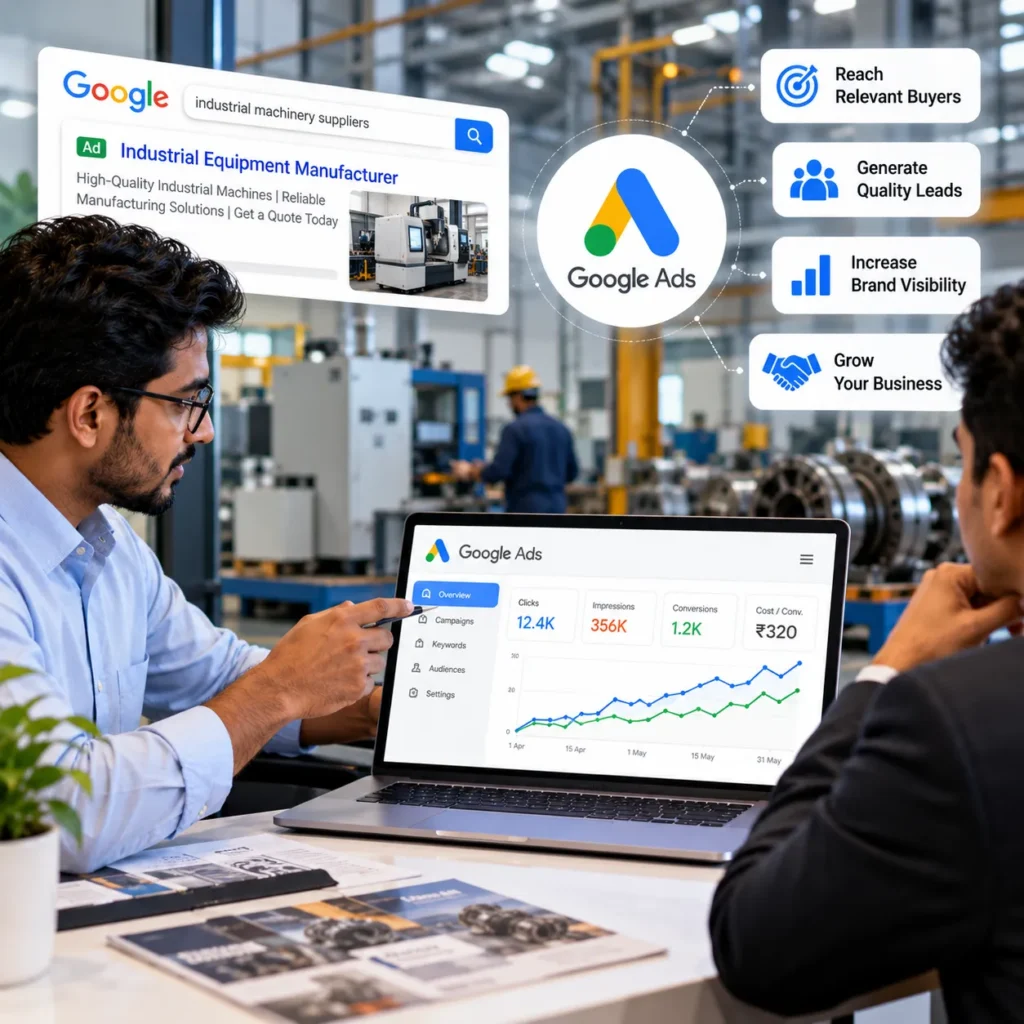
- Why It's Matters
Why Is Google Ads Important for Manufacturing Businesses?
Manufacturing companies often serve specialized markets where purchasing decisions involve product specifications, technical requirements, pricing discussions, production capacity, and supplier evaluation. Potential buyers may search Google for specific components, industrial machinery, raw materials, manufacturing capabilities, or suppliers in particular locations. If your company does not appear for relevant commercial searches, prospective buyers may discover competing manufacturers instead. Google Ads for Manufacturing Businesses allows manufacturers to advertise for relevant search queries and direct interested users to suitable product or service pages. With appropriate campaign targeting, keyword selection, landing page optimization, and conversion tracking, paid advertising can help your company reach potential buyers actively researching industrial products. It also provides measurable campaign data that can guide decisions about advertising budgets, product priorities, and future marketing improvements.
Connect your business with people searching for the products and components you manufacture. Product-specific keywords and relevant ad copy help position your offerings in front of users whose searches match your product range and commercial objectives.
Encourage prospective buyers to request quotations, discuss technical requirements, enquire about bulk orders, or contact your sales team. Clear advertising messages and relevant landing pages help users understand your offerings and take an appropriate next step.
Focus advertising on selected products, product categories, or manufacturing capabilities based on your business priorities. Dedicated campaigns help organize budgets and messaging around specific offerings instead of promoting every product through a single generic advertisement.
Reach potential buyers in Bangalore, other Indian industrial hubs, or selected international markets where your business can supply products. Location targeting and market-specific campaign planning help align advertising with your distribution capabilities and commercial objectives.
Show advertisements for relevant searches involving product specifications, industrial applications, manufacturing suppliers, and commercial purchasing requirements. Search intent analysis helps distinguish useful commercial queries from searches that are unlikely to match your offerings.
Monitor clicks, impressions, cost per click, conversion actions, and enquiry-related metrics where tracking is configured. These insights help you understand how campaigns perform and identify areas where targeting, advertisements, landing pages, or budgets may need adjustment.
Promote products to relevant businesses, distributors, dealers, and procurement teams through campaigns aligned with your sales strategy. Advertising can complement existing sales activities by creating additional opportunities for product enquiries and commercial discussions.
Allocate spending according to product priorities, target markets, campaign performance, and business objectives. Regular reviews of search terms, bidding strategies, and conversion data can help identify wasted spend and opportunities to improve campaign efficiency.
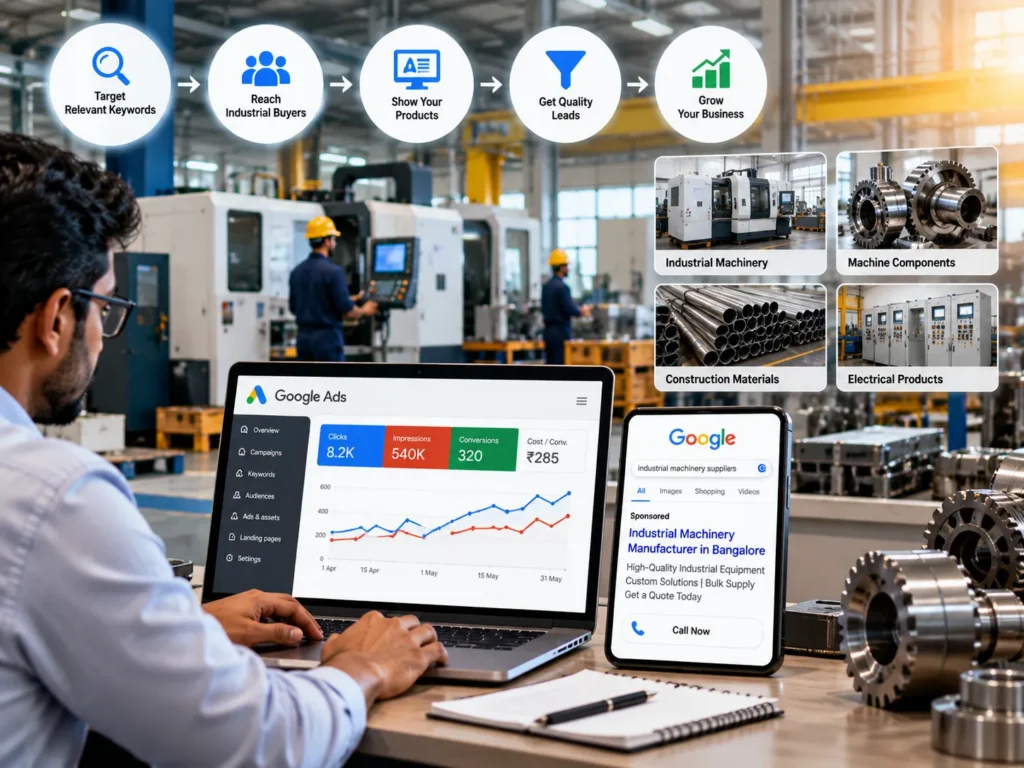
- Services
What Google Ads Services Do We Offer for Your Manufacturing Business Growth?
DigitalClouds provides Google Ads for Manufacturing Businesses tailored to your product categories, target buyers, sales objectives, and advertising budget. Our approach focuses on reaching relevant industrial audiences, promoting manufacturing capabilities, and directing interested users to suitable landing pages. From campaign strategy and keyword research to conversion tracking and performance optimization, we help manufacturers manage paid search campaigns with a focus on measurable business outcomes.
Manufacturing Google Ads Strategy and Campaign Setup
Build a campaign structure around your manufacturing products, target markets, and business priorities. We define campaign objectives, organize relevant product categories, select suitable campaign types, and establish targeting settings. This creates a clear foundation for promoting specific offerings and managing advertising expenditure according to your requirements.
Industrial Keyword Research and Search Intent Analysis
Identify search terms that potential buyers use when looking for industrial products, components, machinery, materials, and manufacturing suppliers. We assess keyword relevance, commercial intent, search patterns, and estimated advertising costs to develop a suitable keyword strategy. Negative keyword planning also helps reduce exposure to irrelevant searches.
Product-Specific Google Search Campaigns
Create campaigns focused on the products and manufacturing capabilities your business wants to promote. Separate campaigns or ad groups can target distinct product categories, applications, or buyer requirements. This approach supports more relevant advertisements, clearer budget allocation, and better alignment between search queries and landing pages.
B2B Audience and Geographic Targeting
Reach potential business customers in the markets your company serves. We plan location targeting around Bangalore, other Indian cities, industrial regions, or international markets where applicable. Depending on campaign objectives, audience signals and suitable targeting options can also support efforts to reach relevant business decision-makers.
Manufacturing Ad Copy and Asset Optimization
Develop advertisements that communicate your product range, manufacturing capabilities, and relevant commercial information. We write clear headlines and descriptions based on your actual offerings, supported by suitable assets such as sitelinks, callouts, and structured snippets where available. Messaging is designed to attract relevant clicks without making unsupported claims.
Manufacturing Landing Page Optimization
Improve the pages users visit after clicking your advertisements. We review product information, technical specifications, certifications where applicable, enquiry forms, contact details, page speed, and calls to action. Relevant landing pages help visitors evaluate your products and make it easier to request quotations or discuss their requirements.
Google Ads Conversion Tracking and Analytics
Measure important actions that help assess campaign performance. Depending on your website and sales process, tracking may include enquiry form submissions, phone calls, quotation requests, or other agreed conversion actions. We review the tracking setup and relevant analytics data to help distinguish advertising traffic from meaningful business interactions.
Remarketing and Display Advertising
Reconnect with eligible previous website visitors through suitable Google Ads remarketing and display campaigns. Where consent, platform policies, audience eligibility, and campaign settings permit, these campaigns can support continued product visibility among users who have already explored your website. Creative and targeting choices depend on your audience and campaign objectives.
Google Ads Management and Performance Optimization
Review campaign results and make data-informed adjustments to keywords, search terms, bids, budgets, advertisements, and landing pages. We assess available performance data to identify relevant opportunities, reduce avoidable expenditure, and improve alignment with your business objectives. Reporting helps your team understand campaign activity and plan future advertising decisions.
- WHY DIGITALCLOUDS
Why Choose DigitalClouds for Google Ads for Manufacturing Businesses?
DigitalClouds combines paid search planning, keyword research, campaign management, landing page recommendations, and performance measurement to support manufacturing companies with their advertising requirements. Our approach considers how industrial buyers search for products, evaluate suppliers, and submit commercial enquiries. We tailor campaign structures to your product range, target markets, budget, and sales process rather than relying on a generic advertising strategy.
Manufacturing-Focused Campaign Planning
We plan campaigns around your actual products, industrial applications, target buyers, and sales objectives. This helps organize advertising around relevant manufacturing categories and prioritize the offerings that matter most to your business.
Product and Commercial Keyword Targeting
We research keywords that reflect the way potential buyers search for industrial components, machinery, materials, and manufacturing suppliers. By considering search intent and negative keywords, we aim to improve the relevance of your advertisements and reduce exposure to unsuitable searches.
B2B Advertising Approach
Manufacturing purchases often involve detailed requirements, multiple decision-makers, and longer evaluation periods. We consider these factors when planning advertisements, landing pages, conversion actions, and campaign measurement so the strategy reflects your business-to-business sales process.
Location-Based Campaign Management
We help configure campaigns for Bangalore, relevant Indian industrial markets, or selected international locations according to your distribution and sales capabilities. Geographic targeting is planned around the areas where your company can realistically serve prospective customers.
Conversion Tracking and Performance Analysis
We focus on measuring relevant campaign actions rather than relying solely on clicks and impressions. Where suitable tracking is available, we review enquiry submissions, calls, quotation requests, and other agreed conversions to support more informed optimization decisions.
Transparent Reporting and Ongoing Optimization
We evaluate campaign performance using available Google Ads and analytics data. Regular reviews help identify changes in costs, search query relevance, conversion activity, and budget utilization, allowing us to recommend adjustments based on your objectives and the evidence available.
- Our Process
How Does Our Google Ads Process for Manufacturing Businesses Work?
Our Google Ads process focuses on understanding your manufacturing business, identifying relevant industrial searches, building structured campaigns, and measuring advertising performance. We begin by reviewing your products, target markets, customer requirements, website, and campaign objectives. Each stage addresses a specific part of the advertising process, helping align campaign activity with your commercial priorities and providing a basis for ongoing improvements.
Step 01 of 08 · Business Analysis
Manufacturing Business and Competitor Analysis
Understand your manufacturing products, target buyers, market opportunities, and advertising requirements before launching campaigns.
We begin by reviewing your product portfolio, manufacturing capabilities, target industries, and commercial objectives. This helps identify which products to promote, which markets to prioritize, and what potential buyers may expect to find when searching for your offerings. We also assess existing campaigns and relevant competitors to identify practical opportunities for improvement.
Our manufacturing business analysis activities include:
- Product Portfolio Assessment: Review your manufactured products, components, materials, technical specifications, and applications to identify suitable advertising priorities based on your business objectives and production capabilities.
- Target Buyer Identification: Define the types of industrial buyers, procurement teams, distributors, wholesalers, and businesses that may require your products, helping campaigns focus on commercially relevant audiences.
- Industry and Application Research: Examine the industries and applications your products serve, such as construction, automotive, electrical, packaging, engineering, or other sectors relevant to your manufacturing operations.
- Geographic Market Assessment: Evaluate Bangalore, other Indian industrial markets, and potential international regions according to your distribution network, delivery capabilities, customer demand, and sales priorities.
- Existing Google Ads Audit: Review available campaign settings, search terms, keyword performance, advertising costs, conversion tracking, and account structure to identify problems and opportunities within existing campaigns.
- Competitor Advertising Analysis: Examine relevant competitors’ visible advertisements, messaging, product positioning, and landing pages to understand how they communicate their offerings and identify potential areas of differentiation.
- Website and Landing Page Review: Assess your current website to determine whether product pages provide relevant specifications, company information, enquiry options, and other details that potential buyers may need before contacting your sales team.
- Advertising Objective Definition: Establish clear campaign objectives, such as product enquiries, quotation requests, distributor enquiries, or other measurable business actions, to guide campaign planning and subsequent performance evaluation.
Step 02 of 08 · Keyword Research
Industrial Keyword Research and Search Intent Analysis
Identify the searches potential buyers use when researching industrial products, manufacturing suppliers, components, and technical solutions.
Keyword research helps connect your products with relevant Google searches. We examine how industrial buyers describe products, materials, specifications, applications, and supplier requirements. We then organize suitable terms according to relevance and search intent, helping reduce the risk of spending advertising budgets on searches unrelated to your manufacturing business.
Our manufacturing keyword research activities include:
- Product-Specific Keyword Research: Identify search terms related to your manufactured products, including product names, component types, materials, sizes, models, and specifications that potential buyers may use when researching suppliers.
- Manufacturer and Supplier Keywords: Research commercially relevant terms involving manufacturers, industrial suppliers, bulk suppliers, component suppliers, and product distributors to identify searches that align with your company’s offerings.
- Technical Specification Keywords: Evaluate relevant searches involving technical grades, dimensions, capacities, standards, and product configurations where these details are important to your buyers’ purchasing decisions.
- Location-Based Keyword Research: Identify appropriate searches involving Bangalore and other target locations, including relevant industrial areas, when geographic terms reflect genuine customer demand and your company’s service coverage.
- Search Intent Classification: Separate commercial searches from general educational queries, employment searches, repair-related searches, and other terms that may not match your product sales objectives.
- Competitor Keyword Analysis: Research relevant keyword themes associated with competing manufacturers and suppliers to identify potential opportunities that align with your products, target industries, and advertising budget.
- Negative Keyword Identification: Develop a list of unsuitable search terms, such as irrelevant job searches, unrelated consumer products, or repair queries, to help reduce unnecessary clicks and advertising expenditure.
- Keyword Grouping and Prioritization: Organize selected keywords into related themes based on product categories, applications, buyer intent, and target markets to support relevant advertisements and manageable campaign structures.
Step 03 of 08 · Campaign Setup
Google Ads Campaign Structure for Manufacturing Companies
Build an organized campaign structure that aligns your product categories, geographic targets, advertising budget, and business objectives.
After identifying suitable keywords, we structure campaigns and ad groups around your manufacturing offerings. The setup depends on your products, market coverage, budget, and intended conversions. A well-organized account makes it easier to review performance, control spending, and adjust campaigns without treating every product or audience as identical.
Our manufacturing Google Ads campaign setup activities include:
- Campaign Type Selection: Evaluate suitable Google Ads campaign types based on your advertising objectives, product category, website readiness, target audience, and the type of commercial action you want potential buyers to complete.
- Product Category Segmentation: Separate major product categories into appropriate campaigns or ad groups so budgets, keywords, advertisements, and landing pages can be managed according to individual product priorities.
- Geographic Targeting Configuration: Configure relevant locations according to your actual sales coverage, including Bangalore, selected Indian markets, or international regions where your business can realistically supply products.
- Budget Allocation Planning: Establish initial campaign budgets based on your overall spending limit, product priorities, estimated click costs, and the need to gather enough data for meaningful performance evaluation.
- Keyword and Ad Group Organization: Group closely related search terms into relevant ad groups to improve the relationship between user queries, advertisement messaging, and the manufacturing products promoted.
- Bidding Strategy Configuration: Select an appropriate bidding approach based on your campaign goals, available conversion data, budget constraints, and account maturity, reviewing settings as reliable performance information becomes available.
- Campaign Schedule and Language Settings: Configure appropriate language and scheduling settings based on your intended markets, buyer behavior, sales support availability, and other practical requirements relevant to your manufacturing business.
- Pre-Launch Campaign Review: Check campaign structure, keywords, locations, budgets, advertisement destinations, and conversion settings before activation to reduce avoidable setup errors and ensure the account reflects your agreed objectives.
Step 04 of 08 · Ad Creation
Manufacturing Google Ads Copy and Asset Development
Create relevant advertisements that communicate your manufacturing products, applications, and commercial value clearly.
Your advertisements should help prospective buyers understand what you manufacture and why your products may be relevant to their requirements. We develop messaging around verified product information and match it to the keywords and landing pages within each campaign. Appropriate ad assets can provide additional information and help users navigate to relevant website sections.
Our manufacturing advertisement development activities include:
- Search Ad Headline Writing: Create concise headlines that reflect relevant product categories, manufacturing capabilities, and commercial search intent while avoiding unsupported claims about product quality, market position, or business performance.
- Advertisement Description Development: Write clear descriptions that explain your products, applications, or manufacturing services and encourage relevant users to explore specifications, request quotations, or contact your sales team.
- Product-Specific Ad Messaging: Develop messaging for individual products or categories so buyers searching for a particular component, material, machine, or industrial solution see advertisements that match their requirements.
- Unique Selling Proposition Identification: Highlight verified differentiators such as available product configurations, manufacturing capabilities, material options, or relevant certifications where applicable and supported by accurate business information.
- Google Ads Asset Configuration: Set up appropriate sitelinks, callouts, structured snippets, and other supported assets to help users access relevant product categories, company information, or contact options directly from advertisements.
- Call-to-Action Optimization: Select suitable calls to action, such as requesting a quotation, exploring product specifications, or contacting the sales team, based on the user’s likely stage in the buying process.
- Advertisement and Landing Page Alignment: Match each advertisement with a relevant destination page so users can find the product details and commercial information suggested by the headline and description.
- Ad Testing and Policy Review: Prepare suitable advertisement variations for testing, review their performance over time, and check that claims, destination pages, and campaign settings follow applicable Google Ads policies.
Step 05 of 08 · Landing Page Optimization
Manufacturing Website and Landing Page Optimization
Make it easier for potential buyers to evaluate your products and contact your business after clicking an advertisement.
The landing page should provide information relevant to the search that triggered the advertisement. We assess whether visitors can understand your products, review applicable specifications, identify your company’s capabilities, and find an appropriate enquiry option. Where necessary, we recommend improvements to content structure, forms, usability, and technical performance.
Our manufacturing landing page optimization activities include:
- Product Information Assessment: Review whether landing pages explain the product, intended applications, available variants, and other relevant information clearly enough for prospective industrial buyers to understand the offering.
- Technical Specification Presentation: Organize suitable information about dimensions, materials, capacities, operating requirements, standards, and other product specifications that buyers may need when evaluating a manufacturing supplier.
- Quotation Form Optimization: Review quotation request forms to ensure they collect relevant information, such as product requirements and business contact details, without creating unnecessary barriers for potential customers.
- Call-to-Action Placement: Position clear actions, including requesting a quotation, contacting the sales team, or asking about product availability, where visitors can find them easily while reviewing product information.
- Mobile Usability and Speed Review: Assess the landing page on mobile devices and desktop screens, checking loading performance, readable content, navigation, form usability, and other factors that may affect the visitor experience.
- Company Credibility Information: Review the presentation of verified company details, manufacturing facilities, certifications, product documentation, and other relevant information that helps buyers evaluate your business.
- Keyword and Message Relevance: Check whether the landing page content corresponds to the advertisement and targeted keywords so visitors can quickly locate the information they expected to find.
- Landing Page Performance Assessment: Use available analytics and conversion data to identify pages that may need clearer messaging, improved enquiry pathways, stronger product information, or further usability testing.
Step 06 of 08 · Conversion Tracking
Google Ads Conversion Tracking and Measurement Setup
Measure the actions that help your manufacturing business assess advertising effectiveness and enquiry activity.
Conversion tracking provides information about what visitors do after interacting with your advertisements. We identify meaningful actions and review the technical setup needed to measure them reliably. Depending on your website and sales process, this may include quotation requests, contact form submissions, relevant calls, or other agreed business interactions.
Our conversion tracking activities include:
- Conversion Goal Definition: Identify the actions that matter to your manufacturing business, such as quotation requests, product enquiries, distributor applications, or other interactions that indicate genuine commercial interest.
- Google Ads Conversion Configuration: Configure or review appropriate conversion actions within Google Ads based on your website capabilities, campaign objectives, and the availability of reliable tracking methods.
- Google Analytics Integration: Review relevant analytics configuration to understand website traffic, landing page interactions, and visitor behavior alongside Google Ads performance data where appropriate.
- Enquiry Form Tracking: Set up and test tracking for completed enquiry forms, ensuring that valid submissions are measured correctly and that duplicate events do not unnecessarily inflate conversion reporting.
- Phone Call Conversion Measurement: Assess suitable call measurement options where supported and appropriate, helping your team understand whether advertising contributes to relevant calls from potential buyers.
- Tag and Event Validation: Test configured tags and events using suitable diagnostic methods to identify implementation problems before relying on conversion data for campaign optimization decisions.
- Conversion Value Assessment: Where reliable data is available, consider assigning appropriate values to different conversion actions to distinguish between enquiry types with different commercial importance.
- Tracking and Data Quality Review: Periodically review conversion records, attribution settings, and reporting consistency to identify tracking gaps that could affect campaign analysis and budget decisions.
Step 07 of 08 · Campaign Optimization
Manufacturing Google Ads Performance Optimization
Improve campaign relevance and advertising efficiency through ongoing analysis of keywords, search terms, budgets, and conversion activity.
After launch, we monitor campaign data to understand how advertisements perform across products and target markets. We identify irrelevant searches, review keyword costs, and assess whether landing pages and advertisements support the intended conversions. Optimization decisions depend on reliable data, campaign objectives, and the time needed to observe meaningful performance patterns.
Our campaign optimization activities include:
- Search Term Optimization: Review available search term reports to identify queries that match your products, discover additional relevant keyword opportunities, and exclude searches that are unlikely to produce useful manufacturing enquiries.
- Keyword Performance Evaluation: Assess keyword relevance, click activity, costs, and recorded conversions to identify terms that may require adjustments, further testing, or a different approach to targeting.
- Budget Distribution Review: Compare performance across campaigns and product categories to determine whether spending should be adjusted according to business priorities, conversion evidence, and available budget.
- Advertisement Performance Testing: Compare suitable headline and description variations where enough data is available, using observed performance to guide changes without drawing conclusions from insufficient evidence.
- Bidding Strategy Assessment: Review bidding settings in relation to campaign objectives, spending limits, conversion volume, and account maturity before making changes intended to improve performance.
- Geographic Performance Analysis: Compare campaign results across relevant target locations to understand where advertising attracts useful engagement and where geographic settings may need refinement.
- Landing Page Improvement Recommendations: Examine available user behavior and conversion data to identify pages that may benefit from clearer product information, more accessible enquiry forms, or improved alignment with advertisements.
- Campaign Quality and Settings Review: Check keyword relevance, advertisement destinations, campaign settings, conversion configuration, and other important elements to identify issues that could affect spending or the reliability of performance data.
Step 08 of 08 · Reporting and Ongoing Management
Google Ads Reporting for Manufacturing Businesses
Understand advertising costs, campaign performance, and opportunities for future improvements through consistent reporting.
Reporting helps your team assess how advertising expenditure is being used and whether campaigns support your business objectives. We review available Google Ads and analytics data to evaluate traffic, costs, conversions, and product-level performance. We also identify areas where additional testing, tracking improvements, or changes to campaign priorities may be appropriate.
Our reporting and ongoing management activities include:
- Campaign Performance Reporting: Summarize relevant impressions, clicks, click-through rates, cost per click, and advertising expenditure to help your team understand how campaigns are performing against agreed objectives.
- Conversion and Enquiry Reporting: Review recorded quotation requests, form submissions, calls, and other agreed conversion actions while noting any limitations in tracking or attribution that may affect interpretation.
- Cost Efficiency Analysis: Evaluate advertising costs and cost per recorded conversion where reliable data is available, helping identify campaigns that may require further investigation or budget adjustments.
- Product Category Performance Comparison: Compare campaigns and ad groups promoting different product categories to identify which areas attract relevant engagement and where further optimization may be worthwhile.
- Geographic Campaign Reporting: Assess performance across selected cities, industrial regions, and other target locations to understand how advertising activity varies across your company’s intended markets.
- Account Monitoring and Maintenance: Review search terms, keyword settings, advertisements, budgets, conversion tracking, and other account elements according to the agreed management schedule.
- Business Outcome Review: Where your sales team provides suitable data, compare advertising enquiries with qualified opportunities, quotation activity, and subsequent sales outcomes to develop a more complete understanding of campaign value.
- Action Plan and Recommendations: Summarize the main findings, identify priority issues, and recommend practical next steps for campaign changes, landing page improvements, measurement enhancements, and future testing.
What Is Google Ads for Manufacturing Businesses and Why Is It Important?
Google Ads for Manufacturing Businesses is a paid digital advertising approach that helps manufacturers promote their products, industrial capabilities, and business services through Google’s advertising network. Manufacturing companies can use search campaigns to reach procurement managers, industrial buyers, distributors, contractors, and other decision-makers actively looking for specific products or suppliers. With appropriate keyword targeting, campaign structure, and conversion tracking, manufacturers can generate relevant business enquiries and improve the visibility of their offerings among potential customers.
Google Ads can support manufacturing businesses in several important ways:
- Reach Relevant Industrial Buyers: Target search queries related to specific components, machinery, raw materials, production capabilities, or industrial products to connect your business with people actively researching potential manufacturing suppliers.
- Generate Business Enquiries: Direct prospective customers to relevant product or service pages with clear enquiry forms, telephone details, and quotation request options that make it easier to initiate commercial discussions.
- Promote Specific Manufacturing Products: Create separate campaigns for different product categories, such as industrial equipment, fabricated components, packaging materials, or customised machinery, allowing advertising budgets to align with individual business priorities.
- Expand Beyond Existing Markets: Reach potential buyers in selected cities, industrial regions, or international markets where your company can supply products, fulfil orders, and support customers commercially.
- Support B2B Lead Generation: Focus advertising on business-related searches that indicate purchasing intent, helping manufacturers attract enquiries from procurement teams, distributors, engineering companies, and industrial organisations.
- Measure Advertising Performance: Track relevant actions such as quotation requests, contact form submissions, telephone enquiries, and other meaningful conversions to understand how campaigns contribute to business development.
- Promote Custom Manufacturing Capabilities: Advertise specialised production services, contract manufacturing, OEM production, precision engineering, or custom fabrication to businesses looking for suppliers with particular technical capabilities.
- Build a Consistent Lead Generation Channel: Use ongoing campaign monitoring, keyword refinement, and landing page improvements to develop an advertising channel that complements existing sales, distributor, and business development activities.
How Can Google Ads for Manufacturing Businesses in Bangalore Generate More B2B Leads?
Google Ads for Manufacturing Businesses in Bangalore can help manufacturers reach companies searching for industrial products, manufacturing partners, and specialised production services. Bangalore’s industrial and commercial ecosystem includes businesses across engineering, electronics, machinery, fabrication, and other sectors, creating opportunities for manufacturers that serve relevant markets. Effective lead generation requires more than generating clicks; campaigns must target appropriate search intent and direct visitors to landing pages that encourage meaningful business enquiries.
The following strategies can help manufacturing companies attract more relevant leads:
- Target Product-Specific Search Queries: Build keyword groups around the actual products you manufacture, including relevant specifications, materials, dimensions, applications, and industry terms that commercial buyers may use when searching for suppliers.
- Reach Buyers With Commercial Intent: Prioritise relevant searches containing purchasing or sourcing signals, such as manufacturer, supplier, bulk order, industrial equipment, or custom production, while evaluating the quality of enquiries generated by each keyword group.
- Develop Dedicated Landing Pages: Send advertising traffic to pages that explain the promoted product, manufacturing capabilities, specifications, applications, and enquiry process instead of directing every visitor to a general homepage.
- Promote Quotation Requests: Make it easy for interested businesses to request pricing, discuss product requirements, or enquire about customised production through clearly positioned forms and appropriate contact options.
- Apply Geographic Targeting Carefully: Target Bangalore and other commercially relevant locations based on your supply capacity, delivery arrangements, and target markets rather than paying for clicks from areas your business cannot serve effectively.
- Use Negative Keywords Strategically: Exclude irrelevant searches associated with jobs, training, educational projects, unrelated consumer products, or free resources when those queries do not align with your manufacturing business objectives.
- Measure Qualified Enquiries: Track quotation submissions, relevant telephone calls, and other meaningful actions, then review lead quality with your sales team to distinguish genuine business opportunities from irrelevant or incomplete enquiries.
- Improve Campaigns Through Continuous Testing: Compare keyword groups, advertising messages, landing pages, and bidding approaches to identify which combinations attract relevant buyers and contribute to commercially useful enquiries.
What Services Should a Manufacturing Google Ads Agency in Bangalore Provide?
A Manufacturing Google Ads Agency in Bangalore should understand industrial buyer behaviour, long B2B sales cycles, specialised product searches, and the importance of lead quality. Manufacturing advertising often requires a different approach from consumer-focused campaigns because purchasing decisions may involve technical specifications, procurement teams, quotations, and multiple approval stages. The right agency should connect campaign planning with your product offering, target industries, sales process, and measurable business objectives.
Consider the following services when selecting a Google Ads agency for your manufacturing business:
- Campaign Strategy and Planning: Assess your product range, manufacturing capabilities, target industries, geographic markets, average order requirements, and business goals before developing a campaign structure that supports realistic lead generation objectives.
- Industrial Keyword Research: Identify relevant search terms around your products, applications, materials, specifications, and supplier requirements while separating high-intent commercial searches from unrelated informational or consumer-focused queries.
- Google Ads Campaign Setup: Configure appropriate Search campaigns and other suitable campaign types according to your advertising objectives, available creative assets, target audience, product range, and budget.
- Manufacturing-Focused Ad Copywriting: Develop advertising messages that communicate your products, manufacturing expertise, service capabilities, and relevant differentiators while encouraging prospective business buyers to visit the correct landing page.
- Landing Page Recommendations: Review product pages and enquiry forms to identify improvements in content clarity, technical information, calls to action, and lead capture that can help convert relevant advertising traffic into enquiries.
- Conversion Tracking and Analytics: Configure suitable tracking for quotation requests, enquiry submissions, telephone calls, and other agreed conversion actions so campaign performance can be evaluated beyond clicks and impressions.
- Campaign Optimisation and Reporting: Monitor search terms, keyword performance, advertising costs, conversion trends, and lead quality to identify opportunities for reducing wasted expenditure and improving campaign effectiveness.
- Ongoing Account Management: Review campaign settings, budget allocation, negative keywords, bidding strategies, and performance trends regularly, adapting the advertising approach as your product priorities and business requirements change.
How Is Google Ads for Manufacturing Businesses Different From Regular Google Ads Campaigns?
Google Ads for Manufacturing Businesses requires a strong understanding of industrial products, technical search terms, procurement behaviour, and business-to-business purchasing decisions. Unlike campaigns for many consumer products, manufacturing advertisements often need to attract a relatively specific audience searching for a particular component, production process, industrial supplier, or customised solution. Campaign success therefore depends on identifying commercially relevant searches and connecting them with accurate product information and an effective enquiry process.
The following factors make manufacturing Google Ads campaigns distinct:
- Technical Keyword Targeting: Manufacturing campaigns may require keywords involving material grades, product dimensions, production methods, equipment types, industry standards, and technical applications that general advertising strategies may overlook.
- Narrower Buyer Audiences: Industrial products often serve specialised industries or procurement teams, requiring campaign targeting that focuses on relevant commercial searches rather than broad traffic from people with unrelated interests.
- Longer Purchasing Cycles: Manufacturing buyers may compare suppliers, request quotations, verify specifications, and obtain internal approvals before purchasing, so campaigns should support meaningful enquiries rather than relying exclusively on immediate conversions.
- Product and Application Segmentation: Different product categories, industries, and manufacturing services may need separate campaigns or ad groups to maintain relevant messaging and direct visitors to the most suitable landing pages.
- Detailed Technical Landing Pages: Buyers may need information about materials, dimensions, tolerances, production capacity, customisation, applications, or certifications, making detailed and accurate landing pages important for lead qualification.
- Quotation-Oriented Conversion Goals: Instead of focusing only on online purchases, manufacturing campaigns commonly track quotation requests, technical enquiries, supplier discussions, and other actions that contribute to a B2B sales pipeline.
- Geographic and Supply Considerations: Advertising locations should reflect production capacity, shipping feasibility, distribution arrangements, and the markets your company intends to serve commercially.
- Lead Quality and Sales Alignment: Campaign performance should be evaluated alongside the sales team’s feedback about enquiry relevance, purchasing requirements, order potential, and the likelihood of converting prospects into customers.
What Should a Manufacturing Business Prepare Before Starting Google Ads?
Before launching Google Ads, a manufacturing business should define its target customers, priority products, supply markets, advertising budget, and expected enquiry outcomes. Preparation is especially important when products involve specialised specifications, customised production, minimum order quantities, or quotation-based pricing. A clear starting plan helps ensure that campaign targeting, advertisements, landing pages, and conversion tracking support the same commercial objectives.
The following preparations can help your business establish a stronger campaign foundation:
- Identify Priority Products: Select the products, components, or manufacturing services you want to promote first, considering commercial demand, production capacity, profit potential, delivery requirements, and your company’s current business development priorities.
- Define Your Ideal Buyers: Identify the industries, company types, procurement roles, distributors, contractors, or OEM customers most likely to require your products so keyword research and campaign messaging can reflect relevant purchasing needs.
- Prepare Accurate Product Information: Collect specifications, dimensions, materials, applications, production capabilities, customisation options, and other verified details that prospective buyers may need before submitting a commercial enquiry.
- Review Your Existing Website: Assess whether your product pages explain your offerings clearly, display appropriate contact details, work well on mobile devices, and provide an accessible way for visitors to request quotations.
- Establish Your Geographic Markets: Decide which cities, states, or international regions you can supply effectively, taking into account shipping costs, delivery timelines, distributor relationships, and applicable commercial restrictions.
- Set a Realistic Advertising Budget: Establish the amount available for testing and ongoing advertising, considering competitive keyword costs, expected enquiry volume, average order value, and the time required to evaluate B2B lead quality.
- Define Conversion Tracking Requirements: Determine which actions matter to your business, such as quotation forms, qualified phone calls, technical enquiries, or other agreed lead events, and establish how these actions will be measured.
- Align Marketing With Your Sales Team: Agree on how enquiries will be reviewed, assigned, followed up, and classified so advertising performance can be assessed using actual lead relevance and sales opportunities rather than traffic metrics alone.
What Types of Google Ads Campaigns Can Manufacturing Businesses Use?
Manufacturing businesses can use different Google Ads campaign types depending on their products, target buyers, website readiness, and advertising objectives. Search campaigns are often useful for reaching people actively looking for specific industrial products or suppliers, while other campaign types may support broader visibility, remarketing, or product promotion when suitable. The campaign mix should reflect your commercial goals rather than including every available format by default.
The following campaign approaches may be relevant to manufacturing companies:
- Search Campaigns: Target text-based searches related to products, components, machinery, manufacturing services, and supplier requirements, allowing your advertisements to appear when users search for terms relevant to your business.
- Remarketing Campaigns: Where appropriate and compliant with applicable policies, reconnect with eligible previous website visitors through supported advertising formats, helping maintain brand visibility among people who have already explored your products or services.
- Display Campaigns: Use suitable visual advertisements to introduce manufacturing capabilities or support awareness among relevant audiences, while evaluating whether the campaign contributes to meaningful business outcomes rather than low-cost impressions alone.
- Video Campaigns: Promote suitable manufacturing videos, facility introductions, production demonstrations, or product explanations when visual content helps communicate capabilities that may be difficult to explain through text alone.
- Performance Max Campaigns: Consider this campaign type when the business has suitable conversion tracking, creative assets, and a clear objective, while monitoring traffic relevance and lead quality across the inventory available to the campaign.
- Brand Search Campaigns: Protect or strengthen visibility for relevant company-name searches where appropriate, helping people looking specifically for your business reach the official website and contact information.
- Product-Focused Campaign Structures: Separate campaigns or ad groups by product category, industry, or service line when the differences justify distinct budgets, keywords, messaging, and conversion analysis.
- Location-Focused Campaigns: Create appropriate targeting arrangements for commercially important regions, adjusting campaign settings and messaging according to where the business can supply products and serve customers effectively.
How Does Landing Page Optimisation Improve Google Ads Performance for Manufacturing Companies?
Landing page optimisation helps manufacturing companies provide a relevant experience after a prospective buyer clicks an advertisement. The page should match the advertised keyword and product, explain the manufacturing offering accurately, and provide a convenient way to request a quotation or discuss technical requirements. A relevant landing page can improve the visitor experience and support conversion performance, although results also depend on competition, pricing, buyer intent, and the quality of the advertising traffic.
The following improvements can help strengthen manufacturing landing pages:
- Match the Page to the Advertisement: Ensure the landing page discusses the exact product, component, or manufacturing service promoted in the advertisement so visitors can quickly confirm that they have reached a relevant supplier.
- Present Technical Specifications Clearly: Include accurate details about materials, dimensions, tolerances, production methods, applications, and customisation capabilities where relevant, helping industrial buyers assess whether your company can meet their requirements.
- Highlight Genuine Manufacturing Capabilities: Explain relevant production processes, equipment, quality procedures, capacity, and verified certifications where applicable, giving prospective buyers practical information for evaluating your business.
- Make Quotation Forms Accessible: Position a clear request-for-quotation form with appropriate fields so buyers can submit product requirements, quantities, specifications, and contact details without completing an unnecessarily complicated process.
- Use Clear Calls to Action: Include relevant prompts such as requesting a quotation, discussing custom requirements, or contacting the sales team, making the intended next step clear to visitors arriving from paid advertisements.
- Improve Mobile Usability: Ensure product information, technical tables, contact buttons, and enquiry forms remain accessible on smartphones and tablets, even when industrial buyers research suppliers away from their office computers.
- Provide Trust-Building Business Information: Display accurate company details, manufacturing location, contact information, relevant experience, and verified quality credentials where available to help visitors evaluate your organisation before submitting an enquiry.
- Monitor Page and Form Performance: Review page engagement, form completion, loading performance, and enquiry quality to identify specific usability issues and test improvements that may increase the proportion of relevant visitors who contact your business.
How Much Budget Should a Manufacturing Business Allocate to Google Ads?
The Google Ads budget for a manufacturing business depends on keyword competition, target geography, product category, expected enquiry value, campaign scope, and the business’s ability to convert leads into customers. Industrial keywords can vary significantly in cost, and some manufacturing purchases involve long sales cycles or high order values. Instead of selecting a budget based only on competitor activity, businesses should establish a testing plan that considers affordability, lead quality, and realistic commercial outcomes.
The following factors can help determine an appropriate advertising budget:
- Keyword Competition: Assess the competition and estimated costs associated with your priority industrial searches, recognising that specialised product terms and commercially valuable supplier searches can have different advertising costs.
- Product Profitability: Consider gross margins, average order value, repeat purchasing potential, and production costs when evaluating how much your business can reasonably invest to acquire a qualified enquiry or new customer.
- Target Market Size: Estimate the potential demand across your selected locations and industries so your budget reflects the audience you can realistically serve rather than spreading expenditure across too many unrelated markets.
- Campaign Scope: Start with a manageable group of priority products, services, or locations, allowing sufficient budget to evaluate each campaign before expanding into additional categories that may require separate testing.
- Conversion Tracking Quality: Ensure relevant enquiries and other agreed conversion actions are measured correctly so budget decisions are based on meaningful performance data rather than clicks and impressions alone.
- Lead Qualification Requirements: Consider the resources required to review quotations, respond to technical questions, and follow up with prospects, ensuring your sales team can manage the enquiry volume generated by advertising.
- Testing and Optimisation Period: Allocate sufficient resources to assess search terms, advertisements, landing pages, and lead quality over a meaningful period, while avoiding the assumption that every campaign needs the same testing duration.
- Regular Budget Reviews: Evaluate spending alongside qualified enquiries, sales opportunities, and customer acquisition outcomes, adjusting campaign allocation as reliable performance data becomes available and business priorities change.
How Much Does a Manufacturing Google Ads Agency in Bangalore Charge?
The cost of hiring a Manufacturing Google Ads Agency in Bangalore depends on the services included, number of campaigns, complexity of the product range, conversion tracking requirements, landing page work, and frequency of optimisation. Agency management fees are separate from the advertising budget paid to Google, and additional work such as website improvements or advanced analytics may incur separate charges. Businesses should compare proposals based on scope, transparency, and the relevance of the services provided.
The following factors can influence Google Ads management costs:
- Number of Campaigns and Product Categories: Managing several campaigns across different products, industries, or geographic markets may require more research, configuration, monitoring, and optimisation than managing a smaller campaign focused on one product category.
- Keyword Research Requirements: Industrial campaigns may require detailed investigation of technical terminology, product specifications, buyer intent, and negative keywords, increasing the research effort needed to establish appropriate targeting.
- Campaign Setup and Configuration: Initial work may include account review, campaign architecture, keyword grouping, ad creation, location targeting, budget settings, and conversion configuration, depending on the existing state of the advertising account.
- Conversion Tracking and Analytics: Implementing and validating quotation tracking, telephone call measurement, form submissions, and other business-relevant conversions may affect the scope when the website requires additional technical configuration.
- Landing Page Recommendations: Reviewing existing product pages or developing campaign-specific landing pages can involve additional work beyond routine advertising management, particularly when technical specifications or custom enquiry forms are required.
- Ongoing Optimisation and Reporting: The frequency of search-term reviews, bidding adjustments, advertisement testing, budget changes, and performance reporting can influence the management effort and associated agency fees.
- Lead Quality and Sales Analysis: More detailed reporting may involve reviewing the quality of enquiries, coordinating with the sales team, and evaluating which campaigns generate relevant commercial opportunities rather than simply recording form submissions.
- Additional Advertising and Technical Services: Website development, content creation, advanced analytics, creative production, and other marketing services may be charged separately depending on the agreement with the agency.
How Can Google Ads for Manufacturing Businesses Improve Lead Quality and Reduce Wasted Spend?
Google Ads for Manufacturing Businesses can improve lead quality by aligning keywords, advertisements, landing pages, geographic targeting, and conversion tracking with the company’s actual sales requirements. Manufacturing companies may receive irrelevant enquiries when campaigns target broad terms, attract job seekers, or fail to explain product specifications and supply conditions. Ongoing optimisation helps identify these issues and allocate more budget towards searches and campaigns that generate commercially relevant opportunities.
The following practices can help reduce wasted advertising expenditure:
- Use Specific Commercial Keywords: Target relevant product, supplier, manufacturer, and industrial application searches rather than relying exclusively on broad terms that may attract people looking for unrelated information or consumer products.
- Build a Strong Negative Keyword List: Exclude irrelevant search terms associated with jobs, salaries, training, tutorials, unrelated repairs, or other subjects that do not match the products and services your business supplies.
- Separate Products and Services: Organise campaigns or ad groups around distinct product categories and manufacturing capabilities so advertisements remain relevant and budgets can be evaluated against the correct business objectives.
- Apply Appropriate Geographic Restrictions: Limit advertising to commercially relevant markets where the business can supply products, deliver orders, and support customers, reducing the risk of paying for enquiries from unsuitable locations.
- Improve Landing Page Relevance: Match each advertisement with a page containing accurate product information, relevant specifications, and an appropriate enquiry option, helping visitors determine whether the offering meets their requirements.
- Track Meaningful Conversion Actions: Measure relevant quotation requests, qualified calls, and enquiry submissions, ensuring that campaign decisions consider genuine business actions instead of treating every website interaction as equally valuable.
- Review Search Terms and Lead Feedback: Regularly analyse actual search queries and ask the sales team to identify irrelevant, incomplete, or unsuitable enquiries so targeting and campaign messaging can be refined.
- Optimise Based on Commercial Outcomes: Where reliable data is available, evaluate campaigns using qualified leads, sales opportunities, and customer acquisition outcomes to guide budget allocation instead of focusing solely on lower click costs.
Can Small and Medium-Sized Manufacturing Businesses Benefit From Google Ads?
Yes, small and medium-sized manufacturing businesses can use Google Ads to promote specific products, reach relevant industrial buyers, and generate enquiries without relying entirely on large-scale advertising campaigns. A business does not necessarily need to advertise every product from the beginning. A focused approach can help identify which products, markets, and search terms attract relevant prospects before additional budget is committed.
Google Ads can provide several opportunities for smaller manufacturing companies:
- Promote High-Priority Products: Start with selected products or services that match your production capacity, commercial objectives, and customer demand, allowing the business to evaluate results before expanding advertising to its entire catalogue.
- Reach Buyers Beyond Existing Networks: Connect with businesses searching online for relevant components, industrial materials, equipment, or manufacturing services, complementing existing referrals, distributor relationships, and sales outreach.
- Control Campaign Budgets: Set daily budgets, geographic targeting, and campaign priorities according to available resources, while monitoring spending and adjusting the scope based on observed lead quality.
- Generate Direct Quotation Requests: Send interested visitors to product pages with clear enquiry forms so procurement teams and potential customers can request prices, discuss specifications, or enquire about custom production.
- Test New Market Opportunities: Evaluate whether particular products attract relevant searches in new cities, industrial regions, or selected export markets before making broader business development commitments.
- Promote Specialised Manufacturing Capabilities: Advertise custom fabrication, contract manufacturing, precision components, or other specialised services to companies seeking suppliers with particular technical or production capabilities.
- Measure Marketing Effectiveness: Track relevant enquiries, campaign spending, and sales feedback to understand whether advertising supports the business’s commercial objectives and where campaign improvements may be worthwhile.
- Build a Scalable Advertising Approach: Begin with a manageable campaign structure and expand into additional products, industries, or locations when performance data and operational capacity support further investment.
Should Manufacturing Businesses Use Google Search Ads or Other Google Ads Campaign Types?
Manufacturing businesses should choose Google Ads campaign types according to their product offering, target buyers, conversion goals, and available marketing resources. Search campaigns can be especially relevant when businesses want to reach people actively searching for industrial products or manufacturing suppliers. Other campaign types may support brand awareness or remarketing, but their suitability depends on whether they can reach relevant audiences and contribute to the business’s objectives.
Consider these campaign approaches when planning your manufacturing advertising strategy:
- Google Search Ads: Target relevant searches for manufacturing products, industrial components, machinery, supplier services, or custom production, helping your business reach people who are actively researching the offerings you provide.
- Remarketing Campaigns: Where eligible and compliant with applicable policies, reach previous website visitors through supported advertising placements, helping maintain visibility among people who have already explored your products or manufacturing capabilities.
- Display Advertising: Use appropriate visual assets to introduce your company, production facilities, or industrial products to relevant audiences, while evaluating the campaign’s contribution to meaningful business outcomes.
- Video Advertising: Present factory introductions, manufacturing processes, product demonstrations, or capability overviews when visual content helps prospective buyers understand aspects of your operation that are difficult to communicate through text alone.
- Performance Max Campaigns: Consider this format when you have suitable conversion tracking, relevant creative assets, and a clear performance objective, while carefully evaluating the quality of the leads generated.
- Brand Search Campaigns: Use appropriate brand-focused search campaigns to help people looking for your company reach its official website and relevant product or contact pages.
- Product-Specific Campaigns: Create distinct campaigns or ad groups for commercially different product categories when separate keywords, budgets, landing pages, or conversion objectives are necessary.
- Location-Based Campaigns: Target markets that align with your delivery capabilities, commercial priorities, and supply arrangements, adjusting budgets according to the relevance and performance of each region.
What Tracking and Reporting Should Manufacturing Businesses Use for Google Ads?
Manufacturing businesses should measure Google Ads performance using metrics that reflect the complete journey from advertising interaction to a relevant sales opportunity. Clicks and impressions indicate visibility, but they do not establish whether an enquiry meets product specifications, has a realistic order requirement, or progresses towards a commercial agreement. A suitable measurement framework connects advertising activity with website enquiries and, where possible, feedback from the sales team.
The following tracking and reporting practices can help evaluate campaign performance:
- Conversion Tracking Setup: Configure appropriate tracking for quotation requests, contact form submissions, and other agreed actions so the business can measure whether campaigns generate the enquiries they are designed to attract.
- Telephone Enquiry Measurement: Where appropriate, track relevant calls generated through advertising or the website, while distinguishing meaningful business conversations from missed calls, accidental calls, and unrelated enquiries.
- Cost Per Lead Analysis: Calculate advertising expenditure relative to the number of recorded leads, then evaluate the result alongside lead relevance because a low cost per lead does not automatically mean high commercial value.
- Search Term Performance Reviews: Examine the queries that trigger advertisements to identify valuable product searches, irrelevant traffic, new keyword opportunities, and terms that may need to be excluded from future campaigns.
- Landing Page Engagement Monitoring: Review relevant engagement and form interaction data to identify pages where visitors may struggle to find product specifications, understand the offer, or submit an enquiry.
- Lead Quality Classification: Work with the sales team to classify enquiries according to product relevance, location, purchasing requirements, and commercial potential, helping identify which campaigns attract suitable business prospects.
- Sales Opportunity and Revenue Analysis: Where the business can connect advertising data with its customer management process, evaluate whether leads progress into quotations, qualified opportunities, orders, or measurable revenue.
- Regular Performance Reporting: Review spending, conversions, keyword performance, lead quality, and agreed business outcomes in a consistent report that supports informed decisions about campaign optimisation and future budget allocation.
Can Google Ads Support Multiple Manufacturing Products, Industries, and Locations?
Yes, Google Ads can support manufacturing companies that offer multiple product categories, serve different industries, or operate across several geographic markets. The key is to organise campaigns around meaningful differences in products, customer requirements, search behaviour, and business objectives. A carefully structured account helps advertisers evaluate performance by product line or location while maintaining relevant advertisements and landing pages for different buyer groups.
A well-organised manufacturing Google Ads account can support these requirements:
- Separate Product Campaigns: Group commercially distinct products into separate campaigns when their keyword demand, advertising budgets, landing pages, or conversion priorities require independent management.
- Industry-Specific Advertising: Develop relevant campaign structures for the industries your company serves, such as engineering, construction, automotive, electronics, packaging, or other markets aligned with your actual manufacturing capabilities.
- Location-Based Targeting: Configure geographic targeting for relevant cities, states, or international markets according to your delivery arrangements, distribution network, customer support capabilities, and commercial objectives.
- Tailored Advertisement Messaging: Adjust ad copy to communicate relevant product features, manufacturing services, or supply capabilities for each audience, ensuring that advertising messages accurately reflect the products and services offered.
- Dedicated Landing Pages: Direct each campaign to a relevant product or service page with accurate specifications, appropriate contact options, and information suited to the needs of the intended buyer group.
- Budget Allocation by Business Priority: Assign budgets according to product demand, commercial value, lead quality, and supply capacity, allowing the business to prioritise campaigns that support its current objectives.
- Shared Conversion Measurement: Maintain consistent conversion definitions and tracking practices across campaigns so performance can be compared meaningfully, even when different product categories generate different types of enquiries.
- Scalable Campaign Management: Establish naming conventions, reporting structures, and optimisation procedures that make it easier to add products, industries, or locations without losing visibility into individual campaign performance.
How Do You Choose the Right Manufacturing Google Ads Agency in Bangalore?
Choosing the right Manufacturing Google Ads Agency in Bangalore requires evaluating its experience with B2B lead generation, industrial keyword research, campaign optimisation, and conversion measurement. A manufacturing business needs an advertising partner that understands the difference between generating website traffic and attracting qualified procurement enquiries. The agency should also communicate its scope of work clearly and explain how campaign decisions will be connected to measurable business objectives.
Evaluate potential agencies using these criteria:
- Assess Relevant B2B Advertising Experience: Review whether the agency has experience with industrial suppliers, manufacturing companies, engineering services, or other businesses with technical products and quotation-based sales processes.
- Evaluate Industrial Keyword Research: Ask how the agency will identify product-specific search terms, assess commercial intent, separate unrelated queries, and develop a negative keyword strategy suited to your manufacturing offering.
- Review Campaign Structure and Targeting: Confirm that the proposed account structure considers product categories, geographic markets, buyer requirements, and separate business priorities rather than relying on a single broad campaign.
- Check Conversion Tracking Expertise: Discuss how the agency will measure quotation requests, relevant calls, enquiry submissions, and other agreed conversions, including how tracking accuracy will be tested.
- Assess Landing Page Recommendations: Ask how the team will evaluate product pages, technical specifications, calls to action, enquiry forms, and mobile usability to help advertising traffic reach relevant business information.
- Understand Reporting and Communication: Choose an agency that provides transparent reports, explains spending and performance changes, communicates regularly, and distinguishes advertising activity from qualified commercial opportunities.
- Clarify Fees and Deliverables: Review the management fee, advertising budget, campaign setup, reporting frequency, optimisation scope, landing page work, and any additional charges before entering into an agreement.
- Consider Long-Term Business Alignment: Select a partner that understands your production capabilities, target markets, sales process, and growth objectives, allowing the advertising strategy to evolve as reliable performance data becomes available.
How Can You Get Started With Google Ads for Manufacturing Businesses at DigitalClouds?
Getting started with Google Ads for Manufacturing Businesses involves identifying the products you want to promote, defining your target buyers, selecting commercially relevant markets, and establishing measurable campaign objectives. Before launching advertisements, it is important to review the website, determine how enquiries will be captured, and decide how the sales team will assess lead quality. A clear strategy helps connect advertising activity with your manufacturing business’s actual sales and growth priorities.
DigitalClouds can be considered for planning and managing Google Ads campaigns based on your manufacturing products, target markets, and lead generation requirements. The following steps can help prepare your campaign:
- Define Your Advertising Objectives: Identify whether you want to generate quotation requests, promote specific products, reach new industrial buyers, increase enquiries for custom manufacturing, or support business development in selected markets.
- Identify Priority Products and Services: Select the product categories or manufacturing capabilities to advertise first, considering demand, production capacity, commercial value, supply requirements, and your current business development priorities.
- Define Your Target Buyers: Identify relevant industries, procurement roles, distributors, contractors, or OEM customers so keyword research and advertising messages can be aligned with the businesses most likely to need your offerings.
- Establish Your Geographic Targeting: Decide which cities, states, or international regions you can serve effectively, considering delivery arrangements, logistics costs, distribution relationships, and commercial requirements.
- Review Your Website and Landing Pages: Ensure that the promoted pages explain your products, technical specifications, manufacturing capabilities, and enquiry process clearly, with appropriate contact options for prospective buyers.
- Set Your Advertising Budget and Tracking Requirements: Establish a realistic testing budget and determine how quotation requests, calls, and other meaningful enquiries will be measured so campaign performance can be evaluated accurately.
- Plan Campaign Setup and Optimisation: Define the keyword strategy, campaign structure, advertisement messaging, negative keywords, bidding approach, and reporting process before launching the campaigns.
- Evaluate Results and Improve Performance: Review advertising expenditure, search terms, qualified enquiries, and sales feedback regularly to identify opportunities for improving targeting, reducing irrelevant traffic, and allocating budget more effectively.
To discuss a suitable campaign, share your manufacturing products, target industries, preferred locations, website details, and advertising budget with DigitalClouds. This will help establish a Google Ads strategy aligned with your business requirements and lead generation goals.
- LET'S GROW YOUR BUSINESS
Ready to Grow with theBest Google Ads Agency for Manufacturing Businesses in Bangalore?
Looking to promote your industrial products and reach more relevant business buyers? DigitalClouds provides Google Ads for Manufacturing Businesses in Bangalore, with campaign planning tailored to your products, target markets, and advertising objectives. As a Manufacturing Google Ads Agency in Bangalore, we focus on relevant keyword targeting, structured campaigns, landing page recommendations, conversion tracking, and ongoing performance analysis to help you make informed advertising decisions.
- FAQs
Frequently Asked Questions About Google Ads for Manufacturing Businesses
How Can Google Ads Help Manufacturing Businesses Reach Potential Buyers?
Google Ads can help manufacturing businesses appear in paid search results when users search for relevant industrial products, components, machinery, or suppliers. Campaigns can be organized around specific product categories and target markets to improve advertising relevance. With suitable landing pages and conversion tracking, manufacturers can evaluate whether campaigns generate relevant enquiries and support their commercial objectives.
Which Google Ads Campaign Type Is Suitable for Manufacturing Companies?
The right campaign type depends on your products, target buyers, sales objectives, and available website content. Search campaigns may be suitable when buyers actively search for specific products or suppliers. Display or remarketing campaigns may support additional visibility among eligible audiences. Campaign selection should be based on the business objective and the ability to measure meaningful results rather than using every campaign type by default.
How Should Manufacturers Choose Keywords for Google Ads?
Manufacturers should prioritize keywords that accurately describe their products, materials, technical specifications, applications, and supplier requirements. Search intent is important because a broad industrial term may attract visitors who are researching rather than purchasing. Keyword research, search term reviews, and negative keyword management help identify relevant opportunities and reduce spending on searches that do not match the company’s offerings.
Can Google Ads for Manufacturing Businesses Target Buyers in Bangalore?
Yes. Google Ads for Manufacturing Businesses in Bangalore can use geographic targeting to reach relevant users in Bangalore and other selected markets. The campaign settings should reflect where your company can supply products and serve customers. Manufacturers selling across India or internationally can consider additional locations based on distribution capacity, sales priorities, and the relevance of demand in each market.
What Budget Should a Manufacturing Company Allocate to Google Ads?
The appropriate budget depends on your product category, competition, target locations, average click costs, conversion objectives, and sales capacity. A practical starting budget should be based on estimated demand and the amount your business can reasonably spend while gathering useful performance data. Campaigns should be reviewed regularly, with adjustments based on actual costs, enquiry quality, and business results rather than a fixed budget that suits every manufacturer.
How Can Manufacturing Companies Measure Google Ads Performance?
Manufacturing companies can measure impressions, clicks, click-through rates, advertising costs, conversion actions, and cost per conversion where tracking is configured correctly. Depending on the sales process, useful conversions may include quotation requests, contact form submissions, and relevant phone calls. For longer B2B sales cycles, the business may also need to assess enquiry quality and sales outcomes through its CRM or internal reporting systems.
Do Manufacturing Companies Need Separate Landing Pages for Different Products?
Separate landing pages can be useful when products have different specifications, applications, audiences, or purchasing requirements. A dedicated page helps align the advertisement with the information the visitor expects to find. It can also provide relevant technical details and a suitable enquiry option. Pages should offer meaningful product-specific information instead of duplicating nearly identical content for minor variations.
How Can a Manufacturing Google Ads Agency in Bangalore Improve Campaign Performance?
A Manufacturing Google Ads Agency in Bangalore can review keyword targeting, search terms, campaign structure, advertisement relevance, landing pages, conversion tracking, and budget allocation. Performance improvements depend on the account’s existing condition, competition, product demand, website experience, and available data. Regular analysis can help identify opportunities and reduce avoidable expenditure, but specific conversion volumes or advertising results cannot be guaranteed.
Can Google Ads Generate Bulk Orders and Industrial Enquiries?
Google Ads can help manufacturers reach users searching for bulk supplies, industrial components, machinery, and other commercial products. Relevant campaigns and landing pages can encourage quotation requests and product enquiries. However, bulk orders depend on factors such as product suitability, pricing, production capacity, delivery terms, buyer requirements, and the sales process. Advertising should therefore be evaluated by enquiry relevance and business outcomes, not clicks alone.
How Long Does It Take to Evaluate Google Ads Results for a Manufacturing Business?
Initial campaign data may become available soon after launch, but meaningful evaluation depends on search volume, budget, competition, conversion tracking, and the length of the B2B sales cycle. Early reviews can identify technical issues and irrelevant searches, while assessing enquiry quality and commercial outcomes may take longer. A consistent measurement process helps determine when there is enough reliable data to make informed optimization decisions.
Still have questions? Contact us →