
Increase Booking Opportunities with Hotel Meta Ads Agency in Bangalore
Looking for a reliable Hotel Meta Ads Agency in Bangalore to attract more guests and strengthen your hotel’s direct booking opportunities? DigitalClouds helps hotels, resorts, boutique properties, business hotels, and hospitality businesses promote their rooms, amenities, dining experiences, and special offers through targeted Meta advertising campaigns. We combine audience research, campaign planning, creative development, location-based targeting, conversion tracking, and continuous optimization to connect your property with relevant audiences. Our approach focuses on turning advertising budgets into measurable marketing activity, helping your team understand what attracts attention, encourages booking enquiries, and supports your hotel’s business growth.
- Why It's Matters
Why Are Hotel Meta Ads Important for Hospitality Business Growth?
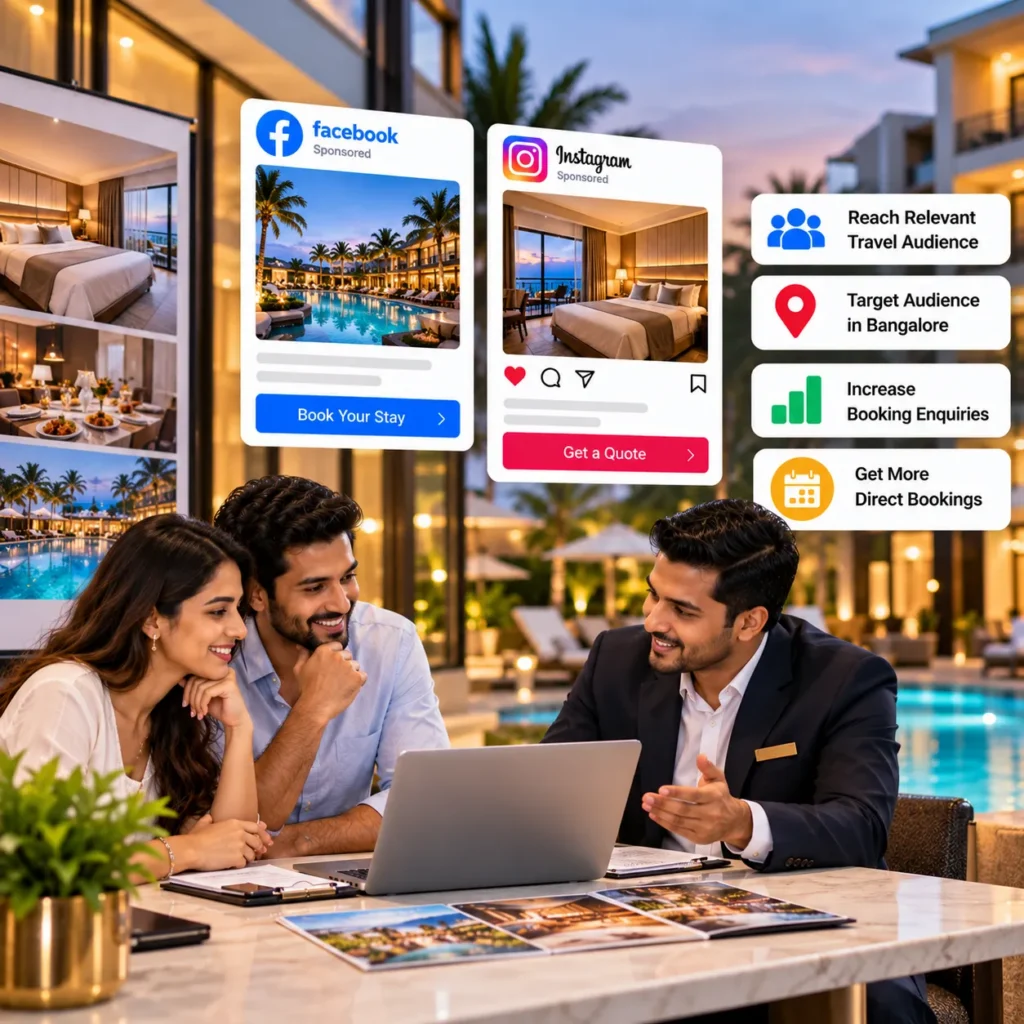
Travelers often discover hotels while browsing Facebook and Instagram for travel inspiration, accommodation ideas, destination recommendations, and special offers. These platforms allow hotels to showcase their rooms, facilities, dining options, guest experiences, and seasonal promotions through visual advertising. With the right campaign strategy, Hotel Meta Ads can help your property reach relevant audiences before they finalize their accommodation plans and give potential guests a reason to explore your offerings. A well-managed Meta advertising strategy also gives hotels opportunities to test different creative concepts, promote selected room categories, reach audiences in relevant markets, and measure website activity or booking-related actions where tracking is available. Rather than relying solely on organic social media posts or third-party booking platforms, your hotel can use paid campaigns to support its own marketing priorities. Performance depends on factors such as pricing, location, seasonality, creative quality, booking experience, and campaign execution.
Showcase your hotel to relevant audiences through Facebook and Instagram advertising. Professionally presented room photographs, facility highlights, destination-related content, and promotional creatives can introduce your property to people who may not have discovered it through their existing search or travel planning activities.
Direct interested audiences to your hotel’s website, booking engine, or enquiry channels. Clear room information, relevant offers, convenient booking options, and consistent advertising messages can help prospective guests explore availability and consider booking directly with your property.
Highlight your accommodation options, dining facilities, event spaces, recreational amenities, and other genuine property features. Separate creative themes can help communicate the value of different offerings to audiences with varied travel purposes and accommodation preferences.
Build campaigns around suitable geographic markets, travel interests, and audience characteristics where permitted by Meta’s advertising tools. This helps your hotel tailor promotional messages for leisure travelers, business visitors, families, couples, and other relevant audience segments without relying on one generic advertisement.
Promote suitable packages, weekday stays, seasonal offers, or selected room categories during periods when additional demand is a business priority. Campaign budgets and messaging can be adjusted according to availability, pricing, and booking trends, helping your hotel respond to changing demand without assuming that advertising alone will fill every room.
Use campaign creatives to communicate verified promotions, holiday packages, dining offers, event packages, and other relevant experiences. Time-sensitive advertising can help bring attention to offers while giving prospective guests clear information about eligibility, validity, and booking conditions.
Evaluate campaign spending, reach, impressions, clicks, landing page visits, and tracked booking-related actions. Properly configured measurement helps your hotel understand which advertisements attract interest and where improvements may be needed in the creative, targeting, or booking journey.
Use Meta advertising to bring relevant audiences to your hotel’s own website and approved booking channels. A well-measured approach can help your team learn which messages and audiences contribute to direct booking activity, supporting more informed marketing decisions over time.
- Services
What Hotel Meta Ads Services Do We Offer for Your Business Growth?
DigitalClouds provides Hotel Meta Ads services designed around your property type, target guests, room inventory, location, seasonal priorities, and advertising budget. We develop campaigns that combine audience planning, persuasive creative development, relevant offers, and performance measurement. From campaign setup and Facebook and Instagram advertising to conversion tracking and ongoing optimization, our objective is to help your hotel make more informed advertising decisions and improve the effectiveness of its digital marketing efforts.
Hotel Meta Ads Strategy and Campaign Planning
We develop an advertising strategy based on your hotel's business objectives, accommodation options, target markets, and promotional priorities. Campaign planning considers whether you want to increase direct booking enquiries, promote room packages, support restaurant reservations, or advertise event facilities. This helps establish a clear purpose for each campaign and a practical framework for evaluating its performance.
Facebook and Instagram Ads for Hotels
We create campaigns across Facebook and Instagram to showcase your hotel's rooms, facilities, dining experiences, and promotional offers. Depending on your objectives and available placements, campaigns may use image ads, video ads, carousel formats, or other suitable creative options. Each advertisement is planned to communicate the property's value clearly and guide interested users toward an appropriate next step.
Hotel Audience Research and Targeting
We identify suitable audience groups based on your hotel's location, guest profile, travel markets, and campaign goals. Where supported by Meta's current tools and applicable policies, targeting may consider geographic markets, relevant interests, and permitted audience strategies. We also evaluate whether broad targeting, custom audiences, or other eligible options suit the campaign's objectives and available data.
Hotel Promotional Creative and Ad Copy Development
We develop advertising messages and creative concepts that highlight your hotel's genuine strengths, such as room comfort, location, amenities, dining, or special packages. Visuals and copy are tailored to the campaign objective, with clear messaging and suitable calls to action. We can test creative variations to identify which approaches attract more relevant interest and support measurable campaign outcomes.
Hotel Booking Landing Page Recommendations
We review the destination pages used in your campaigns to assess whether they provide the information prospective guests need. Recommendations may cover room descriptions, photographs, amenities, rates where available, offer conditions, booking buttons, and mobile usability. A relevant landing page helps maintain consistency between the advertisement and the booking experience, reducing confusion for visitors exploring your property.
Hotel Remarketing and Audience Re-engagement
Where eligible and permitted by Meta's policies and privacy requirements, we plan campaigns for suitable audiences who have previously interacted with your website, advertisements, or other approved business touchpoints. Remarketing can help reintroduce room offers or property information to interested users, subject to audience eligibility, consent requirements, and available campaign features.
Hotel Seasonal Offers and Package Advertising
We plan campaigns around relevant promotional periods, festive stays, holiday packages, business travel needs, dining offers, and other genuine hotel experiences. Advertising schedules and budgets can be aligned with your property's availability and promotional calendar. Clear offer details and valid booking conditions help prospective guests understand the promotion before visiting your booking page.
Hotel Conversion Tracking and Booking Measurement
We configure or review suitable tracking for website enquiries, booking-engine interactions, calls, and other agreed actions where the technical setup permits. Measurement can help identify which campaigns and creatives contribute to booking-related activity. Where booking engines support appropriate integration, additional booking data may be evaluated to understand campaign performance more meaningfully.
Hotel Meta Ads Optimization and Performance Reporting
We monitor campaign results and review available data on reach, clicks, spending, creative performance, landing page activity, and tracked conversions. Based on these findings, we identify opportunities to refine audience settings, adjust budgets, test new creative concepts, or improve the booking journey. Regular reporting helps your team understand what has changed and which actions deserve attention next.
- WHY DIGITALCLOUDS
What Makes DigitalClouds the Best Hotel Meta Ads Agency in Bangalore?
DigitalClouds combines paid social campaign planning, creative strategy, audience targeting, conversion measurement, and ongoing optimization to help hospitality businesses approach advertising systematically. Our Hotel Meta Ads strategy considers your property’s unique offerings, target guest markets, booking priorities, and seasonal requirements. We focus on relevant audience reach and measurable campaign outcomes, helping your team evaluate performance and make decisions based on available data rather than assumptions.
Hospitality-Focused Advertising Strategy
We plan campaigns around the actual services your hotel offers, from room stays and dining experiences to event spaces and special packages. This helps align advertisements with your property's business priorities and the audiences most relevant to each offering.
Creative Campaigns Built Around Your Property
We help communicate your hotel's strengths through suitable images, videos, carousel advertisements, and clear promotional messaging. Creative development focuses on genuine amenities, relevant experiences, and accurate offer details so prospective guests can better understand what makes your property suitable for their stay.
Audience Planning for Relevant Guest Markets
We consider your location, target travel markets, guest profiles, and advertising objectives when planning audience strategies. Where platform features and policies allow, we test appropriate audience options and assess their performance to improve campaign relevance over time.
Focus on Direct Booking Opportunities
We plan advertisements and destination pathways to support your hotel's direct booking objectives where suitable. By reviewing landing pages, booking options, and tracked actions, we help identify opportunities to make the guest journey clearer and understand how advertising contributes to direct enquiries or booking activity.
Performance Tracking and Clear Reporting
We review available campaign metrics and explain what they indicate about your advertising activity. Reporting may include spending, reach, clicks, creative performance, and tracked booking-related actions, helping your team understand progress and identify areas where additional investigation or optimization may be useful.
Continuous Optimization Based on Data
We use campaign results to guide practical changes to audiences, creative variations, budgets, placements, and destination pages. Our optimization process considers booking quality, seasonal demand, property availability, and the limitations of available tracking instead of relying on a single metric to judge success.
- Our Process
How Does Our Hotel Meta Ads Process Work?
Our Hotel Meta Ads process combines hospitality market research, campaign planning, audience targeting, creative development, conversion measurement, and ongoing optimization. We begin by understanding your property’s offerings, target guests, location, booking priorities, and advertising budget. Each stage has a defined purpose, helping your team understand how campaigns are planned, launched, evaluated, and refined to support measurable marketing objectives.
Step 01 of 08 · Business and Campaign Analysis
Hotel Advertising Audit and Competitor Analysis
Understand your current advertising position and identify opportunities to promote your property more effectively.
Before launching new campaigns or improving existing ones, we review your hotel's marketing objectives, accommodation offerings, website, social media presence, and available advertising data. We also assess relevant competitor positioning using publicly available information. This helps identify gaps in messaging, audience opportunities, creative improvements, and tracking requirements before allocating budget to campaigns.
Our hotel advertising analysis activities include:
- Existing Campaign Review: Examine available Meta Ads account data, including campaign objectives, audience settings, creative formats, spending, and recorded results, to identify possible inefficiencies or areas requiring closer evaluation before further investment.
- Hotel Offering Assessment: Review your room categories, amenities, dining facilities, event spaces, packages, and other services to identify which offerings deserve advertising priority based on business goals and current availability.
- Competitor Advertising Research: Review publicly observable hotel promotions, creative themes, and positioning to understand how competing properties communicate their value, without assuming access to competitors' private campaign data or performance figures.
- Target Guest Assessment: Discuss the types of guests your property wants to reach, such as leisure travelers, business visitors, families, or event organizers, and connect those priorities with suitable campaign objectives and available targeting options.
- Website and Booking Journey Review: Assess the pages visitors reach from advertisements, including room details, rates, amenities, booking buttons, and contact options, to identify barriers that could affect booking consideration or enquiry completion.
- Creative Performance Assessment: Review available advertisement data to understand how different images, videos, headlines, and offers have performed, while considering audience size, campaign objective, spending, and the reliability of recorded conversions.
- Conversion Tracking Review: Check existing website events, booking-related measurements, enquiry forms, and relevant integrations where access permits, identifying whether current reporting captures meaningful actions consistently and accurately.
- Campaign Opportunity Planning: Prepare a prioritized list of campaign opportunities, creative requirements, audience tests, landing page recommendations, and measurement improvements based on your property's objectives and the initial findings.
Step 02 of 08 · Audience and Market Research
Hotel Audience Research and Guest Market Targeting
Identify relevant guest markets and develop advertising strategies aligned with your hotel's location and offerings.
Effective hotel advertising starts with understanding who may be interested in your property and why they might choose it. We assess your location, accommodation type, seasonal priorities, and available guest information to plan suitable audience strategies. Targeting choices depend on Meta's current features, advertising policies, privacy requirements, and the data available to your business.
Our hotel audience research activities include:
- Guest Segment Identification: Define relevant guest groups based on your hotel's offering and business priorities, such as leisure travelers, business visitors, families, couples, or guests seeking event and dining facilities.
- Geographic Market Planning: Identify relevant locations from which your hotel aims to attract guests, considering property location, travel patterns, business demand, and practical marketing priorities when selecting eligible geographic targeting options.
- Travel Interest Research: Explore suitable travel, hospitality, destination, and accommodation-related audience opportunities where Meta makes them available, ensuring that proposed targeting aligns with current platform capabilities and applicable policies.
- Seasonal Demand Assessment: Review your promotional calendar, booking trends where available, and upcoming travel periods to identify when particular packages or room categories may deserve additional advertising attention.
- Audience Size and Relevance Review: Evaluate available audience estimates and targeting combinations to avoid unnecessarily narrow configurations, balancing relevant reach with the need to test which audiences respond to your hotel's advertising.
- First-Party Audience Assessment: Where suitable consent and platform requirements are met, assess eligible customer or website audiences for permitted campaign use, respecting privacy obligations and restrictions on sensitive personal information.
- Audience Strategy Selection: Choose appropriate audience approaches for each campaign objective, considering broad targeting, eligible custom audiences, or other available options according to the hotel's requirements and available data.
- Audience Testing Plan: Develop a structured testing approach for comparing suitable audience groups, defining what performance indicators will be reviewed and how the findings will inform future targeting decisions.
Step 03 of 08 · Campaign Setup and Budget Planning
Hotel Meta Ads Campaign Structure and Budget Allocation
Organize campaigns around your hotel's business priorities, promotional offers, and measurable advertising objectives.
Once audience research is complete, we establish the campaign structure and configure suitable settings in Meta Ads Manager. Campaigns may be organized around direct booking objectives, room promotions, dining experiences, events, or seasonal packages, depending on your business needs. Budget allocation is planned around campaign priorities and testing requirements, with ongoing adjustments informed by performance data.
Our campaign setup activities include:
- Campaign Objective Selection: Select an appropriate campaign objective based on your desired outcome, such as website traffic, engagement, or eligible conversion actions, ensuring the objective matches the available tracking setup and business priorities.
- Campaign Structure Planning: Separate campaigns or ad sets where necessary to manage distinct hotel offerings, target markets, or promotional goals, while avoiding unnecessary fragmentation that could make budget management and performance evaluation more difficult.
- Budget Allocation Planning: Distribute the available advertising budget across priority campaigns and testing activities, considering seasonal demand, room availability, campaign maturity, and the business outcomes your hotel wants to evaluate.
- Placement Configuration: Review available Facebook and Instagram placements and select an appropriate setup based on creative format, campaign objective, audience, and platform recommendations, evaluating results rather than assuming one placement suits every hotel.
- Campaign Schedule Planning: Align campaign timing with valid promotional periods, room availability, upcoming events, and the hotel's marketing calendar, while allowing enough time for campaigns to deliver and generate meaningful performance data.
- Destination and URL Configuration: Confirm that each advertisement points to the appropriate hotel website, room page, offer page, booking engine, or approved enquiry channel, maintaining consistency between the advertised message and destination.
- Campaign Tracking Configuration: Review relevant tracking settings, conversion events, URL parameters, and available integrations to improve the reliability of campaign reporting and support better evaluation of booking-related activity.
- Pre-Launch Settings Review: Check budgets, audience settings, campaign objectives, creative requirements, destination links, and tracking configuration before launch to reduce avoidable errors and ensure the campaign is ready for monitoring.
Step 04 of 08 · Ad Creative and Copy Development
Hotel Advertising Creatives and Promotional Messaging
Showcase your property through compelling visuals and accurate messaging that give potential guests a clear reason to explore your hotel.
Hotel advertising relies heavily on how effectively a property communicates its atmosphere, accommodation, amenities, and value. We develop creative concepts and ad copy suited to the campaign objective, available assets, and intended audience. The aim is to present your property attractively while keeping claims accurate and ensuring promotional details match the destination page.
Our hotel creative development activities include:
- Room and Property Visuals: Select suitable room photographs, property images, and other approved visuals that accurately represent the accommodation and facilities, helping prospective guests understand the experience being promoted before visiting your website.
- Short-Form Video Concepts: Plan suitable video creative around room tours, amenities, dining experiences, property highlights, or guest activities, adapting the format to campaign placements and the creative assets available.
- Carousel Advertisement Planning: Organize multiple images or property features into a coherent carousel where suitable, allowing users to explore room types, facilities, packages, or different experiences within one advertisement.
- Promotional Headline Development: Write concise headlines highlighting genuine hotel advantages, valid packages, location convenience, or relevant amenities, ensuring the message is easy to understand and consistent with the actual offer.
- Advertisement Description Writing: Develop supporting copy that explains the property experience, important offer details, and relevant next steps, avoiding unsupported claims about guaranteed availability, guest satisfaction, or outcomes that cannot be substantiated.
- Call-to-Action Selection: Choose appropriate calls to action based on the campaign objective, such as exploring rooms, viewing a package, checking available offers, or visiting the booking page to review current options.
- Creative Variation Testing: Prepare different messaging or visual approaches for controlled testing, comparing available results to understand which concepts attract relevant attention and contribute to the campaign's intended objective.
- Creative Accuracy and Policy Review: Verify room imagery, package details, promotional dates, pricing references, and advertising claims before publication, checking that the content is accurate and aligned with applicable platform requirements.
Step 05 of 08 · Campaign Launch and Delivery Monitoring
Hotel Meta Ads Launch and Campaign Quality Checks
Launch campaigns with the correct settings and monitor delivery to identify early issues.
Before a campaign goes live, we verify its configuration, creative assets, audience settings, destination links, and tracking arrangements. After launch, we monitor delivery and available performance data to identify approval issues, unexpected spending, broken links, or early signs that an advertisement requires attention. Initial performance is evaluated carefully because campaigns may need time and sufficient data before reliable conclusions can be drawn.
Our campaign launch activities include:
- Final Campaign Configuration Check: Review campaign objectives, budgets, ad sets, placements, audience settings, schedules, and conversion goals to ensure the final setup reflects the agreed advertising plan and business priorities.
- Creative and Copy Verification: Confirm that approved images, videos, headlines, descriptions, and calls to action display correctly, communicate accurate hotel information, and comply with the intended promotional offer.
- Destination Link Testing: Test advertisement URLs and relevant booking pathways to confirm that visitors reach the correct hotel page, package details, enquiry form, or booking destination without unnecessary redirects or broken links.
- Ad Approval Monitoring: Review campaign approval status and address relevant policy or configuration issues where possible, recognizing that Meta controls final advertising review and may require changes before delivery is permitted.
- Delivery and Spending Checks: Monitor campaign delivery, impressions, reach, and spending after launch to identify unusual patterns, limited delivery, or budget usage that may require further investigation.
- Tracking Functionality Review: Check available event and conversion data after launch to identify missing or unexpected measurements, helping ensure that campaign reporting is interpreted with appropriate caution.
- Early Engagement Assessment: Review initial engagement, clicks, and other relevant indicators in context, avoiding premature decisions based on limited data or treating early activity as proof of booking success.
- Launch Issue Resolution: Document and address identified setup problems, creative issues, tracking gaps, or destination errors within the agreed scope, then confirm whether the relevant corrections have improved campaign operation.
Step 06 of 08 · Booking Conversion Tracking
Hotel Booking and Enquiry Conversion Measurement
Measure booking-related actions and understand how advertising contributes to your hotel's marketing objectives.
Reliable conversion measurement helps your hotel assess what happens after someone interacts with an advertisement. Depending on your website and booking system, this may include enquiry submissions, click-to-call actions, booking-engine visits, or completed reservations where suitable tracking is supported. We review the measurement setup carefully and distinguish between recorded actions, verified bookings, and actual revenue.
Our conversion tracking activities include:
- Conversion Goal Definition: Establish which actions matter most to your hotel, distinguishing completed booking events from supporting actions such as room-page views, booking-button clicks, enquiry submissions, and calls.
- Website Event Configuration: Configure or review suitable website events through supported tracking tools, ensuring that important actions are measured consistently and that event definitions reflect the intended behavior rather than unrelated page interactions.
- Booking Engine Integration Review: Assess whether your booking engine supports appropriate conversion measurement or integrations, identifying technical requirements and limitations before promising transaction-level tracking or advertising revenue attribution.
- Enquiry Form Tracking: Review tracking for completed enquiry forms and other relevant contact actions, checking that the system records successful submissions rather than counting incomplete forms or repeated button clicks as valid conversions.
- Call and Contact Measurement: Where supported, review suitable tracking for calls or contact interactions generated by advertisements, considering platform eligibility, configuration, privacy requirements, and whether the available measurement provides useful evidence of genuine enquiries.
- Tracking Accuracy Checks: Test configured events where access permits and review available diagnostic information to identify duplicate events, missing conversions, or inconsistent measurement that could distort campaign optimization and reporting.
- Booking and Revenue Data Review: Where appropriate integrations and reliable records exist, compare advertising data with booking outcomes or revenue information, clearly accounting for attribution limitations, cancellations, and differences between recorded and completed reservations.
- Conversion Reporting Setup: Organize reporting around the agreed goals and available measurement, helping your team distinguish campaign engagement from booking enquiries, completed reservations, and other business outcomes that require separate verification.
Step 07 of 08 · Campaign Optimization and Remarketing
Hotel Meta Ads Optimization and Audience Re-engagement
Improve campaign performance through structured testing, budget adjustments, and relevant audience strategies.
Once campaigns have accumulated sufficient data, we assess which audiences, creative concepts, placements, and promotional messages appear most relevant to your objectives. We use these findings to identify practical improvements and test changes carefully. Where permitted and technically supported, eligible remarketing strategies can also help reconnect with people who previously interacted with your hotel or its approved digital touchpoints.
Our optimization activities include:
- Audience Performance Analysis: Compare available audience results across relevant campaign groups, considering reach, spending, engagement, and recorded conversions to identify where further testing or adjustments may be justified.
- Creative Performance Optimization: Review how different images, videos, headlines, and offer messages perform, using sufficient data and relevant metrics to decide which creative concepts deserve further investment or replacement.
- Budget and Delivery Adjustments: Evaluate campaign spending and delivery against the hotel's priorities, making considered adjustments to budgets or settings while monitoring whether changes improve performance without disrupting useful campaign activity.
- Placement Performance Review: Examine available placement-level results to understand how advertisements perform across supported Meta environments, recommending changes only when the evidence and campaign objective justify them.
- Offer and Messaging Tests: Test suitable variations in promotional wording, property highlights, or calls to action while keeping offer conditions accurate, helping determine which messages attract relevant attention and encourage useful next steps.
- Eligible Remarketing Campaigns: Where platform rules, audience eligibility, and privacy requirements permit, develop remarketing campaigns for appropriate website or engagement audiences, using relevant property information or offers to encourage further consideration.
- Booking Journey Improvement: Review the relationship between advertisement engagement, landing page activity, and available booking data to identify possible friction points that may be addressed through website or booking-process improvements.
- Optimization Prioritization: Maintain a prioritized list of changes based on campaign objectives, evidence quality, potential impact, and implementation effort, then review subsequent results to understand whether the changes were useful.
Step 08 of 08 · Reporting and Growth Planning
Hotel Meta Ads Performance Reporting and Future Campaign Planning
Understand advertising outcomes and turn campaign insights into practical next steps for your hotel's growth.
Regular reporting helps your team understand how advertising spending translates into audience reach, website activity, enquiries, and measurable booking outcomes where tracking permits. We review results against agreed objectives, explain important changes, and identify opportunities for future testing. Recommendations consider seasonal demand, property availability, promotional priorities, and the limitations of attribution data rather than relying on isolated metrics.
Our reporting and growth planning activities include:
- Campaign Performance Summary: Report available metrics such as spending, reach, impressions, clicks, engagement, and recorded conversions, providing a clear overview of campaign activity across relevant hotel offerings and target markets.
- Cost and Conversion Analysis: Evaluate available cost metrics and tracked booking-related actions, explaining what they represent and distinguishing measured conversions from verified reservations, qualified enquiries, and actual revenue wherever those records are available.
- Creative and Audience Insights: Summarize how different creative concepts and eligible audience groups have performed, identifying patterns that may inform future campaigns while accounting for differences in spending, reach, and conversion volume.
- Booking Journey Evaluation: Review available landing page and booking-related measurements to identify possible points of friction, then recommend suitable improvements to property information, contact options, or booking pathways within the agreed scope.
- Budget Allocation Recommendations: Use campaign performance, upcoming promotions, room availability, and business priorities to recommend where future budgets may be tested or adjusted, without assuming that past performance will guarantee future results.
- Seasonal Campaign Planning: Align upcoming advertising plans with relevant travel periods, hotel packages, events, and promotional calendars, helping your team prepare creative and budget priorities before key marketing opportunities arrive.
- Business Outcome Review: Where reliable sales or booking records are available, compare advertising measurements with booking outcomes to understand campaign contribution, while accounting for attribution limitations and other channels that may influence a guest's decision.
- Continuous Improvement Roadmap: Develop a practical next-step plan covering creative testing, audience adjustments, tracking improvements, landing page recommendations, and upcoming campaigns, giving your team clear priorities for the next optimization cycle.
What Are Hotel Meta Ads and How Can They Help Hotels Attract More Guests?
Hotel Meta Ads are paid advertising campaigns on Facebook and Instagram that help hotels showcase their rooms, facilities, dining options, location, and guest experiences to relevant audiences. Unlike platforms where travellers primarily search for accommodation, Meta allows hotels to introduce their property through attractive visuals, short videos, seasonal promotions, and travel-focused content. A well-planned campaign can encourage people to explore the hotel’s website, check room availability, enquire about events, or consider a future stay. Results depend on the hotel’s positioning, offer, audience, booking experience, and advertising budget.
Hotels can use Meta advertising to support several business objectives:
- Showcase Rooms and Facilities: Use professional photographs and short videos to present room categories, swimming pools, restaurants, conference facilities, and other amenities that help potential guests understand what makes the property suitable for their visit.
- Promote Direct Bookings: Guide interested travellers to the hotel’s official booking page or enquiry channel, making it easier for them to review available accommodation, compare room options, and consider booking directly.
- Reach Different Traveller Groups: Develop suitable campaigns for business travellers, families, couples, weekend visitors, and event organisers according to the hotel’s facilities, location, pricing, and intended guest segments.
- Advertise Seasonal Offers: Highlight relevant packages, holiday promotions, weekday rates, festive arrangements, or weekend stays when these offers are genuinely available and the booking conditions are clearly communicated.
- Increase Property Awareness: Introduce the hotel to audiences who may not have encountered the property through search engines or booking platforms, using consistent branding and engaging visual content.
- Generate Event Enquiries: Promote suitable banquet halls, meeting rooms, wedding venues, and conference facilities to people or organisations looking for event spaces and hospitality services.
- Reconnect With Interested Visitors: Where permitted by platform policies and privacy requirements, use eligible remarketing approaches to reach people who have interacted with the hotel’s content or website.
- Measure Marketing Performance: Review advertising expenditure, website activity, enquiry submissions, and available booking data to understand how campaigns contribute to the hotel’s marketing objectives and where improvements may be appropriate.
How Can Meta Ads Help Hotels Generate More Room Bookings?
Meta advertising can help hotels introduce their accommodation and hospitality services to travellers who may be planning a trip, comparing properties, or looking for a suitable place to stay. Campaigns can present room photographs, location information, package details, and booking options to encourage interested visitors to take the next step. However, an advertisement view or website click does not automatically translate into a confirmed reservation. Booking performance depends on factors such as room availability, pricing, audience relevance, website usability, seasonal demand, and the ease of completing a reservation.
Hotels can improve their booking opportunities through the following approaches:
- Highlight Attractive Room Options: Create advertisements for relevant room categories using accurate photographs, occupancy details, amenities, and pricing information where appropriate, helping travellers decide whether the accommodation matches their requirements.
- Direct Guests to Booking Pages: Link advertisements to a functional reservation page where visitors can check available dates, review room conditions, understand applicable charges, and complete the booking process without unnecessary navigation.
- Promote Relevant Packages: Advertise genuinely available weekend stays, family packages, business accommodation, or other hospitality offers with clear eligibility conditions and booking dates to help prospective guests understand the value.
- Reach Suitable Travel Audiences: Plan campaigns around relevant geographic markets and permitted audience options, taking into account the hotel’s location, typical guest profile, booking patterns, and the types of stays it can accommodate.
- Use Strong Visual Content: Combine room photography, property walkthroughs, restaurant images, and short videos to give travellers a realistic impression of the accommodation before they visit the hotel’s website.
- Simplify Booking Enquiries: Make reservation links, contact information, and booking instructions easy to find so interested visitors can move from discovering the property to checking availability or requesting assistance.
- Monitor Reservation Activity: Compare suitable campaign indicators with available booking information to understand which advertisements contribute to reservation enquiries or completed bookings, accounting for cancellations and other booking changes.
- Improve the Booking Experience: Review mobile usability, loading speed, date selection, room descriptions, and payment steps because unnecessary friction during the reservation process can discourage interested travellers from completing a booking.
What Should You Expect From a Hotel Meta Ads Agency in Bangalore?
A Hotel Meta Ads agency in Bangalore should understand how hospitality businesses attract guests, promote room inventory, communicate accommodation offers, and generate relevant reservation enquiries through Facebook and Instagram. Its responsibilities may include campaign planning, audience research, creative development, offer promotion, landing-page recommendations, budget management, and performance reporting. The agency should consider the hotel’s guest segments, occupancy patterns, seasonal requirements, and booking process before recommending a campaign structure. Clear communication about deliverables, advertising expenditure, and performance expectations is essential for managing the campaign effectively.
When evaluating an agency for hotel advertising, consider whether it can provide these services:
- Hospitality Campaign Strategy: Develop an advertising plan around the hotel’s room categories, guest segments, occupancy objectives, facilities, and seasonal priorities instead of applying a generic marketing strategy that overlooks hospitality requirements.
- Audience and Location Planning: Identify suitable geographic markets and permitted audience settings based on the hotel’s location, intended guests, and booking patterns, while respecting platform restrictions and privacy requirements.
- Creative Development for Hotels: Prepare engaging advertisements featuring genuine room photographs, property videos, amenities, dining facilities, and offers that accurately represent the guest experience and available accommodation.
- Booking Campaign Setup: Configure suitable website traffic, lead-generation, or other eligible campaign objectives according to whether the hotel wants direct reservations, event enquiries, or additional interest in specific facilities.
- Landing-Page Recommendations: Review room pages, package details, booking links, mobile usability, and contact options to help visitors find the information needed to evaluate the property and proceed with a reservation.
- Seasonal Budget Management: Plan advertising expenditure around relevant booking periods, promotional dates, business priorities, and room availability, making adjustments as campaign evidence and operational requirements change.
- Performance Tracking and Reporting: Establish appropriate measurement for website visits, enquiries, and available booking actions, ensuring reports distinguish advertising engagement from confirmed reservations and actual revenue.
- Regular Communication and Optimisation: Provide understandable reports, explain completed work, review creative performance, and recommend practical adjustments based on the hotel’s objectives and the information available from campaign activity.
How Are Hotel Meta Ads Different From Google Ads for Hotels?
Hotel Meta Ads and Google Ads can both support hospitality marketing, but they connect with travellers in different ways. Facebook and Instagram allow hotels to introduce their property through visual storytelling, accommodation showcases, guest-focused content, and selected promotional campaigns. Google Search Ads can help hotels appear when people actively search for accommodation, hotel facilities, or stays in a particular location. The platforms may complement each other, but their usefulness depends on the hotel’s marketing objectives, audience, booking journey, budget, and ability to measure reservations appropriately.
Hotels should understand these differences when deciding how to allocate their advertising budget:
- Audience Discovery: Meta advertisements can introduce a hotel to people browsing social platforms, whereas Google Search Ads can reach users whose search queries indicate an existing interest in accommodation or a particular destination.
- Visual Property Presentation: Facebook and Instagram support room photography, walkthrough videos, restaurant content, and property showcases, helping hotels communicate their atmosphere and facilities before a traveller visits the booking website.
- Search-Driven Demand: Google Search Ads may be suitable for reaching people actively searching for hotels or accommodation in a destination, particularly when their queries indicate an immediate need to compare available options.
- Campaign Objectives: Meta can support awareness, engagement, website visits, and eligible lead-generation objectives, while Google campaign formats can address different search, website, and conversion goals depending on eligibility and setup.
- Promotion of Hotel Experiences: Meta can help hotels present dining experiences, wedding venues, meeting facilities, and seasonal packages through creative content that encourages people to explore services beyond overnight accommodation.
- Remarketing Considerations: Both platforms offer certain audience-reengagement options, but hotels must check current platform policies and privacy requirements before using audience data or personalised advertising methods.
- Performance Measurement: Compare the platforms using appropriate indicators such as qualified enquiries, confirmed bookings, cost per booking, and booking value where reliable data is available, rather than judging performance only by clicks.
- Coordinated Marketing Strategy: Hotels may combine Meta campaigns for property discovery with suitable Google campaigns for active accommodation searches, provided the overall approach fits their budget and booking objectives.
Which Hotel Services and Offers Can Be Promoted Through Meta Ads?
Hotels can use Meta advertising to introduce different accommodation options, hospitality facilities, and guest experiences, provided the advertised services are genuinely available and the campaign follows applicable platform policies. The appropriate strategy depends on the hotel’s positioning, target market, booking objectives, and operational capacity. A business hotel may prioritise weekday stays and meeting facilities, while a resort may focus on leisure accommodation and seasonal packages. Each advertisement should communicate the relevant service clearly and direct interested visitors to accurate information about availability, pricing, and booking conditions.
Depending on the property’s facilities and business model, campaigns may promote:
- Room Reservations: Showcase available room categories, photographs, amenities, occupancy information, and suitable booking options so prospective guests can evaluate whether the accommodation matches their travel requirements.
- Weekend and Holiday Packages: Advertise genuine leisure packages, holiday stays, and special accommodation arrangements with clear dates, inclusions, booking conditions, and applicable restrictions to help travellers make informed decisions.
- Restaurant and Dining Facilities: Promote on-site restaurants, dining experiences, eligible meal packages, and reservation options using accurate menus, photographs, operating hours, and other information relevant to prospective visitors.
- Wedding and Banquet Venues: Present available event spaces, banquet facilities, seating arrangements, and event services to couples, families, and organisers looking for a suitable location for celebrations or gatherings.
- Corporate Accommodation: Highlight business-friendly rooms, meeting facilities, location advantages, and relevant corporate arrangements for organisations seeking accommodation for employees, visiting clients, or business travellers.
- Meetings and Conference Facilities: Advertise meeting rooms, conference spaces, available equipment, and event support services to businesses planning workshops, professional meetings, training sessions, or corporate gatherings.
- Family and Group Stays: Present suitable room configurations, family amenities, group accommodation options, and relevant facilities to help families or organised groups understand whether the property meets their needs.
- Hotel Events and Experiences: Promote genuine seasonal events, special dining arrangements, or property experiences with accurate dates, availability information, and clear instructions for making reservations or requesting further details.
What Makes an Effective Meta Ads Campaign for a Hotel?
An effective Meta advertising campaign for a hotel connects the property’s strongest selling points with relevant audiences and a straightforward booking or enquiry process. The creative content should reflect the actual guest experience, while campaign objectives should match the hotel’s priorities, such as room reservations, event enquiries, or awareness of particular facilities. Results depend on more than attractive photographs: pricing, room availability, booking convenience, and the relevance of the offer also influence whether visitors take action. Regular reviews help hotel marketers identify which parts of the campaign require improvement.
A well-planned hotel campaign should include these elements:
- A Clearly Defined Objective: Decide whether the campaign should promote room bookings, increase awareness of the property, attract banquet enquiries, or generate interest in specific facilities before selecting the appropriate campaign structure.
- High-Quality Property Creatives: Use genuine, well-presented photographs and videos of rooms, dining areas, amenities, and shared spaces so prospective guests can understand what the hotel offers before visiting.
- Audience Relevance: Plan suitable audience and geographic settings around the property’s guest profile, location, and marketing objectives without relying on assumptions about travellers that the campaign data does not support.
- Accurate Promotional Messaging: Explain available offers, room inclusions, booking dates, and relevant conditions clearly, ensuring that advertisements do not imply discounts, facilities, or benefits that the property cannot provide.
- A Convenient Reservation Journey: Connect advertisements to functional booking pages or enquiry channels where visitors can review room options, check availability, understand pricing, and complete the next step without unnecessary complications.
- Appropriate Conversion Measurement: Track suitable actions such as booking requests or completed reservations where possible, using a privacy-conscious implementation that distinguishes meaningful outcomes from general website engagement.
- Creative and Offer Testing: Compare suitable advertisement formats, property images, messaging approaches, and promotional themes to identify which combinations attract relevant interest from the hotel’s intended audience.
- Ongoing Campaign Evaluation: Review expenditure, audience engagement, booking activity, and enquiry quality at appropriate intervals, then make considered adjustments based on evidence and the hotel’s operational priorities.
How Can Hotel Meta Ads in Bangalore Help Attract More Local and Travelling Guests?
Hotel Meta Ads in Bangalore can help properties promote accommodation, dining, events, and other hospitality services to audiences in selected geographic markets. A hotel may want to attract visitors travelling to Bangalore, residents looking for a staycation, companies arranging business accommodation, or local customers interested in dining and events. Each group has different requirements, so the advertising strategy should reflect the property’s facilities and the audience it intends to reach. Geographic targeting can support relevance, but actual bookings depend on availability, pricing, campaign quality, and the reservation experience.
Hotels promoting their services in Bangalore can consider these local advertising approaches:
- Identify Priority Guest Segments: Decide whether the campaign should focus on business travellers, visiting families, leisure guests, local residents, or event organisers, ensuring that the selected audience matches the hotel’s available facilities and business objectives.
- Target Relevant Geographic Markets: Select suitable geographic settings based on the hotel’s location, intended guest origins, and campaign purpose rather than assuming every nearby or distant audience will be equally valuable.
- Use Location-Relevant Messaging: Mention Bangalore naturally when communicating the hotel’s location, accessibility, or suitability for a particular type of stay, making sure the information accurately reflects the property’s actual position.
- Promote Local Stay Experiences: Advertise suitable weekend stays, dining experiences, celebrations, or other services for residents who may consider using hotel facilities without requiring an overnight booking.
- Highlight Business Travel Facilities: Present relevant accommodation features, meeting spaces, and practical amenities to organisations or travellers looking for a hotel that supports business-related visits to Bangalore.
- Create Relevant Booking Pages: Provide accurate directions, room details, amenities, booking options, and contact information so visitors can evaluate the property and understand how to reserve the advertised service.
- Coordinate Campaigns With Availability: Align promotional activity with available rooms, event capacity, and relevant booking periods so advertisements do not create avoidable enquiries for unavailable accommodation or facilities.
- Review Geographic Performance: Examine suitable campaign reports and booking information to identify which targeted markets contribute relevant interest, then refine geographic priorities according to evidence and business requirements.
How Long Does It Take for Hotel Meta Ads to Generate Bookings?
Hotel Meta Ads can begin delivering after advertisements are approved and campaigns become active, but the time required to generate bookings varies. Performance depends on the property, destination, room rates, creative quality, audience relevance, seasonal demand, competition, and reservation experience. Some campaigns may generate early enquiries, while others require adjustments to their messaging, offers, or landing pages. Hotels should distinguish between advertisement engagement, booking enquiries, completed reservations, and actual stays when assessing results, because these outcomes represent different stages of the guest booking journey.
Hotels can evaluate the initial campaign period using these practical steps:
- Prepare Booking Facilities Before Launch: Confirm that room descriptions, rates, availability information, reservation links, and contact details are accurate, reducing avoidable obstacles for guests who respond to advertisements.
- Allow Time for Advertisement Review: Account for Meta’s advertisement review process and any additional checks that may apply to particular claims, promotional content, or targeting methods used in the campaign.
- Start With a Clear Promotion: Focus the initial campaign on a suitable room category, seasonal package, or hospitality service so the hotel can evaluate audience response without spreading its budget across too many offers.
- Monitor Early Campaign Delivery: Review reach, impressions, clicks, and relevant engagement indicators to understand whether the advertisements are being delivered and whether audiences are responding to the property’s creative content.
- Check the Reservation Journey: Test booking links and mobile reservation pages to ensure that visitors can select dates, review room options, understand charges, and proceed without technical errors or confusing instructions.
- Separate Enquiries From Confirmed Bookings: Review the difference between people requesting information, guests completing reservations, and bookings that are subsequently cancelled, ensuring that campaign reporting reflects meaningful business outcomes.
- Use Sufficient Evidence for Adjustments: Examine campaign patterns over an appropriate period before making substantial changes to audiences, budgets, or creatives, particularly when booking demand varies with seasonality.
- Set Realistic Performance Reviews: Establish regular review points and measurable objectives with the campaign manager, recognising that no fixed timeline guarantees a particular number of reservations or a specific return on advertising expenditure.
How Much Does Hotel Meta Ads Management Cost in Bangalore?
The cost of Hotel Meta Ads management in Bangalore depends on the hotel’s advertising objectives, number of services promoted, creative production requirements, campaign complexity, and monthly advertising budget. The amount paid to Meta for advertisements is separate from the professional fee charged by an agency for campaign management. A small hotel promoting room reservations may require a different setup from a larger property advertising accommodation, dining, weddings, and conference facilities. Hotels should request a clear proposal explaining the scope of work, advertising expenditure, and any additional creative or technical costs.
When planning a hotel advertising budget, consider the following factors:
- Monthly Advertising Spend: Decide how much to allocate to Meta according to room inventory, promotional priorities, available resources, and intended guest segments, recognising that advertising expenditure does not guarantee confirmed bookings.
- Agency Management Fees: Confirm whether the agency’s fee covers campaign strategy, audience planning, creative setup, optimisation, reporting, and communication or whether some management activities are charged separately.
- Number of Services Promoted: Assess whether room bookings, restaurant offers, banquet facilities, and corporate accommodation require separate campaigns or creative variations that increase planning and management requirements.
- Creative Production Costs: Check whether photography selection, graphic design, video editing, advertisement copywriting, and new creative variations are included in the quoted fee or require a separate production budget.
- Website and Booking Improvements: Determine whether landing-page development, booking engine improvements, mobile usability fixes, or enquiry form updates are included or billed separately as website-related work.
- Tracking and Reporting Requirements: Understand the costs associated with suitable conversion measurement, booking data integration, reporting tools, and any additional technical work required to assess campaign performance.
- Seasonal Campaign Management: Consider whether promotional periods, special events, and changes in room availability require additional creative updates, campaign restructuring, or more frequent management attention.
- Transparent Cost Breakdown: Request a written estimate separating Meta advertising expenditure, agency management, creative production, taxes, and optional services so the hotel’s complete financial commitment is clear before launch.
How Can Hotels Improve the Quality of Leads From Meta Ads?
For hotels, a useful lead is someone whose requirements align with the property’s accommodation, facilities, location, and availability. A campaign may generate many enquiries without producing enough bookings if the advertisement attracts the wrong guest segment or fails to explain important conditions. Improving lead quality requires accurate promotional messaging, suitable audience settings, clear booking information, and an effective follow-up process. Hotels should also evaluate the relationship between advertising activity and confirmed reservations instead of relying only on clicks, social engagement, or the number of forms submitted.
Hotels can improve the relevance of their Meta Ads leads through these approaches:
- Define the Desired Booking: Identify whether the campaign is intended to attract room reservations, banquet enquiries, restaurant bookings, or corporate accommodation requests, allowing the advertisement and enquiry process to reflect the actual business objective.
- Communicate Offer Conditions Clearly: Include relevant information about booking dates, room inclusions, occupancy limits, and applicable restrictions so prospective guests understand the offer before contacting the hotel.
- Match Creative Content to Guest Needs: Select room photographs, property videos, and promotional messages that reflect the accommodation or facility being advertised rather than using generic visuals unrelated to the offer.
- Use Appropriate Enquiry Forms: Ask relevant initial questions, such as preferred dates or event requirements when appropriate, without collecting unnecessary personal details or information unrelated to the reservation.
- Improve Booking Page Relevance: Direct visitors to pages containing the advertised room, package, or event facility so they can evaluate availability and pricing without searching through unrelated website sections.
- Review Enquiry and Booking Data: Compare suitable lead indicators with available reservation information to understand whether campaigns are attracting relevant prospects and contributing to completed bookings.
- Coordinate Follow-Up With Hotel Staff: Establish a consistent process for handling reservation enquiries and event requests so potential guests receive accurate information about availability, pricing, and the next steps.
- Refine Campaigns With Evidence: Use patterns in relevant enquiries, booking activity, and creative performance to adjust audience settings and messaging rather than making changes based only on a high click count.
Can Small Hotels, Boutique Properties, and Independent Hotels Benefit From Meta Ads?
Small hotels, boutique properties, and independently operated accommodation businesses can use Meta advertising to showcase their rooms, highlight distinctive facilities, and introduce their property to suitable guest segments. They do not necessarily need a large advertising budget or campaigns covering every service. A focused approach may prioritise a particular room category, a seasonal package, or a facility that supports the hotel’s business objectives. The usefulness of paid advertising depends on room availability, pricing, website readiness, local competition, and the hotel’s ability to manage bookings and enquiries effectively.
Smaller hospitality businesses can approach Meta advertising through these practical steps:
- Showcase the Property’s Distinctive Features: Highlight genuine room designs, personal service, location advantages, or specific amenities that distinguish the property and help prospective guests understand why it may suit their accommodation requirements.
- Promote Selected Room Categories: Begin with a manageable number of room options or packages, ensuring that each advertisement presents accurate photographs, relevant inclusions, and clear booking information.
- Set a Sustainable Budget: Choose an advertising amount that the hotel can maintain while gathering useful campaign data, avoiding spending commitments based on assumed booking volumes or guaranteed returns.
- Use Available Visual Resources Effectively: Select high-quality property photographs and authentic videos that communicate the guest experience clearly, updating creative assets when room offerings or promotional details change.
- Target Relevant Guest Segments: Plan campaigns around suitable leisure, family, business, or local audiences according to the hotel’s location, facilities, and booking objectives instead of targeting everyone indiscriminately.
- Maintain a Functional Booking Process: Ensure that room information, contact details, reservation links, and availability information remain accurate so interested visitors can proceed without unnecessary confusion.
- Review Performance Regularly: Examine advertising expenditure, audience engagement, reservation enquiries, and available booking data to identify practical improvements and assess whether the campaign is contributing to business priorities.
- Expand Gradually When Appropriate: Consider additional room categories, event services, or geographic markets when campaign evidence, available budget, and hotel operations support a broader promotional strategy.
Should Hotels Manage Meta Ads In-House or Hire an Agency?
Hotels can manage Meta Ads internally when their teams have the necessary advertising knowledge, creative resources, and time to monitor campaigns consistently. Working with an agency may provide dedicated campaign management, creative development, reporting, and support with ongoing optimisation. Neither approach automatically guarantees better results because performance also depends on room rates, availability, guest demand, booking convenience, and promotional relevance. The decision should reflect the hotel’s internal capabilities, advertising complexity, and ability to coordinate marketing activity with reservation and operations teams.
Hotels can compare the two management approaches using these considerations:
- Internal Advertising Expertise: Assess whether the team understands Meta campaign objectives, audience settings, creative testing, budget allocation, reporting, and the requirements involved in promoting hospitality services responsibly.
- Time for Daily Operations: Consider whether staff can regularly review campaign performance, update promotions, check reservation links, and coordinate enquiries while managing front-desk responsibilities and other hotel operations.
- Creative Production Capacity: Determine whether the hotel can consistently prepare quality photographs, videos, promotional graphics, and advertisement copy or would benefit from professional assistance with content production.
- Agency Experience and Planning: If considering external support, ask how the agency approaches hospitality campaigns, plans seasonal promotions, reviews creative performance, and connects advertising activity with the hotel’s booking objectives.
- Budget and Resource Comparison: Compare agency fees and advertising expenditure with the time, staffing, photography, design, and technical resources needed to operate campaigns internally.
- Coordination With Reservation Teams: Establish how marketing staff will receive accurate information about room availability, booking conditions, seasonal offers, and event capacity before launching or updating advertisements.
- Tracking and Data Management: Ensure that the chosen arrangement includes suitable performance measurement, appropriate account permissions, and responsible handling of booking-related information.
- Ownership and Accountability: Confirm who controls the advertising account, approves creative assets, manages billing, monitors campaign performance, and authorises changes regardless of whether the hotel uses internal staff or an agency.
What Meta Advertising Policies Should Hotels Understand Before Launching Campaigns?
Hotels should review Meta’s current advertising standards before launching campaigns to ensure that promotional messages, creative assets, audience settings, and data practices comply with applicable requirements. Advertisements should accurately represent the property, room categories, available amenities, and terms of any promotion. Misleading discounts, inaccurate room photographs, unsupported claims, or unclear booking conditions can create problems for both campaign approval and guest expectations. Hotels should also handle customer information responsibly and check any relevant rules affecting payments, promotional offers, or other advertised services.
Before launching campaigns, hotels should review these important areas:
- Accurate Property Representation: Use genuine photographs and descriptions that reflect the actual rooms, facilities, amenities, and services available, avoiding creative material that could mislead prospective guests about the accommodation.
- Clear Promotional Conditions: State relevant booking dates, availability limitations, occupancy requirements, inclusions, and other material conditions so guests can understand the advertised offer before making a reservation.
- Responsible Pricing Communication: Ensure that advertised prices and discounts are accurate, clearly explained, and consistent with the applicable booking conditions rather than using promotional claims that create a misleading impression.
- Appropriate Audience Targeting: Review available audience and geographic settings to ensure that campaign configurations comply with current platform requirements and do not rely on prohibited targeting practices.
- Privacy-Conscious Remarketing: Check current policies and applicable privacy requirements before using website visitor audiences, customer lists, or other data-driven advertising methods to re-engage prospective guests.
- Secure Booking and Enquiry Processes: Ensure that reservation forms and contact channels handle customer information appropriately and avoid sending unnecessary personal or payment information to advertising platforms.
- Consistent Landing-Page Information: Match advertisements with relevant booking pages that accurately explain the room, package, facilities, and reservation terms so visitors do not encounter contradictory information after clicking.
- Ongoing Policy Reviews: Monitor advertisement approvals, account notifications, and relevant platform updates so that campaigns can be reviewed and corrected when advertising requirements or promotional details change.
Can Meta Ads Promote Multiple Hotel Services, Properties, and Locations?
Meta Ads can support campaigns for multiple hotel services, properties, and locations when the advertising account is organised around clear objectives and accurate information. A hospitality business may want to promote room reservations, restaurant facilities, banquet halls, and corporate accommodation, while a hotel group may operate several properties. Each service or property may require distinct creative content, booking links, and budget priorities. A structured campaign makes it easier to maintain relevance, monitor expenditure, and assess performance without combining unrelated offers into a single broad advertisement.
Hotels managing multiple services or properties can consider these approaches:
- Separate Campaigns by Service: Organise campaigns for room bookings, restaurant promotions, banquet enquiries, or corporate stays where appropriate, helping advertisements communicate a clear purpose and making performance easier to assess.
- Use Property-Specific Creative Assets: Select photographs, videos, and promotional details that accurately represent the relevant property, avoiding confusion when a hotel group operates multiple locations with different facilities.
- Create Relevant Booking Destinations: Direct visitors to the correct property’s website page or reservation system so they can review the advertised accommodation, location details, availability, and booking conditions.
- Distinguish Location-Based Offers: Keep the property address, available amenities, room rates, and promotional terms accurate for each location instead of assuming every branch provides identical facilities or packages.
- Allocate Budgets by Business Priority: Distribute expenditure according to booking objectives, room availability, service priorities, and campaign evidence rather than automatically dividing the budget equally among every property or facility.
- Coordinate Seasonal Promotions: Plan creative updates and campaign schedules around relevant holidays, events, and booking periods, ensuring that promotional details remain accurate and operational teams can fulfil advertised offers.
- Measure Results Separately: Use appropriate reporting to compare relevant engagement, enquiries, and booking indicators across services or properties, while recognising differences in room inventory, pricing, and guest demand.
- Expand in Manageable Stages: Introduce additional properties or service categories after assessing campaign performance, available resources, creative requirements, and the hotel’s capacity to manage enquiries and fulfil reservations.
How Do You Choose the Right Hotel Meta Ads Agency in Bangalore?
Choosing a Hotel Meta Ads agency in Bangalore requires reviewing its hospitality marketing approach, creative capabilities, campaign management process, reporting standards, and communication practices. The agency should understand that hotel advertising must reflect room availability, booking conditions, seasonal demand, and the guest reservation journey. It should explain how it plans campaigns, evaluates creative performance, and distinguishes engagement from actual bookings. Hotels should also verify the scope of work, fee structure, account ownership, and reporting arrangements before deciding whether an agency is suitable for their property.
Use these criteria when comparing potential agencies:
- Understanding of Hospitality Marketing: Ask how the agency would promote your room categories, facilities, packages, and other services, ensuring its proposed strategy reflects your property’s actual guest profile and business objectives.
- A Clearly Defined Campaign Plan: Request an outline covering campaign objectives, audience settings, creative formats, promotional priorities, booking destinations, budget allocation, and the method used to evaluate campaign performance.
- Quality of Creative Strategy: Review whether the agency can plan attractive, accurate visual content and service-specific messaging that communicates the property’s facilities without misrepresenting room quality, amenities, or promotional conditions.
- Transparent Pricing and Deliverables: Obtain a written breakdown of management fees, advertising expenditure, creative production, website improvements, taxes, and optional services so you understand what is included.
- Booking-Focused Reporting: Confirm that reports distinguish advertisement reach and clicks from enquiries, confirmed reservations, cancellations, and booking value wherever reliable and appropriate data is available.
- Realistic Performance Expectations: Be cautious of agencies promising guaranteed occupancy rates, fixed booking volumes, or specific returns without considering seasonal demand, room availability, pricing, and market competition.
- Responsible Data Handling: Ask how the agency manages account access, customer audiences, booking-related measurement, and privacy-sensitive information to reduce unnecessary exposure of customer data.
- Clear Communication and Ownership: Establish who approves promotional content, controls the advertising account, manages billing, reviews performance, and coordinates campaign changes with the hotel’s reservation and operations teams.
How Can Your Hotel Get Started With Meta Ads at DigitalClouds?
Getting started with Hotel Meta Ads at DigitalClouds can begin with an assessment of your property, accommodation options, target guests, website, promotional plans, and advertising budget. This initial discussion helps identify the services that may be suitable for promotion and the campaign objectives that match your hotel’s priorities. The proposed approach may include creative planning, audience configuration, booking-page recommendations, campaign setup, and appropriate performance measurement. Advertising decisions should reflect actual room availability, promotional conditions, operational capacity, and the requirements of the chosen platform.
Hotels can prepare the following information before discussing a campaign:
- Describe Your Property: Share the hotel category, location, room types, facilities, and distinctive guest experiences so the campaign can communicate accurate information about the accommodation and its available services.
- Identify Your Main Marketing Objective: Clarify whether you want to encourage direct room bookings, promote weekend stays, generate banquet enquiries, attract corporate accommodation requests, or increase awareness of selected facilities.
- Define Your Target Guest Groups: Explain whether the property primarily serves business travellers, families, leisure visitors, event organisers, or other relevant segments, helping establish suitable creative and audience priorities.
- Share Your Website and Booking Details: Provide the website and reservation link so room pages, mobile usability, booking steps, contact information, and offer details can be reviewed before campaign launch.
- Establish Your Advertising Budget: Decide how much you can allocate to Meta advertising and whether you also require campaign management, creative development, photography support, or website improvements.
- Prepare Promotional Information: Share current room offers, package inclusions, booking dates, availability restrictions, and other relevant conditions so advertisements can present accurate information to prospective guests.
- Plan Performance Measurement: Identify suitable indicators such as booking enquiries, completed reservations, or event leads, and establish how these will be assessed while respecting applicable privacy requirements.
- Agree on Review and Reporting: Establish how campaign delivery, advertising expenditure, creative performance, and available booking information will be reviewed so decisions can be based on clear evidence and business priorities.
If you are looking to promote your property through Hotel Meta Ads in Bangalore, DigitalClouds can be considered for campaign planning, creative development, audience setup, booking-focused advertising, and performance reporting. Share your hotel details, website, target guest segments, promotional priorities, and approximate budget to discuss an approach suited to your business. Campaign eligibility and results depend on advertising policies, audience response, room availability, competition, pricing, and the overall booking experience.
- LET'S GROW YOUR BUSINESS
Ready to Grow Your Business with the Best Hotel Meta Ads Agency in Bangalore?
Want to attract relevant guests, promote your hotel’s best offerings, and make more informed decisions about your advertising budget? DigitalClouds provides the best Hotel Meta Ads services in Bangalore with campaign planning, Facebook and Instagram advertising, creative development, audience targeting, conversion measurement, and ongoing optimization. We work around your hotel’s objectives, available inventory, and promotional calendar to build a structured advertising approach that can be evaluated and improved over time.
More Advertising & Social Media Solutions
Explore Other Meta Ads & Digital Advertising Services in Bangalore & Across India
Beyond hotel Meta Ads, DigitalClouds helps businesses in Bangalore and across India reach relevant audiences through Facebook, Instagram, and other paid advertising. Explore complementary solutions for Meta Ads management, hotel search advertising, creative production, lead generation, remarketing, and more.
Beauty & Wellness Meta Ads Services
Reach audiences interested in spa experiences, salon services, and wellness offerings with visual Facebook and Instagram campaigns.
Beauty & Wellness Meta Ads ServicesMeta Ads Management Services
Plan and optimise Facebook and Instagram campaigns with audience research, creative testing, budgets, and conversion tracking.
Meta Ads Management ServicesHotel Google Ads Services
Complement paid social campaigns with search ads for travellers actively researching rooms, locations, and hotel bookings.
Hotel Google Ads ServicesFacebook Ads Services
Introduce your property, restaurant, events, and seasonal offers through relevant Facebook placements and campaign measurement.
Facebook Ads ServicesLead Generation Services
Capture wedding, group booking, corporate stay, and event enquiries through focused forms and measurable conversion pathways.
Lead Generation ServicesRemarketing Services
Reconnect with eligible past website visitors and interested audiences using privacy-aware follow-up promotions and reminders.
Remarketing ServicesReels & Video Marketing Services
Showcase rooms, dining, amenities, and guest experiences through platform-ready Reels and short-form videos.
Reels & Video Marketing ServicesSocial Media Content Creation
Prepare consistent property visuals, captions, and campaign assets that reflect your hotel's brand and genuine facilities.
Social Media Content CreationInstagram Marketing Services
Build your hotel's Instagram presence with content planning, Stories, Reels, and guest-experience storytelling.
Instagram Marketing ServicesEcommerce Advertising Services
Promote eligible gift vouchers, packaged experiences, or other online offerings with suitable advertising and purchase tracking.
Ecommerce Advertising ServicesLanding Page Development Services
Create clear, mobile-friendly pages for hotel packages, room categories, event venues, and direct booking enquiries.
Landing Page Development ServicesSocial Media Management Services
Maintain an active, consistent social presence with scheduled content, community engagement, and performance reviews.
Social Media Management ServicesReady to Attract More Guests with Meta Ads?
Explore our Facebook and Instagram advertising services or discuss a campaign strategy for your hotel or business in Bangalore or anywhere across India.
- Our Services
We Offer a Range of Other Premium Digital Solutions
- FAQs
Frequently Asked Questions About Hotel Meta Ads
How Can Hotel Meta Ads Help Increase Direct Booking Opportunities?
Hotel Meta Ads can introduce your property to relevant audiences through Facebook and Instagram and direct interested users to your website or booking engine. Attractive property visuals, accurate room details, and clear booking options can encourage visitors to explore available stays. Results depend on pricing, audience relevance, campaign quality, seasonal demand, and the ease of completing a reservation.
What Types of Hotels Can Benefit from Meta Ads?
Hotels, resorts, boutique properties, business hotels, serviced accommodation providers, and hospitality businesses with suitable offerings may use Meta advertising. Campaigns can promote rooms, dining, event spaces, packages, or other services based on the property’s goals. The campaign structure should reflect the business model, target guests, available inventory, and the actions the hotel wants to measure.
How Much Should a Hotel Spend on Meta Ads?
The appropriate advertising budget depends on your property’s objectives, target markets, competition, seasonality, creative requirements, and booking economics. A practical budget should allow sufficient testing and measurement without putting pressure on operating costs. Campaign performance should be reviewed before increasing spending, and advertising expenditure should be considered separately from agency fees, creative production, and website development costs.
Can Hotel Meta Ads Target Guests Looking for Accommodation in Bangalore?
Meta Ads offers geographic and other audience options that can help hotels reach relevant markets, subject to current platform features and policies. A Bangalore hotel may plan campaigns around relevant local, domestic, or international guest markets depending on its business objectives. The best targeting approach depends on property location, guest profile, booking patterns, campaign performance, and the availability of suitable audience options.
Are Facebook Ads and Instagram Ads Suitable for Promoting Hotel Rooms?
Both platforms can be useful for showcasing hotel rooms, amenities, dining experiences, and special packages. Visual formats such as images, videos, and carousels can communicate the property’s atmosphere and features. Campaign selection should consider the target audience, creative assets, campaign objective, and performance data rather than assuming that one platform or format will always produce better results.
How Can Hotels Measure Bookings Generated Through Meta Ads?
Hotels can measure suitable actions such as enquiry submissions, booking-engine interactions, and completed reservations where supported by the website or booking system. Accurate tracking and appropriate integrations are important for reliable reporting. Businesses should also distinguish platform-attributed conversions from independently verified bookings and revenue, as attribution methods may not capture every influence on a guest’s decision.
Can Meta Ads Help Hotels During Low-Occupancy Periods?
Meta Ads can help promote suitable offers, weekday stays, packages, and selected room categories during periods when additional demand is a priority. Campaigns should reflect actual availability, valid pricing, and the hotel’s commercial objectives. Advertising can increase visibility and generate interest, but occupancy outcomes also depend on market demand, competition, rates, distribution channels, and the guest booking experience.
What Makes a Hotel Meta Ads Agency in Bangalore the Right Choice?
Choose an agency that understands hospitality advertising, campaign objectives, creative development, audience planning, tracking, and performance reporting. Ask how the agency evaluates booking-related outcomes, handles seasonal campaigns, and communicates budget decisions. You should also clarify agency fees, advertising account access, reporting frequency, creative responsibilities, and how campaign performance will be assessed.
How Long Does It Take to Evaluate Hotel Meta Ads Performance?
Campaigns can begin delivering after approval, but reliable evaluation requires enough data to understand audience response and booking-related activity. The timeframe depends on budget, audience size, property demand, seasonality, campaign objective, and booking cycle. Early indicators can reveal technical or creative issues, while larger optimization decisions should consider sustained trends and the quality of conversion data.
Why Should We Choose DigitalClouds for Hotel Meta Ads Services?
DigitalClouds combines campaign planning, hospitality-focused creative development, audience targeting, tracking, and performance optimization. We tailor the approach to your hotel’s objectives, promotional calendar, target markets, and available booking data. Our focus is on transparent reporting and informed improvements so you can understand campaign activity, evaluate relevant outcomes, and make better decisions about future advertising investments.
Still have questions? Contact us →