
Boost Your Website Rankings and Booking Potential with Hotel SEO Services
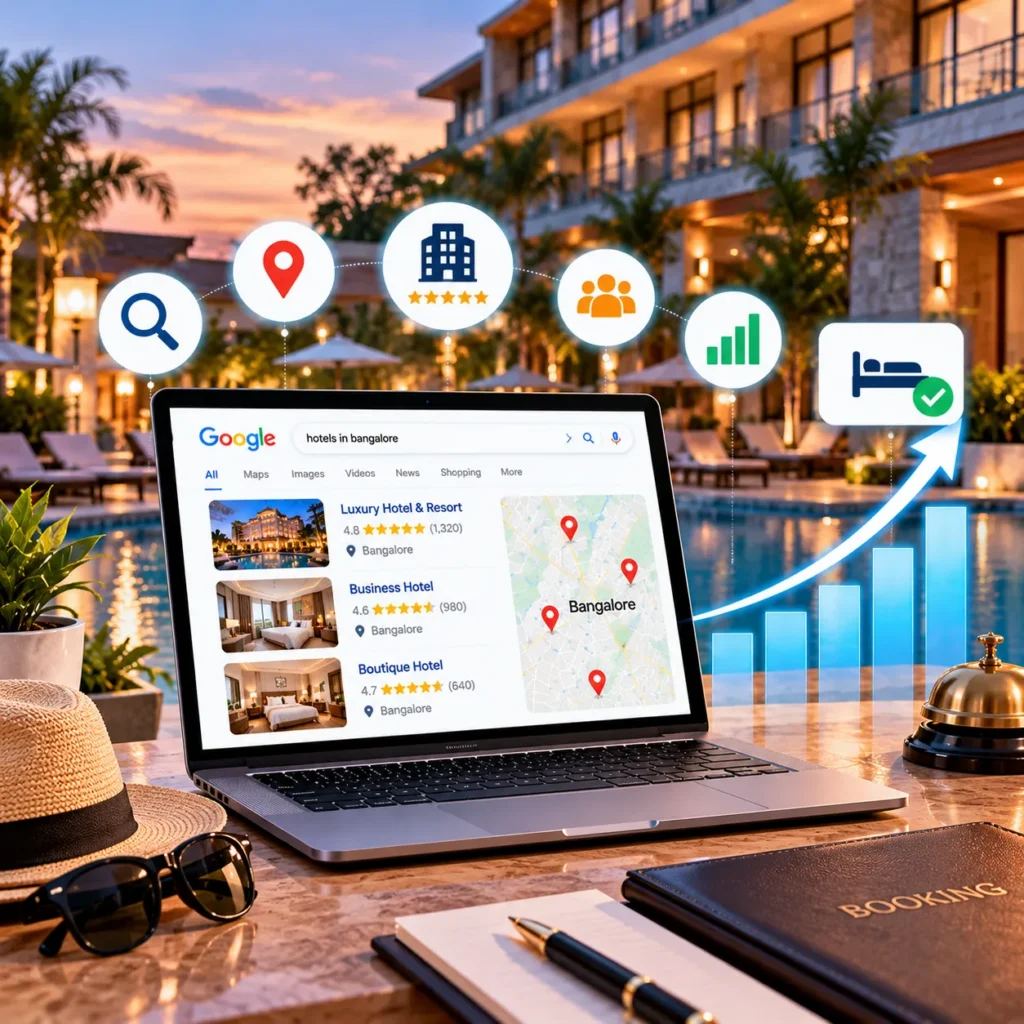
Looking for Hotel SEO Services to improve your hotel’s online visibility? DigitalClouds helps hotels, resorts, boutique properties, and hospitality businesses reach travellers searching for accommodation. Our SEO strategies focus on relevant keywords, room and facility pages, local search visibility, and website performance to make your property easier to discover, encourage direct booking enquiries, and support sustainable growth through organic search.
- WHY LAW FIRM SEO MATTERS
Why Is Hotel SEO Important for Hospitality Businesses?
Travellers often use search engines to compare hotels, explore room options, check amenities, and find accommodation near attractions, business districts, airports, or event venues. They may search for hotels by location, budget, property type, facilities, or travel purpose. If your website does not appear for relevant searches, potential guests may discover competing properties or rely entirely on third-party booking platforms. Hotel SEO helps improve your property’s organic search visibility and makes it easier for travellers to discover your rooms, facilities, location, and booking options. A well-planned strategy can also improve the website experience, provide clearer accommodation information, and support direct bookings alongside online travel agencies and other marketing channels.
Make your hotel easier to discover when travellers search for accommodation, resorts, boutique stays, business hotels, or other relevant property types. Targeted keyword research and optimized website pages help search engines understand your property and connect it with appropriate searches.
Help travellers explore room options, amenities, rates, and booking information directly on your website. Clear room descriptions, accessible booking options, and useful property information can encourage visitors to check availability or make reservations without relying exclusively on third-party platforms.
Improve your hotel’s visibility for searches involving your location, nearby attractions, transport connections, and local facilities. Local SEO, Google Business Profile optimization, accurate business information, and useful location content can help travellers discover your property when planning a stay.
Make individual room categories, suites, dining facilities, meeting spaces, and other available amenities easier to discover online. Dedicated pages with accurate descriptions and useful images help visitors understand what your property offers before making a booking decision.
Organize website content around the needs of business travellers, families, couples, tourists, and guests visiting for events. Relevant landing pages and accommodation information can help your property appear for searches that match its facilities, location, and guest experience.
Provide accurate details about room facilities, check-in procedures, amenities, location, policies, and available services. Clear website content helps travellers evaluate your property and understand what to expect before making a reservation.
Organic search can support your hotel’s direct booking channel alongside online travel agencies, metasearch platforms, and other marketing activities. A well-optimized website gives travellers another way to discover your property and access its official room and booking information.
Track organic traffic, search impressions, clicks, landing-page activity, and booking-related actions where appropriate tracking is available. These insights help identify which pages attract travellers and where further SEO improvements may support better website performance.
- Services
What Hotel SEO Services Do We Offer for Your Business Growth?
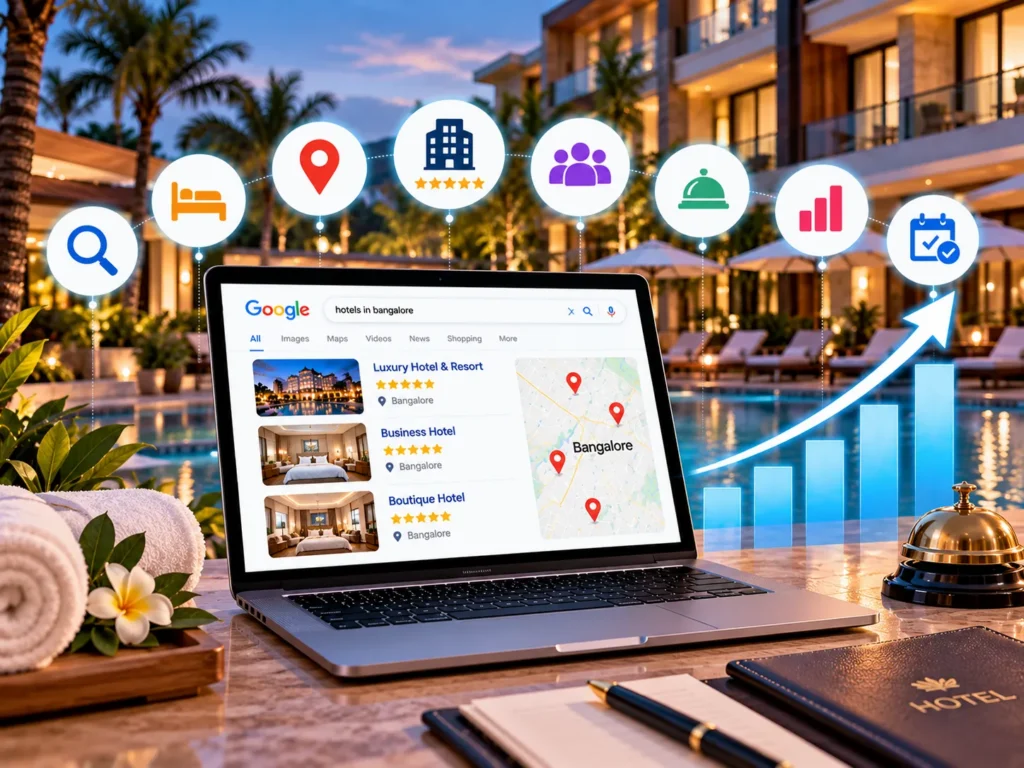
DigitalClouds provides Hotel SEO Services designed to improve search visibility, accommodation page relevance, local presence, and organic performance. We tailor our strategy to your property type, room categories, target locations, website structure, and booking objectives.
Hotel Website Audit and Competitor Analysis
Identify technical issues, review competing hotel websites, uncover content gaps, and prioritize improvements. We assess your website structure, room pages, location content, and existing organic visibility to develop an SEO plan suited to your property and competitive environment.
Hotel Keyword Research
Find relevant search terms based on your property type, room categories, facilities, location, and guest requirements. We identify opportunities for hotel, resort, boutique accommodation, business stay, and location-based searches, then map suitable keywords to relevant website pages.
On-Page SEO Optimization
Optimize page titles, meta descriptions, headings, URLs, room descriptions, images, and internal links. We improve the relevance and organization of hotel pages so search engines can better understand your accommodation offerings and travellers can find essential information.
Technical SEO for Hotel Websites
Address crawling, indexing, page speed, mobile usability, redirects, XML sitemaps, and other technical issues. We review your website's technical health to help search engines access important pages and provide travellers with a smoother browsing experience.
Local SEO for Hotels
Improve your local search presence through Google Business Profile optimization, location-based keyword research, accurate business information, and useful location content. We focus on the areas and destinations relevant to your property and its genuine accommodation services.
Hotel Room and Facility Page Optimization
Improve room category pages, suites, dining facilities, meeting rooms, event spaces, and other available amenities. Clear descriptions, relevant images, accurate details, and appropriate internal links help travellers explore your property and understand the options available.
Hotel Content Optimization
Improve hotel descriptions, destination guides, facility information, FAQs, and supporting blog content. We identify opportunities to answer common traveller questions and make your website more useful when people compare accommodation and plan their stays.
Off-Page SEO and Link Building
Review your backlink profile and identify relevant opportunities to strengthen your hotel's online presence. Activities may include legitimate hospitality directories, relevant local citations, competitor backlink research, and suitable editorial or tourism-related mentions.
Multi-Location Hotel SEO
Improve search visibility across multiple properties or locations through location-specific keyword research, useful property pages, internal linking, and performance tracking. Each page should provide meaningful information about the relevant property rather than repeating generic descriptions across locations.
Hotel SEO Performance Monitoring
Track organic traffic, search impressions, clicks, keyword visibility, important landing pages, and booking-related actions where suitable tracking is available. Regular performance reviews help identify opportunities and guide ongoing technical, content, and local SEO improvements.
- WHY DIGITALCLOUDS
Why Choose DigitalClouds for Hotel SEO Services?
DigitalClouds combines SEO planning, website optimization, content strategy, and performance monitoring to help hospitality businesses strengthen their online presence. Our approach considers how travellers discover hotels, compare accommodation options, explore facilities, and choose where to stay.
Hospitality-Focused SEO Strategy
We plan SEO activities around your property type, accommodation categories, facilities, target locations, and business objectives. Whether you manage a hotel, resort, boutique property, or business accommodation, the strategy reflects your actual offerings and guest requirements.
Room and Facility Page Optimization
We help organize your website around room categories, suites, dining options, meeting facilities, and other available amenities. Clear page structures make it easier for travellers to explore your property and understand the accommodation options available.
Location-Based Search Optimization
We focus on relevant geographic searches to help travellers discover your property in the locations you serve. Local keyword research, Google Business Profile optimization, accurate property details, and useful destination content can strengthen your local search presence.
Guest-Focused Content Improvements
We help present accommodation details, property facilities, booking information, and nearby attractions through clear, informative website content. This approach helps travellers understand the property and evaluate whether it suits their travel plans.
Technical SEO and Booking Experience
We review website speed, mobile usability, crawling, indexing, navigation, and relevant booking pathways. Addressing technical issues can help search engines access important pages and give visitors a smoother experience when exploring rooms or making reservations.
Transparent Reporting and Continuous Improvement
We evaluate available search and analytics data to understand your website's performance. Reporting can cover organic traffic, search visibility, landing-page activity, and tracked booking actions, helping you prioritize future SEO improvements based on measurable results.
- Manufacturing SEO Process
How Does Our Hotel SEO Process Work?
Our Hotel SEO strategy helps hotels, resorts, boutique stays, and accommodation providers attract travellers searching for places to stay. At DigitalClouds, we assess your property website, room offerings, destination market, booking journey, and online competitors to identify opportunities for growth. From destination-specific keyword research to room page optimization, local search visibility, and direct booking performance analysis, our approach aims to increase organic discovery and encourage travellers to book directly through your website.
Step 01 of 08 · Property Analysis
Hotel Website Audit and Competitor Analysis
Discover what prevents travellers from finding your property through search engines.
We evaluate your hotel website to understand how effectively it presents rooms, amenities, rates, location details, and booking options. We also examine competing hotels and accommodation websites to identify search visibility gaps, website weaknesses, and opportunities to attract travellers who are comparing places to stay.
Our hotel website audit includes:
- Website Technical Assessment: Identify crawl errors, indexing problems, broken links, redirect issues, and technical barriers affecting important hotel pages.
- Room Page Evaluation: Review room descriptions, occupancy information, amenities, photographs, and booking details for completeness and clarity.
- Competitor Hotel Analysis: Examine competing properties' room pages, destination targeting, website content, and organic search visibility.
- Booking Journey Assessment: Review how easily visitors can move from exploring rooms and facilities to checking availability or making a reservation.
- Website Structure Review: Evaluate room categories, amenities pages, location information, and internal links to improve website navigation.
- SEO Opportunity Planning: Prioritize improvements based on property offerings, target travellers, destination competition, and direct booking objectives.
Step 02 of 08 · Keyword Research
Hotel Keyword Research and Traveller Search Intent
Connect your property with travellers searching for accommodation in your destination.
Travellers use different search terms depending on their destination, travel purpose, budget, preferred facilities, and accommodation requirements. We research these patterns to identify keywords that match your hotel's offerings and help your website reach people actively exploring suitable places to stay.
Our hotel keyword research activities include:
- Accommodation Keyword Research: Identify relevant searches for hotels, resorts, budget stays, boutique properties, family accommodation, and other property types you offer.
- Destination-Based Keyword Research: Discover searches combining accommodation terms with your city, neighbourhood, tourist attractions, transport hubs, and nearby destinations.
- Room and Facility Keywords: Research terms related to room types, family rooms, parking, complimentary breakfast, conference facilities, and other available amenities.
- Traveller Intent Analysis: Distinguish between destination research, accommodation comparisons, facility searches, and queries indicating an intention to book.
- Competitor Keyword Analysis: Examine competing hotel websites to identify relevant search terms and destination opportunities your property may be missing.
- Keyword-to-Page Mapping: Assign suitable keywords to room pages, amenity pages, location pages, offers, and other relevant website sections.
Step 03 of 08 · Website Optimization
On-Page SEO for Hotel Websites
Turn your room, facility, and location pages into useful booking resources.
Travellers need accurate information to compare accommodation options and decide whether a property suits their needs. We optimize your website content and page elements to communicate room features, hotel facilities, location advantages, and booking information while improving relevance for accommodation-related searches.
Our on-page SEO activities include:
- Room Description Optimization: Improve room pages with accurate details about occupancy, bed types, facilities, views, and available amenities.
- Title and Meta Description Optimization: Write distinctive metadata reflecting your property name, accommodation type, destination, and relevant search terms.
- Hotel Facility Page Optimization: Develop useful content for facilities such as restaurants, meeting rooms, swimming pools, parking, and other amenities actually available.
- Location Content Enhancement: Explain the property's surroundings, nearby attractions, transport access, and relevant destination information.
- Internal Linking Improvements: Connect room categories, facilities, dining options, location pages, and booking pages to help visitors explore the property.
- Image and Gallery Optimization: Improve image filenames, alternative text, and gallery organization to make room and property photographs more accessible and understandable.
Step 04 of 08 · Technical SEO
Technical SEO and Website Performance for Hotels
Remove technical barriers that interfere with property discovery and reservations.
Hotel websites must make it easy for travellers to explore rooms, review property details, and complete reservations across devices. We examine technical issues affecting search engine access, page speed, mobile usability, and booking functionality to support a smoother browsing experience.
Our technical SEO activities include:
- Crawling and Indexing Review: Check XML sitemaps, robots directives, indexing settings, and crawl errors affecting important hotel pages.
- Website Speed Improvements: Evaluate loading performance and Core Web Vitals, including issues caused by large property photographs and third-party scripts.
- Mobile Booking Experience Testing: Review room layouts, navigation, availability links, and reservation forms across mobile devices.
- URL and Redirect Management: Identify broken room URLs, outdated offer pages, and unnecessary redirects that affect navigation and crawling.
- Duplicate URL Management: Review booking parameters, room variations, and similar URLs to determine appropriate canonicalization and indexing rules.
- Structured Data Validation: Assess relevant hotel, local business, and other supported structured data to ensure it accurately reflects visible property information.
Step 05 of 08 · Room & Destination Visibility
Hotel Room, Amenity, and Destination Page Optimization
Help travellers discover the accommodation and facilities that match their plans.
A hotel's website should make more than its homepage visible in search results. Individual room categories, facilities, dining options, and destination-related pages can address specific traveller needs. We optimize these sections to communicate your property's offerings and improve their relevance for suitable searches.
Our hotel page optimization activities include:
- Individual Room Page Development: Create or improve dedicated pages for standard rooms, deluxe rooms, suites, family rooms, and other available categories.
- Room Category Organization: Arrange accommodation options according to room type, occupancy, amenities, and other useful booking considerations.
- Amenity Page Optimization: Improve relevant pages for dining, parking, event spaces, recreational facilities, and other services offered at your property.
- Destination Landing Page Development: Create useful content for the areas and destinations your property serves, with accurate local information relevant to travellers.
- Offer and Package Page Optimization: Present valid seasonal offers, accommodation packages, and special stay options with clear terms and availability details.
- Direct Booking Path Improvements: Make room availability checks, rate information, reservation links, and contact options easy to find.
Step 06 of 08 · Content Development
Hotel Content Marketing and Destination Guides
Give travellers useful information while showcasing what makes your property worth considering.
Many travellers research destinations, nearby attractions, transport options, and accommodation features before selecting a hotel. We develop content that answers these questions, highlights relevant property advantages, and connects destination research with suitable room and booking pages.
Our hotel content activities include:
- Destination Guide Development: Create useful guides about local attractions, popular neighbourhoods, transport access, and places travellers may want to visit.
- Traveller-Specific Content: Develop relevant resources for business travellers, families, couples, tourists, and other audiences your property serves.
- Hotel Facility Guides: Explain available amenities, dining options, event facilities, and guest services through accurate, informative website content.
- Local Experience Articles: Publish content about nearby attractions, local activities, cultural experiences, and practical travel considerations relevant to your destination.
- Content Gap Analysis: Identify destination questions, accommodation topics, and traveller needs that competing hotel websites address but your site overlooks.
- Content Accuracy Review: Verify property facilities, travel details, room information, offer terms, and other factual claims before publication.
Step 07 of 08 · Online Authority
Hotel Link Building and Off-Page SEO
Improve your property's online discovery through relevant travel and local references.
Travellers may discover accommodation through travel resources, destination publications, local business directories, and other relevant websites. We identify legitimate opportunities to strengthen your hotel's online presence through accurate listings, relevant mentions, and quality-focused link building.
Our off-page SEO activities include:
- Backlink Profile Assessment: Review existing backlinks and referring domains to understand your hotel's current online authority profile.
- Travel and Accommodation Listings: Identify suitable hotel directories, destination platforms, and legitimate accommodation listing opportunities.
- Local Citation Management: Check consistency in your hotel's name, address, telephone number, and other essential business information.
- Competitor Backlink Research: Examine relevant websites mentioning competing properties to identify suitable opportunities for your hotel.
- Travel Industry Outreach: Explore relevant travel publications, destination websites, tourism resources, and local business platforms for potential editorial mentions and links.
- Link Quality Monitoring: Track backlink changes and review potentially problematic patterns as part of ongoing off-page SEO management.
Step 08 of 08 · Performance Tracking
Hotel SEO Reporting and Direct Booking Optimization
Measure organic visibility and identify opportunities to increase direct reservations.
Hotel SEO should be evaluated through search visibility, room page performance, relevant website traffic, and measurable booking activity. We monitor how travellers discover your property and interact with its website to identify improvements that can support stronger organic performance and direct reservation opportunities.
Our hotel SEO monitoring activities include:
- Organic Traffic Analysis: Review search-driven visits to understand how travellers discover your hotel and its accommodation options.
- Search Visibility Monitoring: Track impressions, clicks, and click-through rates for important hotel, room, amenity, and destination searches.
- Hotel Keyword Tracking: Monitor priority accommodation, room category, facility, and location keywords to identify changes in search visibility.
- Room Page Performance Review: Evaluate room categories, amenity pages, destination content, and booking-related landing pages to identify improvement opportunities.
- Booking Conversion Tracking: Measure reservation completions, availability checks, booking link clicks, and relevant enquiries where reliable tracking is available.
- Ongoing SEO Refinement: Use performance insights to prioritize technical improvements, room page updates, destination content, and new search opportunities.
What Is Hotel SEO and How Can It Increase Direct Bookings?
Hotel SEO improves a hotel’s visibility in search engines when travellers look for accommodation, rooms, amenities, and places to stay in a particular destination. It helps independent hotels, resorts, boutique properties, and hotel chains reach travellers researching their next trip. By improving room pages, destination content, local search visibility, and booking journeys, hotels can attract relevant organic visitors and create more opportunities for direct reservations.
Our hotel SEO activities include:
- Hotel Keyword Research: Identify searches related to hotel stays, room categories, accommodation types, and destination-specific requirements. Prioritise keywords that reflect your property’s actual facilities, target travellers, location, and booking objectives.
- Room Page Optimisation: Improve individual room pages with accurate descriptions, occupancy details, amenities, photographs, and relevant search terms. Clear information helps travellers compare accommodation options and decide whether your hotel meets their requirements.
- Direct Booking Page Optimisation: Improve the pages that guide visitors towards your hotel’s reservation system. Make room details, booking options, cancellation information, and relevant policies easy to understand before travellers proceed with a reservation.
- Local SEO: Strengthen your hotel’s visibility for accommodation searches associated with its actual destination and neighbourhood. Accurate business information and relevant local pages help travellers discover your property while comparing nearby places to stay.
- Destination Content Development: Publish useful guides about local attractions, transport connections, business districts, and visitor experiences. Relevant destination content helps travellers researching a trip discover your hotel while planning where to stay.
- Booking Journey Improvements: Review how visitors move from search results to room information and the reservation process. A clear journey reduces unnecessary confusion and makes it easier for interested travellers to check availability and book.
How Can SEO Help Hotels Attract More Travellers Through Organic Search?
Travellers use search engines to compare accommodation, explore destinations, check hotel facilities, and find suitable rooms for different budgets and trip purposes. SEO helps hotels appear for these searches by aligning website pages with traveller needs and providing accurate property information. A focused strategy can increase organic discovery, strengthen visibility beyond third-party booking platforms, and create additional opportunities for travellers to reserve directly through the hotel’s website.
Our hotel SEO activities for attracting travellers include:
- Traveller Intent Research: Identify searches from leisure tourists, business travellers, families, couples, and guests visiting for specific events. Understanding these audiences helps your hotel create relevant pages that address different accommodation needs and booking preferences.
- Accommodation Category Optimisation: Develop clear content for the room types and accommodation categories your property genuinely offers. Accurate descriptions of occupancy, bed arrangements, facilities, and suitable guest requirements help travellers identify appropriate options.
- Destination-Based Search Targeting: Research relevant searches connecting your hotel’s destination with accommodation requirements. Match these searches to useful landing pages that explain your location, property facilities, and proximity to relevant attractions or business areas.
- Hotel Website Content: Create helpful information about check-in procedures, amenities, transport access, dining options, and nearby attractions. Useful content answers practical traveller questions and helps prospective guests evaluate your property before making reservations.
- Organic Visibility Beyond OTAs: Optimise your own website so travellers can discover the property through non-branded accommodation searches as well as hotel-name searches. This creates an additional discovery channel alongside online travel agencies and other booking platforms.
- Seasonal Search Planning: Identify accommodation searches associated with holidays, festivals, conferences, weddings, and local events. Prepare relevant pages and update existing content before important travel periods when the hotel can accommodate additional demand.
- Performance and Booking Analysis: Monitor organic traffic, room-page engagement, booking-system visits, and available reservation data. These insights help determine which pages attract travellers and which improvements may support more direct booking opportunities.
What Should You Expect From a Hotel SEO Agency in Bangalore?
A hotel SEO agency should understand accommodation searches, destination competition, room inventory, and the factors travellers consider before booking. The agency should assess your website, identify opportunities across room pages and destination content, and develop a strategy aligned with your property and business goals. You should expect transparent reporting, clearly defined activities, and ongoing optimisation rather than unrealistic promises about rankings, occupancy, or guaranteed reservation numbers.
Our hotel SEO agency services include:
- Hotel Website Audit: Review your website structure, room pages, booking links, technical performance, indexing, and existing search visibility. The audit should identify issues affecting accommodation discovery and opportunities to improve the visibility of important hotel pages.
- Accommodation Keyword Strategy: Research search terms related to room types, hotel facilities, destinations, and traveller requirements. Map keywords to relevant pages based on search intent, the property’s actual offerings, and the audiences you want to attract.
- Competitor Analysis: Examine how competing hotels present room information, destination pages, amenities, and booking options. Use the findings to identify opportunities for better content and search visibility without copying competitor descriptions or marketing claims.
- On-Page SEO: Improve titles, headings, descriptions, image alt text, and internal links across important hotel pages. These improvements help search engines understand each page and help travellers find relevant accommodation information more easily.
- Local Search Optimisation: Improve your Google Business Profile, hotel location information, and relevant local landing pages. Accurate business details help travellers discover the property, check its location, and access the correct website or contact information.
- Technical SEO Support: Review website speed, mobile usability, indexation, booking links, and site architecture. Technical improvements help search engines access important pages and make it easier for travellers to browse accommodation options across different devices.
- Booking Performance Reporting: Track organic impressions, clicks, keyword visibility, booking-related actions, and available conversion data. Reporting should explain the work completed, changes in performance, and the next steps for improving your hotel’s search presence.
- Ongoing SEO Management: Refine priorities as room availability, seasonal demand, competing properties, and search behaviour change. Consistent optimisation helps maintain relevant content and supports sustainable organic visibility as your hotel’s business objectives evolve.
How Can Local SEO Help Travellers Discover Hotels in Your Area?
Travellers frequently search for accommodation near attractions, transport hubs, hospitals, business districts, event venues, and other important destinations. Local SEO helps hotels become more discoverable when people look for places to stay in a particular area. By maintaining accurate business information, improving location relevance, and publishing useful destination content, hotels can help travellers understand where the property is situated and whether it suits their travel plans.
Our local hotel SEO activities include:
- Google Business Profile Optimisation: Keep your hotel’s name, address, phone number, website, categories, operating information, and other relevant details accurate. A complete profile helps travellers discover the property and review essential information before deciding where to stay.
- Location Keyword Research: Identify accommodation searches that combine hotel-related terms with the destinations and neighbourhoods your property genuinely serves. Use these terms naturally in appropriate pages rather than inserting location names without meaningful supporting information.
- Hotel Location Landing Pages: Create useful pages explaining your property’s location, nearby attractions, transport access, and relevant neighbourhood features. Each page should provide practical information for travellers instead of repeating generic hotel descriptions with different location names.
- Nearby Attraction Content: Develop informative pages about relevant tourist attractions, business districts, event venues, and transport connections. Use accurate distances and travel information where verified so travellers can understand the property’s location before booking.
- Business Information Consistency: Maintain consistent hotel details across your website and relevant business directories. Correct addresses, telephone numbers, and website links reduce confusion and help travellers reach the correct property when planning their stay.
- Guest Review Management: Encourage genuine guest feedback and respond professionally to reviews without revealing private booking or personal information. Thoughtful responses demonstrate attention to guest experiences and help prospective travellers understand how the property addresses feedback.
- Local Search Performance Monitoring: Review available Google Business Profile interactions, local search visibility, website visits, calls, and direction requests. These indicators help you understand how travellers discover and interact with your property through local search.
- Directions and Contact Accessibility: Make your hotel’s address, map details, telephone number, and booking options easy to access on mobile devices. Clear information helps travellers confirm the property’s location and contact the hotel when they need assistance.
How Should Hotels Choose Keywords for Rooms, Amenities, and Destinations?
Hotel keyword research should reflect how travellers search for accommodation, including their preferred destination, room requirements, budget, amenities, and travel purpose. Someone looking for a family room has different needs from a business traveller seeking accommodation near an office district. Mapping relevant searches to suitable room, facility, and destination pages helps hotels attract appropriate visitors while making their website easier to navigate.
Our hotel keyword research activities include:
- Room Category Keyword Research: Identify searches related to standard rooms, deluxe rooms, suites, family accommodation, and other categories the hotel actually offers. Use relevant terms on the appropriate pages so travellers can find accommodation that matches their requirements.
- Amenity-Based Keyword Research: Research searches involving genuine hotel facilities such as parking, Wi-Fi, restaurants, conference rooms, or swimming pools. Include amenity keywords only when the property offers those facilities and can provide accurate information about them.
- Destination Keyword Research: Identify accommodation searches associated with your city, neighbourhood, tourist attractions, and relevant travel destinations. Prioritise areas connected to your actual property location and the needs of your intended guests.
- Traveller Intent Analysis: Separate general destination research from searches showing a stronger interest in accommodation, room availability, or specific facilities. This helps determine whether a keyword belongs on a destination guide, room page, amenity page, or booking-related page.
- Long-Tail Keyword Research: Explore specific searches involving room configurations, guest requirements, location preferences, and facilities. These queries can reveal opportunities to attract travellers whose accommodation needs closely match the hotel’s available offerings.
- Keyword-to-Page Mapping: Assign primary and supporting keywords to relevant room categories, amenities, destination pages, and hotel information pages. This creates a clearer content structure and reduces unnecessary competition between pages targeting the same search intent.
- Competitor Keyword Analysis: Examine the searches for which competing hotels and accommodation websites appear in organic results. Use this research to discover content gaps while keeping your hotel’s descriptions accurate, original, and specific to its facilities.
- Seasonal Keyword Review: Reassess keyword opportunities before relevant travel seasons, local festivals, conferences, and major events. Update content according to genuine accommodation availability and changing traveller needs rather than targeting seasonal terms without a practical booking opportunity.
What Type of Content Helps Hotel Websites Attract Potential Guests?
Travellers often need practical details before choosing a hotel, including room facilities, check-in arrangements, dining options, transport access, and nearby attractions. Useful website content answers these questions while helping guests understand the property’s location and accommodation choices. Accurate room descriptions, destination guides, amenity pages, and booking information can improve organic discovery and support better-informed booking decisions without relying on vague promotional language or unsupported claims.
Our hotel content development activities include:
- Detailed Room Descriptions: Explain room configurations, bed arrangements, occupancy limits, amenities, and other verified features. Clear descriptions help travellers compare suitable accommodation options and reduce uncertainty about what is included in their reservation.
- Hotel Amenity Pages: Create useful pages for facilities such as restaurants, conference spaces, parking, fitness areas, or other amenities actually available. Explain relevant access details and conditions so guests understand how the facilities may support their stay.
- Destination Guides: Publish helpful content about nearby attractions, shopping areas, transport connections, and visitor experiences. Reliable destination information helps travellers plan their itinerary while discovering your hotel as a potential accommodation option.
- Travel Purpose Content: Develop relevant pages for business stays, family trips, leisure travel, or event-related accommodation where the hotel genuinely caters to these guests. Each page should explain the facilities and location benefits relevant to that audience.
- Booking and Policy Information: Explain check-in and check-out arrangements, cancellation conditions, occupancy requirements, and other important booking details clearly. Accurate information helps guests understand the reservation terms before completing a booking.
- Frequently Asked Questions: Answer common questions about room facilities, parking, meals, arrival times, accessibility, and nearby transport. Keep answers accurate and consistent with the hotel’s actual policies to avoid creating misleading expectations.
- Hotel and Property Information: Present the hotel’s facilities, location, available room types, and relevant services in an organised format. Well-structured information helps travellers assess the property without navigating through unrelated pages or promotional material.
- Seasonal Travel Content: Create relevant guides for local events, holiday periods, and destination-specific travel opportunities. Publish information early enough to support trip planning and update it whenever event dates or accommodation details change.
Why Is Technical SEO Important for Hotel Websites and Booking Pages?
Technical SEO helps search engines discover and understand hotel websites while supporting a smooth experience for travellers browsing rooms and reservation options. Hotel websites may contain room categories, amenity pages, destination guides, promotional landing pages, and external booking systems. Technical problems can prevent important pages from appearing in search results or make reservations difficult to complete. A reliable technical foundation supports both organic visibility and website usability.
Our hotel technical SEO activities include:
- Crawlability and Indexation: Check whether important hotel, room, amenity, and destination pages can be discovered and indexed correctly. Identify crawl errors, accidental indexing restrictions, and duplicate URLs that may prevent valuable pages from appearing in search results.
- Website Speed Optimisation: Review large room photographs, scripts, page templates, and other resources that affect loading performance. Improving performance helps travellers browse room options more comfortably, particularly when researching accommodation on mobile devices.
- Mobile Booking Usability: Test navigation, room selection, booking links, and contact options across mobile screen sizes. A mobile-friendly experience helps travellers compare accommodation and proceed to the appropriate reservation system without struggling with difficult controls.
- Website Architecture: Organise room categories, amenities, location pages, destination guides, and hotel information into a logical structure. Clear internal linking helps search engines discover important pages and enables travellers to find relevant details more easily.
- Booking Link Validation: Check that reservation buttons, booking engine links, and availability options lead to the correct destinations. Broken or misleading booking links can interrupt the reservation journey and prevent interested visitors from completing their intended action.
- Image Optimisation: Compress suitable hotel photographs, use descriptive file names, and add meaningful alternative text where appropriate. These improvements support accessibility and performance while helping search engines understand the visual content associated with rooms and facilities.
- Structured Data Review: Assess appropriate structured data for the hotel or relevant business information and implement it accurately where eligible. Markup must reflect visible website content and should not claim unsupported ratings, prices, amenities, or booking availability.
- Broken Link and Redirect Audits: Identify outdated room pages, broken destination links, redirect chains, and unavailable booking destinations. Resolve these issues appropriately so travellers can access current information and search engines can understand changes to the website.
How Long Does Hotel SEO Take to Improve Direct Booking Opportunities?
Hotel SEO requires consistent work because results depend on website quality, destination competition, property reputation, content relevance, and the demand for accommodation. Some technical corrections may be completed quickly, while stronger organic visibility and measurable booking improvements can take longer. Hotels should assess progress through search performance, room-page engagement, and available reservation data rather than expecting immediate rankings or guaranteed increases in occupancy.
Our hotel SEO progress management activities include:
- Initial Performance Benchmarking: Record existing organic traffic, indexed pages, keyword positions, and available booking-related conversion data. These benchmarks establish a reference point for evaluating future performance and identifying which parts of the hotel website need attention.
- Technical Issue Resolution: Prioritise problems affecting crawlability, indexing, mobile usability, website speed, and booking links. Resolving these issues helps search engines access important pages and creates a stronger foundation for subsequent optimisation activities.
- Room and Amenity Page Optimisation: Improve priority pages for room categories, hotel facilities, and guest requirements. Progress depends on how well the content matches traveller searches and how effectively the pages compare with competing accommodation results.
- Destination Content Development: Create useful pages around nearby attractions, travel needs, and relevant local experiences. Content should offer genuine value to travellers rather than repeating location keywords without providing practical information.
- Consistent Content Improvements: Update room descriptions, policies, destination guides, and amenity details as the property changes. Accurate, current information helps travellers make informed decisions and prevents search visitors from encountering outdated accommodation details.
- Regular Performance Analysis: Compare organic impressions, clicks, rankings, room-page engagement, and available reservation actions over time. Reviewing longer-term trends helps identify pages that are improving and areas where further optimisation may be useful.
- Seasonal Strategy Adjustments: Review upcoming travel periods, events, and changes in room availability when planning content priorities. Seasonal opportunities should align with genuine booking capacity and the hotel’s actual facilities and target audience.
- Realistic Results Evaluation: Treat SEO as an ongoing marketing channel rather than a guaranteed source of immediate reservations. Rankings, website traffic, and bookings can vary according to competition, travel demand, pricing, and the overall guest experience.
How Can You Measure the Performance of Hotel SEO Services?
Hotel SEO performance should be measured through search visibility, traveller engagement, and booking-related actions rather than rankings alone. A hotel may attract organic visitors who browse destination information without intending to reserve a room immediately. Reviewing room-page visits, booking engine interactions, direct reservation data, and local search activity provides a clearer understanding of how SEO supports the property’s marketing goals and where improvements may be needed.
Our hotel SEO measurement activities include:
- Organic Search Traffic: Monitor visits arriving from unpaid search results and compare performance over time. Analyse traffic by room category, amenity page, destination guide, and other important sections to understand which content attracts relevant travellers.
- Search Impressions and Clicks: Use Google Search Console to review how frequently important hotel pages appear in search results and how often users click them. These metrics help identify opportunities to improve search relevance and listing presentation.
- Accommodation Keyword Visibility: Track selected searches related to room types, hotel facilities, and the property’s destination. Ranking changes help indicate shifts in visibility but should be considered alongside traffic quality and booking behaviour.
- Room Page Engagement: Review how visitors interact with room descriptions, photographs, occupancy information, and amenity details. Engagement data can reveal whether guests are exploring accommodation options or encountering information gaps that need improvement.
- Booking Engine Interactions: Where tracking is available, measure clicks to the booking engine, availability searches, and progression through the reservation process. These actions help show whether organic visitors are moving from website research towards booking.
- Direct Booking Measurement: Connect website analytics with reliable reservation data where the booking platform supports appropriate integration. This helps evaluate direct booking outcomes while accounting for tracking limitations and differences between visits and completed reservations.
- Local Search Interactions: Review available Google Business Profile interactions, website visits, calls, and direction requests. These indicators help show how travellers discover and interact with your hotel through local search results.
- Reporting and Recommendations: Review completed activities, search performance, and booking-related metrics in regular reports. Reporting should distinguish measured results from estimates and identify practical actions for improving the hotel’s organic visibility and reservation journey.
What Is the Cost of Hotel SEO Services in Bangalore?
The cost of hotel SEO services in Bangalore depends on the website’s size, number of room categories, competition, location coverage, content requirements, and technical complexity. A small independent hotel may need a different level of support from a resort, boutique property, or hotel chain managing multiple locations. A suitable proposal should explain the work involved and align the SEO plan with the property’s marketing priorities and budget.
Our hotel SEO pricing assessment considers:
- Website Size and Structure: Evaluate the number of room pages, amenity pages, destination guides, and location pages before estimating the workload. A complicated website with duplicated content or technical issues may require more initial optimisation.
- Number of Room Categories: Determine how many room types and accommodation pages need individual keyword research and content improvements. Each category should provide useful, accurate details rather than receiving only superficial keyword changes.
- Competitive Destination Market: Assess the competition for accommodation searches in the hotel’s location and target market. Highly competitive destinations may require more sustained content development, technical improvements, and local SEO work.
- Content Development Requirements: Identify whether existing room descriptions and destination pages need improvement or whether new resources are necessary. The amount and complexity of content affect the overall project scope and review requirements.
- Technical SEO Requirements: Review indexing, page speed, booking links, mobile usability, and website architecture. The level of technical work required can influence implementation effort and the ongoing support needed to maintain performance.
- Location Coverage: Establish whether the business promotes one property or several hotel locations. Multi-property strategies may require additional landing pages, separate business profile management, and location-specific keyword research and reporting.
- Booking and Analytics Integration: Clarify whether the hotel needs support with booking engine tracking, enquiry measurement, or analytics configuration. Accurate measurement can require additional coordination depending on the booking platform and available integration options.
- Scope and Budget Alignment: Select a plan that reflects the hotel’s business objectives, resources, and competitive environment. A transparent proposal should define deliverables and exclusions without guaranteeing rankings, direct bookings, or occupancy levels.
Can SEO Help a New Hotel Compete With Established Accommodation Providers?
A newly opened hotel may have limited brand recognition, few established rankings, and little organic traffic compared with established properties. SEO can help build visibility by focusing on relevant accommodation searches, accurate room information, destination content, and local discovery. Although growth takes time, a structured strategy can help new hotels introduce their facilities to prospective travellers and create additional opportunities for direct reservations.
Our SEO activities for new hotels include:
- Hotel Website Foundation: Establish clear navigation, descriptive page titles, organised room categories, and appropriate indexing settings. These fundamentals help search engines understand the property and make it easier for travellers to explore available accommodation.
- Core Room and Facility Pages: Create dedicated pages for the room types, dining facilities, and amenities the hotel genuinely offers. Each page should provide accurate information and help travellers understand what is available before making a reservation.
- Local Business Profile Setup: Create or optimise an eligible Google Business Profile with accurate hotel details and relevant categories. Correct information helps travellers discover the property, review its location, and access the official website or contact options.
- Destination-Specific Search Targeting: Research accommodation searches associated with the hotel’s actual location and nearby attractions. Use these opportunities to develop useful pages that connect the property’s location with the needs of relevant travellers.
- Unique Hotel Content: Write original room descriptions, amenity information, and destination guides based on verified property details. Distinct content helps explain the hotel’s offering rather than repeating generic accommodation descriptions found across other websites.
- Traveller Information Resources: Publish useful content about local attractions, transport access, check-in arrangements, and other practical travel questions. Relevant resources can help prospective guests discover the hotel while planning their trips.
- Analytics and Booking Tracking: Configure suitable measurement for organic traffic, booking engine clicks, and available reservation conversions. Establishing tracking early helps the hotel understand which pages attract visitors and contribute to booking opportunities.
- Gradual SEO Expansion: Review search performance and expand into additional room categories, facilities, or travel topics as the hotel develops. This approach helps direct effort towards demonstrated opportunities instead of attempting to target every accommodation search immediately.
How Can SEO Improve the Visibility of Hotel Rooms and Amenities?
Travellers often search for specific accommodation features rather than using only a hotel’s name. They may want family rooms, accessible facilities, parking, conference spaces, dining options, or accommodation near a particular attraction. SEO helps hotels organise these offerings into relevant pages and explain their features accurately, making it easier for travellers to discover the property when its facilities match their requirements.
Our room and amenity SEO activities include:
- Dedicated Room Category Pages: Create or improve pages for each meaningful room type available at the property. Include accurate details about occupancy, bed arrangements, room features, and included facilities so travellers can compare their options.
- Amenity-Specific Landing Pages: Develop useful pages for facilities such as restaurants, meeting rooms, parking, or other genuine hotel amenities. Explain availability and relevant conditions clearly so visitors understand what the property offers.
- Room Feature Keyword Research: Identify searches involving occupancy, bed configurations, views, and other room features the hotel genuinely provides. Use these terms naturally in relevant pages rather than targeting amenities that are unavailable.
- Accurate Photographs and Descriptions: Present current photographs and descriptions that reflect the actual room or facility. Accurate visual information helps travellers set realistic expectations and reduces confusion between the website presentation and the accommodation they reserve.
- Internal Linking Between Services: Connect room pages with relevant amenity information, dining options, and destination resources. Helpful internal links let travellers explore facilities that matter to their stay without repeatedly returning to the main navigation.
- Accessibility and Facility Information: Clearly explain relevant accessibility features and facility arrangements using verified details. This helps guests assess whether the property suits their requirements without relying on vague or unsupported accessibility claims.
- Structured Content and Metadata: Improve page titles, headings, descriptions, and suitable structured data where appropriate. These elements help search engines understand each page’s purpose and make the hotel’s accommodation information easier to discover.
- Room and Amenity Performance Tracking: Monitor impressions, clicks, engagement, and booking-related actions for individual pages. This helps identify which accommodation categories attract interest and where clearer information or additional optimisation may be worthwhile.
How Should You Choose Between a General SEO Company and a Hotel SEO Agency?
Choosing an SEO provider requires understanding whether the team can address hotel search behaviour, accommodation pages, destination competition, and the technical requirements of booking websites. A general SEO company may have the necessary capabilities, while a hotel-focused agency may better understand room discovery and traveller decision-making. Evaluate the provider’s actual process, technical knowledge, content quality, and reporting before deciding which option suits your property’s marketing needs.
Our recommended SEO provider evaluation criteria include:
- Hotel Industry Understanding: Ask how the provider approaches accommodation searches, room categories, destination content, and booking-related journeys. Look for a practical explanation of its strategy rather than relying solely on claims of hospitality specialisation.
- Hotel Website Audit: Check whether the agency evaluates room pages, booking links, indexing, technical performance, and current search visibility. Recommendations should address the property’s actual needs instead of presenting the same generic package to every hotel.
- Accommodation Keyword Strategy: Review how the provider identifies room, amenity, and destination keywords. The strategy should reflect the property’s genuine facilities, target travellers, location, and the type of reservations the business wants to attract.
- Hotel Content Quality: Examine how the agency plans to improve room descriptions, amenity pages, and destination resources. Content should be accurate, distinctive, and useful to travellers rather than relying on repetitive descriptions or unsupported promotional claims.
- Technical SEO Capabilities: Confirm that the provider can assess indexing, page speed, mobile usability, website structure, and booking links. These capabilities matter when the website needs more than basic metadata changes.
- Local SEO Experience: Ask how the company manages hotel business profiles, destination landing pages, and relevant local search opportunities. The strategy should reflect the property’s actual location and provide accurate information about nearby attractions and facilities.
- Reporting Transparency: Request an explanation of the metrics included in regular reports. Useful reporting should cover organic visibility, website activity, and available booking-related actions without presenting estimates as confirmed reservation outcomes.
- Realistic Pricing and Promises: Compare service scope, deliverables, and communication arrangements rather than selecting the lowest fee alone. Be cautious of guaranteed rankings, promised occupancy increases, and contracts that do not clearly define the work included.
Can DigitalClouds Help Hotels Target Multiple Property Locations?
Hotels operating several properties need a website structure that helps travellers discover the correct location and understand the facilities available at each property. Simply duplicating one page and changing the city name can create weak content and confuse guests. A multi-location SEO strategy should combine accurate property information, useful destination pages, relevant room details, and location-level performance tracking to support discovery across the hotel’s genuine operating locations.
Our multi-location hotel SEO activities include:
- Property and Location Assessment: Identify each active hotel property and verify its address, room categories, amenities, contact details, and operating information. This creates an accurate foundation for location optimisation and prevents travellers from receiving incorrect property information.
- Location-Specific Keyword Research: Research accommodation searches relevant to each hotel’s destination and surrounding area. Prioritise terms that match the property’s facilities, target audience, local demand, and genuine booking opportunities rather than applying identical keywords everywhere.
- Unique Property Landing Pages: Develop useful pages for each hotel that explain its room offerings, facilities, location, and relevant destination information. Each page should provide distinct value rather than repeating generic content with a different city name.
- Google Business Profile Management: Maintain accurate profiles for eligible individual properties and ensure that each profile matches the hotel’s official details. Correct information helps travellers discover the right property and access the appropriate website or contact options.
- Property-Specific Room and Amenity Information: Clarify which room categories and facilities are available at each location. Accurate details help guests compare properties without assuming that every hotel in the group offers identical accommodation or amenities.
- Internal Linking Between Properties: Organise location pages so travellers can explore other relevant properties within the group. Clear links help visitors compare suitable accommodation options and support search engines in discovering each property’s page.
- Consistent Business Information: Review property addresses, telephone numbers, website links, and operating details across relevant platforms. Consistent information reduces confusion and helps travellers reach the correct hotel when planning their stay.
- Location-Level Performance Reporting: Monitor organic visibility, room-page engagement, local profile interactions, and available booking actions for each property. This helps identify which locations are gaining traction and where additional optimisation may be beneficial.
How Do You Choose the Best Hotel SEO Company in Bangalore?
Choosing the best hotel SEO company in Bangalore involves evaluating its understanding of hospitality searches, booking journeys, destination competition, and website requirements. The right partner should explain how it will improve room-page visibility, attract relevant travellers, and measure booking-related performance. Instead of selecting a provider based only on price or ranking promises, review its process, deliverables, reporting standards, and ability to support your hotel’s commercial objectives.
Our checklist for evaluating a hotel SEO company includes:
- Business Goal Alignment: Confirm that the proposed strategy reflects your priorities, such as increasing direct bookings, promoting selected room categories, or improving visibility for a particular property. The agency should understand your goals before recommending its activities.
- Website Audit Quality: Look for a detailed assessment of room pages, booking links, technical issues, existing visibility, and competitors. Specific recommendations demonstrate that the agency has evaluated your website rather than relying on a generic proposal.
- Hotel Keyword Strategy: Ask how the company will research and prioritise accommodation, amenity, and destination keywords. A strong approach considers search intent, genuine property features, competition, and the likelihood of attracting relevant travellers.
- Content Quality Standards: Review how the provider plans to improve room descriptions, destination guides, and amenity pages. Accurate, original content helps travellers evaluate the property and avoids misleading descriptions of facilities or accommodation options.
- Technical SEO Expertise: Check whether the team can address indexation, website speed, mobile usability, booking links, and website architecture. Technical recommendations should be practical and relevant to the hotel’s website and reservation journey.
- Local SEO Capabilities: Understand how the company will manage hotel profiles, destination pages, and local search opportunities. The strategy should reflect the property’s actual location and provide accurate information about nearby facilities and attractions.
- Reporting and Accountability: Request a clear reporting schedule that covers search visibility, website engagement, and available booking-related actions. Useful reports should distinguish completed tasks, measured outcomes, and proposed next steps.
- Transparent Pricing and Expectations: Compare the actual scope of work instead of choosing solely by the lowest fee. Be cautious of guaranteed rankings, promised occupancy levels, and contracts that fail to explain deliverables or reporting responsibilities.
How Can You Get Started With Hotel SEO Services at DigitalClouds?
Getting started with hotel SEO services at DigitalClouds begins with understanding your property’s facilities, room categories, target travellers, location, and booking objectives. This information helps shape a strategy suited to your website and hospitality business. By reviewing existing performance, prioritising important pages, and establishing measurable activities, your hotel can work towards stronger organic visibility and more opportunities for travellers to discover and book directly.
Our process for getting started includes:
- Discuss Your Hotel’s Goals: Explain whether you want to increase direct bookings, promote particular room categories, attract business travellers, or improve destination visibility. This helps establish which audiences and services should receive priority.
- Review Your Existing Website: Assess the current website structure, room pages, amenities, booking links, technical condition, and organic search performance. The review identifies existing strengths and areas that may require immediate improvement.
- Understand Your Target Travellers: Identify the guest groups you want to attract, such as families, leisure tourists, business travellers, or event attendees. Understanding their requirements helps shape relevant keyword research and content priorities.
- Develop a Hotel Keyword Strategy: Research accommodation, room category, amenity, and destination searches relevant to your property. Assign keywords to suitable pages according to search intent and the facilities your hotel genuinely offers.
- Prioritise Important Website Pages: Identify which room categories, amenity pages, destination resources, and property information pages deserve attention first. Prioritisation helps direct resources towards meaningful opportunities instead of spreading effort across every page immediately.
- Plan Technical and Content Improvements: Establish which indexing fixes, booking link updates, room description improvements, and destination resources should be developed. A clear implementation plan helps organise work according to business priorities and available resources.
- Set Performance Benchmarks: Record baseline data for organic visibility, website traffic, room-page engagement, and available booking actions. These benchmarks provide a reference for measuring progress and identifying areas that need further attention.
- Begin Ongoing SEO Optimisation: Implement the agreed activities, review performance regularly, and adjust priorities as room availability and travel demand change. Consistent optimisation helps develop a sustainable search presence without relying on guaranteed rankings or booking volumes.
- LET'S GROW YOUR BUSINESS
Ready to Grow with the Best Hotel SEO Company in Bangalore?
DigitalClouds is committed to helping hotels, resorts, and hospitality businesses strengthen their online presence through tailored SEO strategies. As the Best Hotel SEO Company in Bangalore, we focus on improving search visibility, enhancing website performance, and increasing organic reach through targeted keyword research, technical SEO, on-page optimization, and local SEO. Partner with DigitalClouds to build a stronger search presence, connect with relevant travellers, and support sustainable growth in the competitive hospitality industry.
- FAQs
Frequently Asked Questions About Hotel SEO Services
How Can Hotels Improve the Visibility of Individual Room Categories?
Hotels can improve the visibility of individual room categories by creating clear, informative pages for rooms, suites, and other accommodation options where appropriate. Each page should explain verified details such as room size, occupancy, amenities, bed configuration, and available facilities. Descriptive titles, relevant images, internal links, and accurate information help search engines interpret the page and help travellers compare accommodation options. Similar room pages should provide meaningful distinctions rather than duplicate the same content.
How Can Hotels Optimize Their Websites for Different Types of Travellers?
Hotels can organize website content around the needs of business travellers, families, couples, tourists, and guests attending local events. For example, a property may highlight meeting facilities for business stays or family-friendly amenities where these are genuinely available. Relevant landing pages and clear facility descriptions help visitors evaluate the property. The strategy should reflect the hotel’s actual capabilities rather than creating audience-specific pages that offer little unique information.
How Should Hotels Manage Duplicate Content Across Booking Platforms?
Hotels may have similar descriptions appearing on their own website and third-party booking platforms. The most practical approach is to provide useful, distinctive information on the official website, including accurate property details, room features, policies, and local context. Search engines independently decide which pages to display for a query, so duplicate descriptions do not automatically mean a penalty. However, improving the quality and usefulness of official website content can help differentiate it from generic listings.
Can Hotel SEO Help Promote Conference Rooms and Event Facilities?
Yes. Hotels that offer meeting rooms, conference halls, banquet facilities, or event spaces can create dedicated pages describing those facilities and their intended uses. Relevant information may include room capacity, available equipment, layout options, catering arrangements, accessibility, and location, provided these details are accurate. These pages can help businesses and event organizers discover suitable facilities through search engines and understand how to enquire about availability.
How Can Hotels Optimize for Searches Related to Nearby Attractions?
Hotels can create useful destination content explaining their actual proximity to nearby attractions, transport hubs, business districts, shopping areas, and event venues. Accurate descriptions, relevant internal links, and clear location information help travellers understand the property’s surroundings. Content should avoid unsupported distance or travel-time claims and should not simply repeat attraction names to attract search traffic. The goal is to provide useful context for travellers comparing accommodation in a destination.
How Can Hotel Websites Handle Seasonal Room Rates and Availability?
Hotel websites should keep room rates, booking policies, seasonal offers, and availability information accurate and up to date. SEO content can explain seasonal packages or special stays when these are genuinely offered, while booking systems should display current reservation information. Temporary changes do not necessarily require removing important room pages. The appropriate approach depends on the booking system, page structure, and whether the offer or room category will return in the future.
What Is the Difference Between Hotel SEO and Online Travel Agency Optimization?
Hotel SEO focuses on improving a property’s own website visibility in organic search results. Online travel agency optimization focuses on presenting the property effectively within third-party booking platforms, each of which has its own listing requirements and discovery mechanisms. Both can support hotel marketing, but they serve different channels. A coordinated strategy helps maintain accurate property information across platforms while giving travellers the option to discover and book directly through the hotel’s website.
How Can Hotels Measure the Contribution of SEO to Direct Bookings?
Hotels can evaluate SEO through organic search traffic, search impressions, clicks, room-page engagement, availability checks, booking engine visits, and completed reservations where suitable tracking is available. Connecting website analytics with booking data can provide a clearer view of the customer journey, although attribution may not capture every influence on a reservation. Tracking should be configured consistently, respect privacy requirements, and distinguish between website activity and confirmed bookings.
Can SEO Help Independent Hotels Compete with Large Hotel Chains?
SEO can help independent hotels improve their visibility for relevant accommodation searches, particularly when they provide useful information about their location, facilities, room categories, and guest experience. A focused strategy can identify relevant local and niche searches that suit the property’s strengths. However, competition, website authority, location, pricing, and demand all influence performance. SEO cannot guarantee that an independent property will outrank large hotel chains, but it can help strengthen its own organic presence.
How Can DigitalClouds Help Improve a Hotel Website's Online Presence?
DigitalClouds can assess your hotel website and identify opportunities across keyword research, room page optimization, technical SEO, local search, content improvements, and performance monitoring. The strategy can be tailored to hotels, resorts, boutique properties, and other hospitality businesses according to their facilities, locations, and booking objectives. We begin by understanding your website, accommodation offerings, current search performance, and business goals before recommending suitable improvements. Results depend on the website’s condition, competition, implementation, and ongoing optimization.
Still have questions? Contact us →